Philly City Council is reluctant to abolish the sheriff’s office, even after a $20 million scandal
While Council members expressed dismay over the recently located $20 million, none clearly stated they were in favor of eliminating the sheriff’s office.
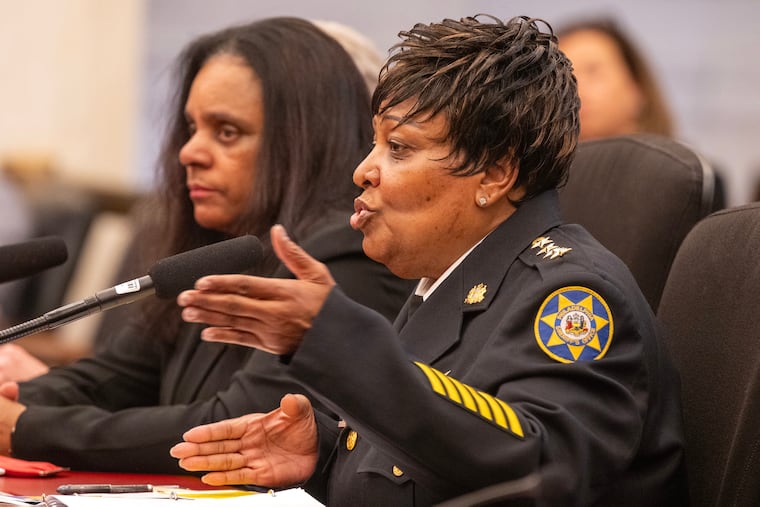
After a top aide to Philadelphia Sheriff Rochelle Bilal confirmed in court last month that her scandal-plagued office had been sitting on nearly $20 million meant for public coffers, reformers renewed calls to abolish her position.
But for City Council, which has the power to initiate such a change, eliminating the antiquated sheriff’s office isn’t on the agenda.
The Inquirer attempted to contact all 17 Council members last week, and five said they opposed or were skeptical of proposals to eliminate the sheriff’s office — a long-troubled holdover from before Philadelphia’s city and county governments merged in 1854. The modern iteration of the office has limited law enforcement powers, but controls the flow of vast sums of city money.
Six Council members acknowledged they may be open to a conversation about abolishing the office at some point — and some said that the missing money was a sign the office’s internal changes are not working. Six declined to comment or didn’t respond to inquiries.
And though all the Council members who responded to The Inquirer expressed dismay over the recently located $20 million, as the city’s schools and other agencies are in desperate need of funds, none clearly stated they were in favor of eliminating the sheriff’s office.
Most important, Council President Kenyatta Johnson — a staunch supporter of the Bilal and who controls the flow of city legislation — objected to the notion that the sheriff’s office should be abolished with its tasks folded into other branches of government, as has been proposed by the good government group Committee of Seventy and a state oversight board, the Pennsylvania Intergovernmental Cooperation Authority.
“It’s an independent body, and so right off the top, I know I don’t support abolishing it,” Johnson told reporters last week. “But it probably is due for some reforms to make sure that particular office operates in a more efficient and transparent manner.”
» READ MORE: Philly sheriff’s office reneges on court-supervision deal, tells judge it found $20 million in city money
Anti-corruption advocates have for generations called for the elimination of independently elected “row offices” like the sheriff and register of wills. Led by officials elected in races often determined by party politics, the offices tend to operate with less oversight over hiring and awarding contracts than regular city agencies. The city’s previous five sheriffs have seen corruption or sexual harassment scandals unfold during their tenures.
“We should get rid of it, and turn [the office’s tasks] over to a highly competent technocrat working with the mayor and Council,” State Rep. Jared Solomon (D., Phila.) said in an interview. “The office has been plagued with corruption and incompetence and mismanagement for all of modern history.”
The discovery that the sheriff’s office failed to transfer $20 million — mostly proceeds from delinquent property auctions owed to the city to cover unpaid taxes and other costs — should be a wake-up call, he said.
“At a moment in time when my constituents can’t afford their prescription drugs or figure out how to put food on the table or pay their gas bill, she lost $20 million,” said Solomon, who represents parts of Northeast Philadelphia.
Johnson said Council would examine what happened with the missing money, which came to light as the result of judicial hearings into the office’s operations.
“We will be taking a close look at that $20 million and why it wasn’t distributed to Philadelphia,” Johnson said, “and so our team would take a deeper dive to get answers regarding that particular issue, and then go from there.”
But he declined to commit to holding a public hearing on it, a common mechanism for Council members to demand accountability.
Council has squabbled with the mayor’s administration over much smaller sums. Lawmakers have recently bemoaned a $1.4 million cut to the Mural Arts Program, and they are currently locked in a tense behind-the-scenes battle with Parker over $2 million in funding for the Philadelphia Activities Fund, which Council members dole out to community groups.
For Lauren Cristella, president of watchdog group Committee of Seventy, Council’s response to the multimillion-dollar discovery in the sheriff’s office falls short.
“Council is the only group that can provide a long-term solution for these issues and we welcome their efforts to solve this problem for the people of Philadelphia,” she said. “This office has been in dire need of reform for over 40 years. From failing to perform the most basic duties to misplacing millions of dollars, self-dealing, and secret slush funds, the same problems repeat regardless of who is elected.”
Bilal and her spokesperson, Teresa Lundy, did not respond to questions about the missing money and Council’s response.
Shortly after she won the Democratic primary in 2019, Bilal told The Inquirer she was open to the possibility of eventually abolishing her own office. But Lundy, Bilal’s campaign manager at the time, interrupted the interview to say that was not on the table.
“No, right now,” Bilal said then, “but if there’s a situation where we need to evaluate that in order to save the city money … then we will have that conversation."
‘Every decision is political’
The sheriff’s office is responsible for serving warrants, transporting prisoners, providing courthouse security, and auctioning off tax-delinquent or foreclosed real estate. Critics assert most of these functions could be handled by the city’s police force or court administrators, without an elected leader.
To eliminate the sheriff’s office, Council would have to approve an amendment to the Philadelphia Home Rule Charter that would go before city voters in a ballot question.
The Inquirer’s survey of Council members revealed that isn’t likely to happen any time soon.
Four members — Johnson, Mark Squilla, Cindy Bass, and Jim Harrity — clearly stated they opposed doing away with the office. A fifth, progressive Councilmember Kendra Brooks, said she is skeptical that abolishing it is “the right move.”
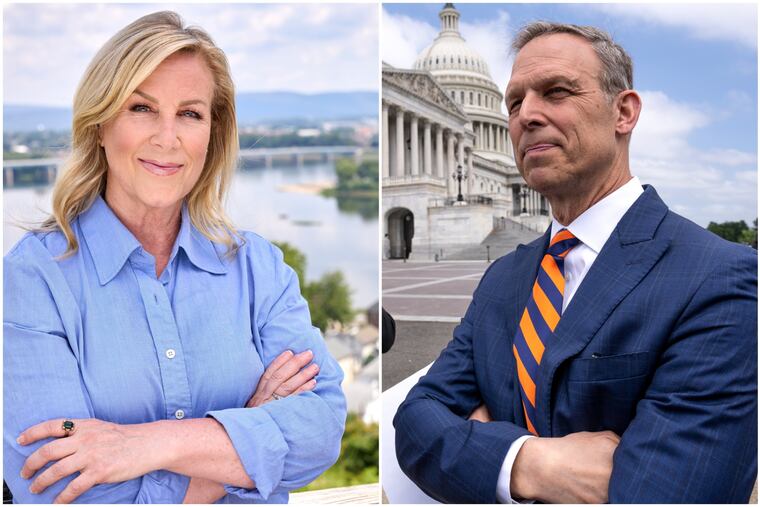
“Philadelphians should make decisions about the office and will get to weigh in next year,” when Bilal is up for reelection, she said. (Bilal will face a challenge from corporate security consultant Jennifer Vrana in the Democratic primary in May. Other candidates may join the race.)
Four Council members — Nicolas O’Rourke, Jamie Gauthier, Nina Ahmad, and Isaiah Thomas — said they were open to discussing the possibility of eliminating the office. Thomas said the discussion would have to be about eliminating all the city’s row offices, not just the sheriff. Ahmad said: “Everything’s on the table.”
Two other members — Rue Landau and Mike Driscoll — didn’t rule out the possibility, but said they need more information. Landau wants Council to examine the office’s structure and functions in the next city budget cycle, if not sooner, a staffer said. And Driscoll said he first wants to see what happens in the court case, which stems from a lawsuit over the office’s alleged failure to transfer deeds following sheriff’s sales.
“Depending on how that plays out, perhaps City Council needs to get involved,” he said.
The other six members gave noncommittal answers or did not comment.
Councilmember Quetcy Lozada said she was not prepared to discuss the possibility of abolishing the office. Majority Leader Katherine Gilmore Richardson said she hopes intervention by the courts would result in a “better management process.” (Bilal this summer agreed to independent oversight of her real estate division, but is now seeking to block any outside supervision.)
» READ MORE: Philly judge imposes six months of outside supervision for sheriff’s auctions
Councilmember Anthony Phillips declined to comment. Councilmembers Brian O’Neill and Curtis Jones Jr. did not respond to requests for comment. An attempt to reach Councilmember Jeffery Young Jr. was unsuccessful.
Former Councilmember William J. Green IV said he’s not surprised the current Council remains uninterested in eliminating the office.
When he introduced a bill in 2010 to eliminate the sheriff’s office, Green said he was inundated with calls from Democratic ward leaders who told him the issue was a nonstarter due to an unwritten agreement in local politics.
To appease the city’s various political factions, the local Democratic Party often employs blunt racial math, such as setting aside slots for white and Black candidates when deciding judicial election nominations.
Green said he learned a similar logic applied to row offices, explaining why some politicians are protective of the current arrangement. Black officials, he says he was told, controlled the sheriff’s office, while white officials ruled the register of wills’ office, another relic of the city’s now-defunct county government that lives on as a pool of patronage jobs.
“There was definite racial politics involved in each office and who was expected to be the nominee,” Green, who is white, said in an interview. “The bill went absolutely nowhere.”
Green said he’s not surprised little has changed since.
“I think you can find among most elected leaders in Philadelphia a lack of core convictions or guiding principles, and so every decision is political,” Green said.
Bilal, the city’s first Black female sheriff, burst onto the political scene in 2019, when she shockingly dethroned Sheriff Jewell Williams, whom multiple women had accused of sexual harassment, and two other candidates in a crowded Democratic primary.
She ran that year without the Democratic City Committee’s blessing and with endorsements from anti-establishment of progressives, including the activist group Reclaim Philadelphia and District Attorney Larry Krasner.
Most ward leaders stood by Williams in the 2019 election, party chair Bob Brady said at the time. But in 2023, when Bilal was already facing accusations of mismanagement, the party endorsed Bilal for reelection.
Before running for office, Bilal was a 27-year veteran of the Philadelphia Police Department and a former leader of the Guardian Civic League, the union for Black officers.
Nearly two centuries of reform
The dispute over the sheriff and Philadelphia’s other elected row offices stems from a 172-year-old effort to fully combine the city and county of Philadelphia.
Prior to 1854, the city of Philadelphia, which then was composed only of modern-day Center City, was one of dozens of local governments with separate jurisdictions across the county. The fragmented townships and boroughs lacked a unified police force, driving public safety concerns after a series of riots erupted targeting Black people and Catholic immigrants.
That year, Harrisburg approved the Act of Consolidation for Philadelphia, merging the city, county, and other local governments into a single entity. But the sheriff and a string of other county row officers were carved out of the merger.
» READ MORE: WITH EACH NEW SHERIFF, SAME OLD PROBLEMS: The history of Philly’s scandal-plagued elected office.
The debate over Philly’s parallel governments raged for decades, with the focus shifting to corruption. Party-backed candidates for these obscure offices typically cruised to victory, often doling out jobs in return for political endorsements.
The enactment of Philadelphia’s 1952 Home Rule Charter and state legislation in the 1950s and ’60s brought a new wave of reform, legally placing most elected row offices under city control, and transforming several more — including the coroner and prothonotary — into appointed positions. The city now had the power to abolish most of the remaining row offices via referendum and fold their duties and staff into other departments.
But Council has never voted to initiate such a referendum for the sheriff and register of wills.
In 2008, Mayor Michael A. Nutter proposed eliminating the sheriff’s office, the register of wills, and the clerk of quarter sessions, another row office relic that auditors found had lost track of millions in mishandled bail, fines, and court fees.
(Mayors can propose legislation and use their bully pulpit to encourage Council to adopt it. Ultimately, Council has the power to approve a Home Rule Charter amendment eliminating the sheriff’s office and send it to the voters. Mayor Cherelle L. Parker has not proposed eliminating any row offices.)
Nutter succeeded in doing away with only the clerk of quarter sessions.
In 2025, the Pennsylvania Intergovernmental Cooperation Authority, the state-appointed board that oversees the city’s finances, called for both Philadelphia’s sheriff’s office and register of wills to be axed.
There are procedural differences between the two. Under state law, Philadelphia cannot unilaterally dissolve the register of wills office without state authorizing legislation, while the city has final say over the sheriff’s office.
‘We’re looking into it’
The revelations about missing money and records have spilled out of Court of Common Pleas hearings over the past six weeks.
Real estate investors who bought foreclosed or tax-delinquent properties at sheriff sale — but never received a deed — filed suit, leading Judge Paula Patrick to issue a May order demanding Bilal explain the chronic delays.
After a tense first hearing in August, Bilal agreed to allow independent oversight of her real estate division, but reneged on the deal weeks later.
In September, a deputy undersheriff testified that the backlog had been cleared and that Bilal’s office was auditing revenues linked to the stalled sales for any lingering discrepancies. Under questioning from the judge, the deputy revealed that the audit had already uncovered $20 million from sales in just the past year that should have gone to the city.
Instead, the money had been stuck in limbo in several sheriff’s office bank accounts. The deputy said it was disbursed to the city after this discovery, and that the office was reviewing earlier years for other unclaimed funds.
Parker told NBC10 that week that she had not been briefed on the millions owed to the city. Asked last week about the money, the mayor’s spokesperson, Joe Grace, said: “We’re looking into it.” He declined to answer questions or make anyone available in the treasurer’s office for an interview.
Some Council members have questioned Bilal’s management in the past, including her office’s handling of millions more in fee revenue that the city controller in 2022 said was meant to flow into city coffers. The Inquirer reported Bilal had instead diverted the money into an off-budget bank account ex-staffers called a “slush fund” that paid for mascot costumes, DJs, and a $600,000 ad campaign, among other discretionary expenses. Bilal has also drawn two prior court orders linked to chronic understaffing and security lapses in the court facilities her office patrols.
Additionally, Bilal’s office delayed the collection of an estimated $35 million in tax revenue because it failed to auction off tax-delinquent properties between 2021 and 2024 as a result of a contract dispute involving an online auction company.
Parker, during her first budget address in March 2024 described that money as “dollars that could have been invested in classrooms and in rec centers or on building affordable homes.”
This year, Bilal returned to Council, seeking to increase her office’s budget by more than 50%. (Ultimately, Council approved only a fraction of that, a $146,000 funding increase, bringing her office’s budget to $35.8 million.) She was greeted with enthusiasm by several lawmakers, who thanked her for her work.
‘We’ve seen all the criticism’
The sheriff enjoys close political relationships with many of the Democrats on Council, and some have fiercely defended her.
In March, during Women’s History Month, Council members heralded Bilal for her leadership, and she accepted an honorary resolution on behalf of the women in her office.
“We’ve seen all the criticism,” Bass, a longtime ally of Bilal’s, said as she presented the citation. “And let’s be clear, accountability is essential, but the challenges facing the sheriff’s office did not begin with Sheriff Bilal.”
But the $20 million revelation seems to have altered the conversation. Over the last two weeks, a handful of members pointed to the news as a sign that the sheriff’s internal reforms had not taken hold.
“That’s money that was supposed to go to the city, and we’re in a financial bind right now,” Harrity said. “They need to get their act together.”
Brooks said that it’s clear the office’s revenue collection and distribution issues are “systemic,” and she encouraged Bilal to work with the courts to establish independent oversight — a move that Bilal now publicly opposes.
And Gauthier said that she was particularly “surprised” by the finding given that Bilal has repeatedly asked Council to increase her office’s yearly budget.
“We need to understand why that happened, how that happened, and we need to understand that before we’re in another conversation about millions of dollars being needed,” Gauthier said.
But it’s largely up to Johnson whether that understanding happens in public or behind closed doors.
Gilmore Richardson — the Democratic majority leader who has in the past sharply criticized city departments that have misspent or lost track of taxpayer dollars — said that she called Johnson shortly after learning of the undisbursed money. She said she trusts that “he’ll be working to ensure that we can adequately address this.”
Solomon, who has been a rare vocal supporter of abolishing the office, said that despite the reform’s lack of popularity on Council, he’s heartened that some members said they are open to the conversation.
“You seem to be seeing a growing number of folks — and maybe it’s after the $20 million marker — who seem to be saying, ‘Let’s figure out a path forward,’” Solomon said. “Other municipalities do this. They function with efficiency, and the sheriff is effective, and they’re not losing $20 million.”

The Inquirer’s journalism is supported, in part, by the Lenfest Institute for Journalism and readers like you. News and editorial content are created independently of The Inquirer’s donors. Gifts to support The Inquirer’s high-impact journalism can be made at inquirer.com/donate. A list of Lenfest Institute donors can be found at lenfestinstitute.org/supporters.