Philadelphia looks to dramatically restrict where stores can sell tobacco and vapes | Council roundup
Also this week: Council passed a long-delayed bill to establish a bike lane around City Hall, and members honored Officer Shane Seiber.
Philadelphia City Council wants to dramatically restrict where new stores that sell tobacco or vaping products can be located in the city, the latest attempt by the legislative body to rein in smoke shops.
Democratic Majority Leader Katherine Gilmore Richardson on Thursday introduced legislation that would adjust the city’s zoning code to prohibit any business selling tobacco from opening in much of the city. It would also ban them from locating within 750 feet of a school, daycare, park, or existing stores that sells nicotine products.
Asked whether that would effectively ban new stores from opening in most of city, Gilmore Richardson said: “Bingo.”
The new zoning definition would apply to any store that sells tobacco or vaping products, meaning it could also encompass new gas stations, groceries, and corner stores. Existing stores that sell nicotine products will not be affected by the legislation.
“We are hopeful that this piece of legislation will be the one that will make the difference for our communities,” Gilmore Richardson said Wednesday during a news conference.
Gilmore Richardson said she hasn’t heard from a single Council member who opposes her legislation, and wants members to pass the measure before the end of this year. The bill is her 10th piece of legislation aimed at regulating smoke shops in the city.
» READ MORE: Kratom and hemp advocates clash with Philly lawmakers over smoke shop crackdown
The effort comes as the state is already significantly limiting vape sales in the state. Starting next week, Pennsylvania stores may only sell electronic nicotine products that are manufactured by six companies.
Also this week: Council passed a long-delayed bill to establish a bike lane around City Hall, and members honored Officer Shane Seiber, who was fatally shot in the line of duty on Saturday.
What was this week’s highlight?
Smoking ‘em out: Currently, smoke shops that open in the city are classified as retail businesses under the zoning code, allowing them to locate in most areas that are zoned to allow commercial sales.
But under Gilmore Richardson’s legislation, such shops would fall under a new use definition specifically for stores that sell tobacco, nicotine, or vaping products.
“With its own new definition,” she said, “new smoke shops would no longer be treated like any other retail business.”
Shops that sell nicotine products will only be able to open in areas covered by the most flexible zoning rules — predominantly focused in Center City and University City — or in areas zoned for auto-oriented commercial uses like shopping centers.
» READ MORE: Most nicotine vape products will be banned in Pennsylvania by mid-October
On commercial corridors, stores selling nicotine products will be slightly less restricted and will only have to get a “special exception,” which requires a trip to the Zoning Board of Adjustment (ZBA) where they are almost always approved.
To open such a store in the rest of the city would require a variance, which are subject to greater scrutiny by the zoning board.
However, the wait times at the ZBA are so long that small businesses subjected to either requirement often struggle to afford the delays.
Gilmore Richardson’s latest legislation is squarely focused on tobacco and vape sales. It comes as part of a yearslong effort by Council to crack down on nuisance businesses and smoke shops, some of which hawk unregulated drugs with little oversight.
The Council member has cited Inquirer reporting in introducing pieces of legislation that have added layers of permitting and oversight for smoke shops, including implementing new age restrictions and penalizing landlords who rent space to illegal stores.
The Inquirer collected unregulated hemp products sold at smoke shops in the region, and had them tested, finding that some samples contained illicit or harmful substances. A second investigation found similar results when experts tested magic mushroom samples.
District members have also instituted business curfews in their jurisdictions, partly in an effort to crack down on smoke shops.
Councilmember Curtis Jones Jr., who represents parts of West Philadelphia, introduced such a restriction on Thursday, covering North 54th Street between Arlington Street and Montgomery Avenue, and instituting a curfew from 11 p.m. to 6 a.m.
What else happened this week?
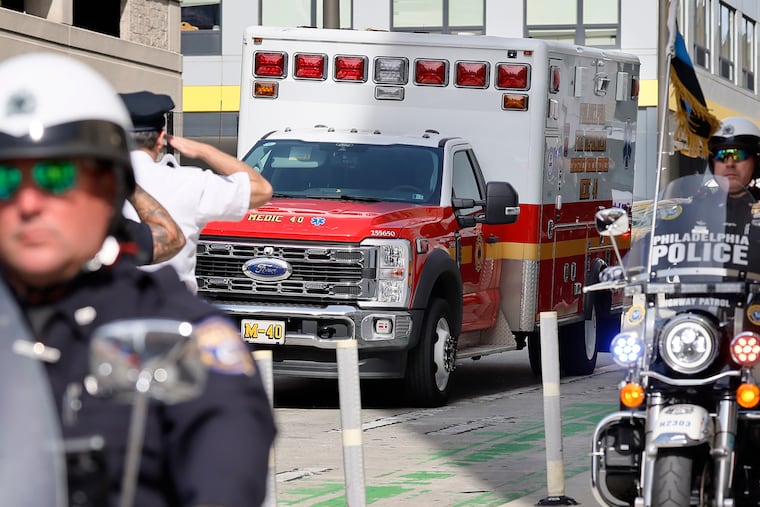
Honoring Officer Seiber: Council President Kenyatta Johnson kicked off Thursday’s session by holding a moment of silence for Seiber, the Philadelphia police officer fatally shot in West Philadelphia on Saturday.
“We extend our deepest condolences to Officer Seiber’s wife, children, family, friends, and fellow officers during this heartbreaking time,” Johnson said. “May his memory live on, and may his family find strength and comfort in our city’s support.”
Prayers up: POWER Interfaith, a progressive coalition of religious leaders, this week called on Council to adopt a three-pronged “We Make Philly” agenda to contain costs for working families and raise revenue.
“Every food giveaway line in this city is long right now,” the Rev. Cean R. James, senior pastor of Salt & Light Church in West Philadelphia, said at a rally Tuesday. “There is not a clergy person with me today who is not weekly receiving requests from members for assistance.”
» READ MORE: Should Philly open a city-supported grocery store? Council President Kenyatta Johnson wants to consider it.
First, POWER wants Council to raise the real estate tax homestead exemption, which currently reduces the assessed value of owner-occupied properties by $100,000 and saves taxpayers up to $1,399 per year.
Second, the group renewed calls for a city “wealth tax,” which would be a 0.4% levy on the value of certain investment holdings like stocks and bonds. Councilmember Kendra Brooks proposed a similar measure in 2022, but the bill lacked support and never got a committee hearing.
Third, the group called for a five-year freeze on gas bills. Council cannot control gas bills, which are set by the Philadelphia Gas Works, but POWER asked lawmakers to pressure the utility, which is owned by the city, to enact a freeze.
Johnson said that idea could be a way to address the “affordability crisis around utilities.”
“But obviously,” he said, “we have to sit down with chair of the PGW board and the members and see what can actually be done when it comes to helping individuals who are having a hard time.”
A City Hall bike lane, at long last: The bike lane around Philadelphia City Hall is just a mayoral signature away from becoming permanent.
Council on Thursday unanimously passed legislation to approve the bike lane after a 16-month delay by Councilmember Jeffery Young Jr., who sponsored the legislation but held the bill for months.
» READ MORE: The Philly City Hall bike lane is one step closer to becoming permanent
New crime lab gets final green light: Council on Thursday also approved legislation authorizing the city to issue $40 million in bonds to finance the police department’s new forensics lab in University City, a project that’s been in the works for more than five years.
The lab at 4101 Market St., which will cost about $90 million in total, is already under construction and could open as early as next year, according to Mayor Cherelle L. Parker’s administration.
Police have said a new, state-of-the-art crime lab to replace the force’s outdated space in North Philadelphia will allow investigators to solve more crimes and more quickly process evidence like guns, drugs, and DNA.
Quote of the week
That was Mario Zucca, A.K.A. “One-shot Mar,” who won Philadelphia’s first parallel parking championship earlier this month and was honored with a resolution Thursday. While greeting Council members, Zucca clutched his trophy, which is fittingly topped with a chunk of concrete curb.
Staff writer Ryan Briggs contributed to this article.