At every turn, Trump’s ideas for aiding U.S. consumers run into resistance
The president's Iran war, tariffs, and immigration push have all contributed to inflation and rising prices. Now he's trying to fix them.
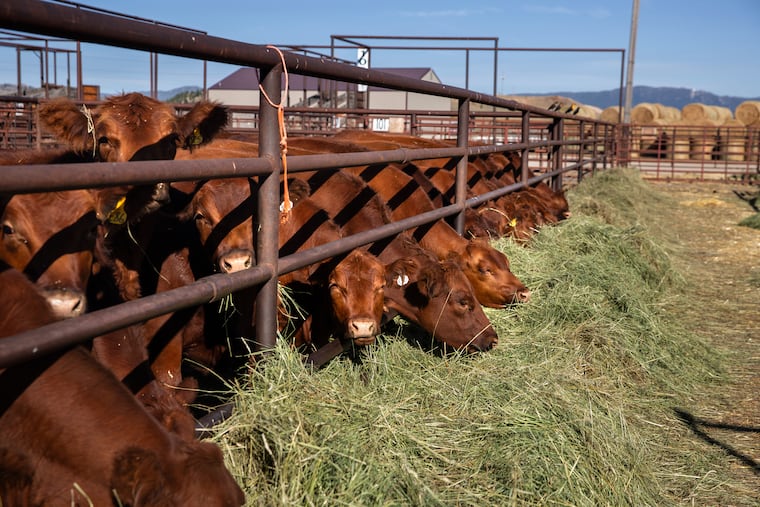
First came a proposal to permit tariff-free beef imports, but that immediately angered America’s farmers and ranchers.
Then came a plan to ban exports of domestic diesel fuel, but that met with pushback from major oil companies.
In between, President Donald Trump pitched the idea of simply cutting $5,000 checks to adult Americans frustrated, polls show, by high food and gas prices — if the GOP maintains control of Congress. But that idea, too, has come under fire, even from some Republican lawmakers concerned about the potential hit to the budget deficit.
With just five weeks until Election Day, the White House has thrown out multiple ideas for combating persistent inflation, which has outpaced wage growth. But experts say it is unclear whether Trump can execute any policy that would placate inflation-weary voters and help the GOP maintain control of Congress.
“These are symptoms of panic in the administration about problems that they have in part created,” said David Wessel, director of the Hutchins Center on Fiscal and Monetary Policy at the Brookings Institution.
Inflation has been running over the Federal Reserve’s target rate since 2021, but an array of Trump policies have fed the problem, economists say. Trump’s decision to join Israel in going to war with Iran has disrupted the global oil supply, leading to elevated energy rates. His tariffs have produced higher prices for some imported goods. And his administration’s immigration crackdown has made low-cost labor harder to find, keeping price pressures on domestic companies high.
Consumer frustration is reflected in polling. The gap has steadily widened between voters who approve of and disapprove of Trump’s performance as president, and 73% of Americans said they disapprove of Trump’s handling of the economy in a recent poll conducted by SSRS for CNN. Only 27% approved — his lowest approval rating on the issue ever recorded by the survey.
Against that backdrop, Trump has floated a parade of ideas for cutting prices.
“President Trump pledged to lower costs and raise real wages for everyday Americans, and the Administration continues to rigorously evaluate every option on the table to deliver,” White House spokesperson Kush Desai said in a statement.
On top of the political hurdles, however, these policies have been “small in the grand scheme of things … if they’re helpful at all,” said Mark Zandi, chief economist at Moody’s Analytics. “So it’s not like it’s moving the dial on the affordability crisis.”
Douglas Holtz-Eakin, president of the American Action Forum, a conservative-leaning think tank, said it’s not uncommon for politicians to try to bring down prices in the run-up to elections, especially when their party’s control of Washington is at risk.
President Joe Biden did the same ahead of the 2022 midterms, notably by calling for a federal gas tax holiday and releasing millions of barrels of oil from the nation’s Strategic Petroleum Reserve in an effort to bring down sky-high gas prices.
“This whack-a-mole with particular prices is something the Biden guys tried,” said Holtz-Eakin, who was a senior economic adviser to President George W. Bush and the 2008 presidential campaign of then-Sen. John McCain (R., Ariz.). “It doesn’t solve the economic problem, and it doesn’t seem particularly politically successful.”
For Trump, time is running out, said Rebecca Patterson, a senior fellow at the Council on Foreign Relations.
The U.S. economy is so big and so complex that improving affordability “is simply not something anyone can do in a month,” Patterson said. “Actions taken today might help in the medium and longer term. But between now and the election, the best you can hope for is that voters appreciate that you’re trying.”
One idea the administration has executed is buying back Treasury bonds. But so far, the payoff has been minimal.
In part because of the competition for cash from massive private-sector spending on artificial intelligence, investors are demanding higher interest rates for Treasury bonds. Higher bond yields, in turn, raise interest rates for consumer loans such as mortgages. The average 30-year fixed mortgage rate hit 7% last week for the first time since January 2025.
In August, Treasury Secretary Scott Bessent announced he would intervene in the bond market by buying back longer-term Treasury bonds to try to slow the rise in yields. That has not yet worked in bringing down yields, though Bessent contended in a recent congressional hearing that it is nonetheless a success because “we then proceeded to have the two most successful Treasury auctions that we’ve had in 20 years.”
While Bessent was wrestling with the bond market, Trump decided to tackle meat prices.
In late August, the president signed a proclamation that rolled back tariffs on foreign beef trimmings for 90 days in an effort to boost imports and lower ground beef prices, which have risen almost 25% since the beginning of Trump’s second term.
But that drew rare pushback from farm-state Republicans, including Sen. Chuck Grassley (Iowa), Sen. Pete Ricketts (Neb.), Sen. Roger Marshall (Kan.) and Rep. Ashley Hinson (Iowa), who is running in a competitive Senate election in her state.
The lawmakers argued that a flood of cheap foreign beef would undermine American farmers and ranchers, who are already struggling with high fuel, grain, and fertilizer prices due to the Iran war and other factors.
Trump issued a follow-up executive order aimed at helping ranchers, and the Agriculture Department announced new policies aimed at supporting American beef producers. The administration is now reportedly considering reversing course on beef imports — though the White House has denied that.
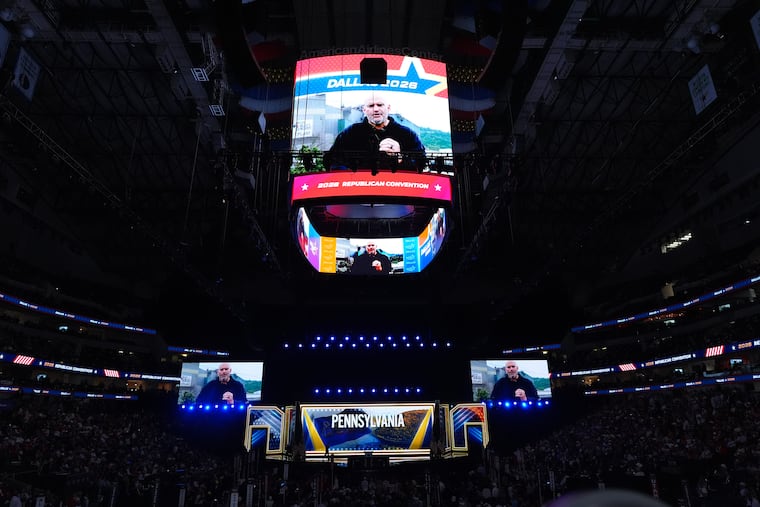
Then came the Republican midterm convention in Dallas, where Trump made his biggest pitch yet: If Republicans keep both the House and Senate on Nov. 3, Trump said, he would give every adult American a $5,000 dividend to spend within the United States.
Some Republican lawmakers applauded the idea, but others were skeptical, saying the checks not only could exacerbate inflation but also could increase historically large budget deficits. The proposal could cost more than $1 trillion at a time when concern is growing about the nation’s outsize debt, which recently surpassed $40 trillion.
Public interest groups blasted the idea; Lisa Gilbert, co-president of the left-leaning consumer watchdog Public Citizen, called it an “explicit and desperate attempt to buy votes.”
And voters largely have not been swayed: A YouGov poll released earlier this month found that 64% of U.S. adults felt they would probably or definitely not receive the dividend if Republicans were to win the election.
So far, there have been few signs of interest on Capitol Hill, where lawmakers would have to draft legislation to authorize the checks and vote to approve it.
Last week, after diesel prices hit a record high, Trump and Bessent announced a new idea for tackling soaring fuel prices: a ban on diesel exports. Their theory was that a ban would boost the diesel supply for American consumers, lowering the price at the pump.
Several Republican candidates in competitive congressional races supported the idea. But major oil companies and Energy Secretary Chris Wright objected, arguing that such a policy would incentivize companies to lower diesel production, which would further raise fuel prices.
By midweek, the fate of the diesel export ban, too, seemed uncertain: Wright said any new limits on diesel exports were likely to be voluntary.