Does Pennsylvania now have ‘the strictest guardrails in the nation’ for data centers?
Gov. Shapiro’s wide-ranging executive order imposes strict requirements on the projects but stops short of a moratorium on development.

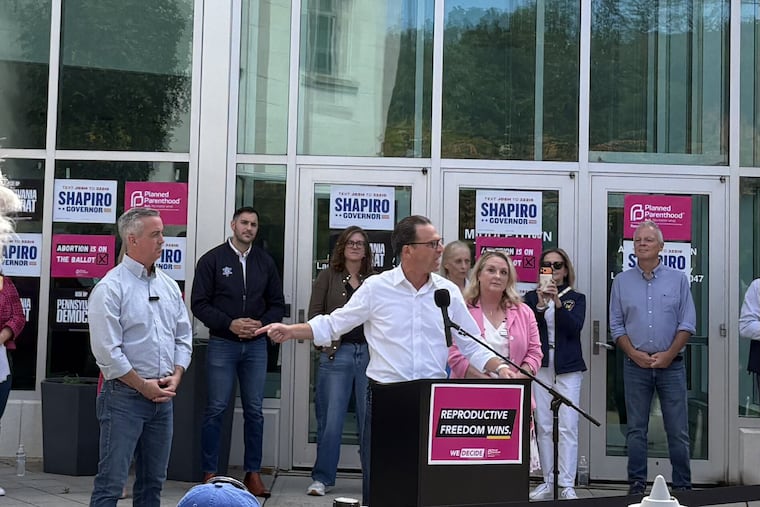
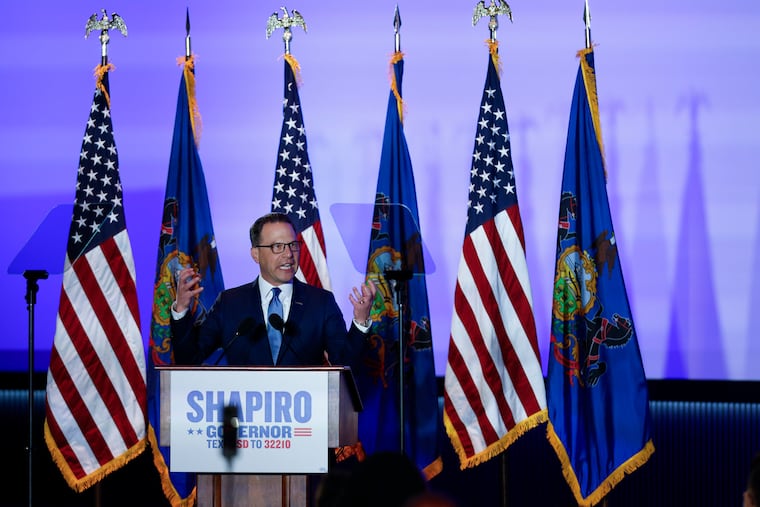
HARRISBURG — As part of his new, hard-line stance on regulating data centers in Pennsylvania, Democratic Gov. Josh Shapiro said during a news conference last week that his sweeping executive order has the “strictest guardrails in the nation” on data center development.
Fact check: That is technically true, if you exclude moratoriums, or the full-stop pauses on development that have been implemented in two other states.
States around the country have taken different approaches to data centers in the race for AI supremacy — and, subsequently, how to rein in the increasingly unpopular massive developments that some fear will disrupt their communities, drain resources, and increase energy costs.
Governors, including Shapiro, initially welcomed companies who had come knocking on their states’ doors offering billion-dollar investments to build there. And as the political tide has transformed data centers into widely unwelcome developments among most Americans, leaders have had to adapt — or even change their positions.
» READ MORE: In a major shift, Gov. Josh Shapiro restricts data center development in Pennsylvania
To build a data center in Pennsylvania — where Shapiro just 14 months ago trumpeted a $20 billion commitment from Amazon to build at least two data center campuses in Bucks and Luzerne Counties — developers will now be required to sign a consent agreement detailing how it will follow new guidelines in four key areas: transparency, energy affordability, workforce development, and environmental protection.
Many top Pennsylvania Democratic leaders and environmental groups lauded Shapiro’s order, while some Republicans called it a disingenuous flip-flop in an election year. And some of the loudest data center opponents said it did not go far enough — and they still want a moratorium.
Thirty-eight states, including Pennsylvania, offer tax breaks for data centers. Many of these tax incentives were approved years ago, as the emerging artificial-intelligence industry began to come online. Pennsylvania’s legislature first approved its benefit in 2021.
Some states, like New York, have halted all data center development for periods of time, while others, like New Jersey, have singled out specific areas, such as consumer protections, in which lawmakers want to curb data centers’ impact.
Shapiro’s administration argues it is unfair to compare its multipronged requirements for developers to build in Pennsylvania to states with moratoriums. In other words, officials say, Pennsylvania has the toughest enforceable barriers for data center development, while moratoriums are a total stop.
Most state legislatures are weighing proposals to restrict data center development through moratoriums or energy generation requirements. Pennsylvania has near-unanimous support among lawmakers to end tax breaks for data center developers, but legislators in the politically split General Assembly failed to do so before leaving Harrisburg for the summer.
» READ MORE: Pa. state lawmakers found common ground on this data center policy — but still couldn’t reach a deal
In absence of new state laws, a handful of governors, including Shapiro, have taken executive action to restrict data center development in their states. Here is a look at how several states, including Pennsylvania and its neighbors, are approaching data centers.
Pennsylvania
Moratorium: No
Tax credit available: Yes
Restrictions: After previously embracing data center development as a potential economic driver for Pennsylvania, Shapiro changed his position and signed a wide-ranging executive order last week requiring data centers to get local approval, bring their own power, hire and train local workers, and more. The order does not include a moratorium on data center development. However, its requirements for local approval may, in effect, block many from moving forward.
» READ MORE: Could a Bucks County Amazon data center be affected by Gov. Shapiro’s order?
Any developer looking to build a data center in Pennsylvania must sign a 33-page, legally binding consent agreement that follows Shapiro’s multifaceted and detailed requirements about the facility’s projected energy generation and water usage and a community benefits agreement in order to receive state-level permit approvals. If the developer does not agree to Shapiro’s rules, its project will be held up by the state indefinitely.
Current projects that have received state permits will be allowed to proceed, but developers will need to sign the agreements for any future approvals.
New Jersey
Moratorium: No
Tax credit available: Yes
Restrictions: In July, Gov. Mikie Sherrill signed several bills into law to protect consumers from increased costs associated with data center development, including the creation of a new tax and rate structure specific to data centers so that the projects pay for their own energy usage and grid updates.
Sherrill has released a plan with a framework similar to the regulations outlined in Shapiro’s executive order — including requirements for energy generation, community input, workforce development, and environmental protection — but unlike an executive order or legislation, it does not appear to be enforceable.
Sherrill, a Democrat, began her first term earlier this year after running on a campaign promise to bring down utility costs.
New York
Moratorium: Yes
Tax credit available: Yes
Restrictions: Gov. Kathy Hochul in July signed the first statewide data center ban in the nation, blocking new construction for any project using 50 megawatts or more of electricity for up to one year. Fewer projects were proposed in New York, one of the nation’s most populous states that relies heavily on surrounding regions to generate its energy consumption, than in its neighbors. Hochul said she will lift the order once her administration develops guardrails for future projects.
Hochul, a Democrat, took specific aim at hyperscale data center proposals, the main projects intended to power emerging AI technologies.
Maryland
Moratorium: No
Tax credit available: Yes
Restrictions: There has been no statewide action on data centers yet, as Maryland is limited on how much energy it can produce due to its size and dense population. Unlike in Pennsylvania, county and local governments in Maryland are allowed to pass their own moratoriums on data center development, which Baltimore and other densely populated counties near Washington have done.
Gov. Wes Moore, a Democrat running for reelection, backs a number of legislative proposals in the Maryland statehouse that would require the centers to bring their own power and hire local union workers. But he has mostly demurred on a statewide moratorium, saying it is up to local governments to decide, online news outlet Maryland Matters reported.
Similar to Shapiro’s Republican opponent, Stacy Garrity, Moore’s GOP challenger, Dan Cox, has called for a statewide moratorium on the projects.
Virginia
Moratorium: No
Tax credit available: Yes
Restrictions: Virginia is among the hottest spots for data center development in the country, with more than 340 data centers in operation and hundreds more proposed. In July, the Virginia General Assembly imposed a new electricity-use tax set to run out in two years.
Virginia is also seeing massive tax revenues from its burgeoning data center industry. One wealthy county just south of Washington is home to 250 data centers. The local government there is expected to bring in $1.3 billion in additional tax revenue from data centers, allowing the county to reduce property taxes by 30%, the New York Post reported.
Like Moore, Gov. Abigail Spanberger, a Democrat for whom Shapiro campaigned last year, has bucked calls for a statewide moratorium and urged local governments to decide.
Ohio
Moratorium: No
Tax credit available: Yes
Restrictions: Ohio has the fifth-most data centers in the country, with more than 200 already operating, according to the state’s consumer protection office.
The GOP-controlled state broadly still welcomes data center development. But its utilities commission approved a tariff for large data centers, requiring them to pay for at least 85% of their electricity capacity.
It is also a top issue on the campaign trail in the state’s hotly contested U.S. Senate race that could decide control of the chamber: Top Republicans warned AI developers that they need to fix their public image or lose supportive candidates, Axios reported.
Texas
Moratorium: Yes, for future development
Tax credit available: Yes
Restrictions: In what was once the most welcoming state in the country for data center development, new developments in Texas are now indefinitely on hold.
This month, Gov. Greg Abbott, a Republican, announced a moratorium on future data center projects while the state’s utility commission and electricity council audit the current projects’ power and water use, and more.
Kentucky
Moratorium: No
Tax credits available: Yes
Restrictions: Gov. Andy Beshear, like Shapiro an ambitious Democrat and a potential 2028 presidential contender, also signed an executive order earlier this month that requires data center developers to submit an energy plan that outlines that the project will not raise prices for ratepayers. He also directed the state’s utility commission to deny any rate increases to cover increased costs from data centers.
Beshear’s order was met with criticism from some experts who claim his order was not enforceable, particularly for its inclusion of a directive to an independent agency not under the governor’s discretion, the Kentucky Lantern reported.