The little known think tank that is the intellectual engine of Trump’s GOP
The Claremont Institute's ideas were changing long before Donald Trump ran for president — and it has helped to shape the new brand of authoritarian conservative populism now dominating the GOP.
The pillars and institutions that defined American conservatism have undergone dramatic transformations in the Trump era. That’s especially clear at the Claremont Institute.
Once a little-known think tank dominated by political philosophers devoted to the preservation of constitutional conservatism, the Institute has transformed into a bastion of political activism in support of authoritarianism. Its scholars have joined with national conservatives and postliberals to form the three-legged stool of the MAGA New Right.
Yet, as jarring as this transition has been, it was far less abrupt than many assume. Long before Donald Trump declared a presidential campaign, Claremont’s scholars had begun to sour on traditional conservatism and gravitate toward ideas that would come to define Trumpism.
This long transition reveals that a new generation of Claremont fellows and scholars saw what other conservatives did not: the rise of illiberalism in the Western world. The future of conservatism, they concluded, would be anchored in this sentiment and they found a leader they could guide and use to gain power.
Harry V. Jaffa, a distinguished philosopher and political theorist, and four of his former Claremont University graduate students established the Claremont Institute in 1979. They aimed to create a home for political philosophers — rather than political strategists — to carry on Jaffa’s legacy of conservative political philosophy.
Jaffa’s mission was to promote the ideas of his mentor, Leo Strauss, one of the most consequential political theorists of the 1970s and 1980s. Strauss had revived the concept of natural rights derived from the laws of nature that had long been swept aside by relativism and secularism. Jaffa took Strauss’ natural law thinking a step further by arguing that the principle of natural rights as expressed in the Declaration of Independence was embodied in the Constitution, and thus, was the core of the nation’s founding.
Claremont preached these ideas to the next generation of conservative leaders in the hopes of creating “a community dedicated to preserving constitutional government.”
Until the late 1990s, the institute’s mission was largely educational. It established summer fellowships to train promising young conservative intellectuals willing to embrace its ideas and goals. These fellowships proved highly successful in shaping a new generation of elites who have exercised significant influence on policy and decision-making at the highest levels of government, law, media, culture and academia.
Claremont focused on three main issues: the abolition of the administrative state, the restoration of the “Founders’s Constitution” and the repeal of the 1964 Civil Rights Act. In one of its publications, a Claremont fellow referred to the latter as “the little law that ate the Constitution.” For a brief time, Jaffa and his fellow Claremonters succeeded in reorienting conservatism toward a greater appreciation of the nation’s founding story.
But during the late 1990s, the institute’s thinkers became disgruntled with the neoconservatism that they argued had begun to dominate Republican politics. They saw it as insufficiently committed to stopping the advance of progressivism.
They also claimed that it deviated from the idea that the Declaration of Independence was at the heart of the American Revolution and the foundation for the creation of the American nation. In 1998, Charles Kesler, Claremont senior fellow and editor of the highly regarded Claremont Review of Books, lamented that too many conservatives had “renounced the central principles of the American Founding” and had settled for the argument that the Revolution was waged to restore traditional English common law rights rather than those of the Declaration of Independence.
This debate may have looked like an esoteric intellectual squabble, but it had profound consequences.
The Iraq War and the 2008 financial crisis caused the final break between Claremont and neoconservatism. The Claremonters then formed an informal alliance with the paleoconservatives — champions of a right-wing nationalist and nativist conservatism, like commentator Pat Buchanan. The alliance advocated for a populist nationalism of non-intervention abroad, economic nationalism and cultural traditionalism. It was an insurgent movement that aimed to topple the Republican establishment.
This alliance ended up driving the institute deeper into far-right extremism. After Jaffa’s death in 2015, his son Phillip lamented that, “they did not wait to bury the teaching with the teacher. What they are trying to do is to put a top hat on Jefferson Davis and call it Abraham Lincoln.”
Shortly before the 2016 election, Claremont senior fellow Michael Anton published a dark essay titled “The Flight 93 Election.” It marked the institute’s final departure from Jaffa’s ideas and its entry into populism.
Together with an earlier essay titled “Toward a Sensible, Coherent Trumpism,” Anton defined Trumpism as a new conservatism based on opposition to immigration, trade (globalism) and war (foreign intervention). On immigration, Anton cited the Far-Right replacement theory in highly nativist, xenophobic and Islamophobic terms. He warned that the nation would go off a cliff if Hillary Rodham Clinton was elected.
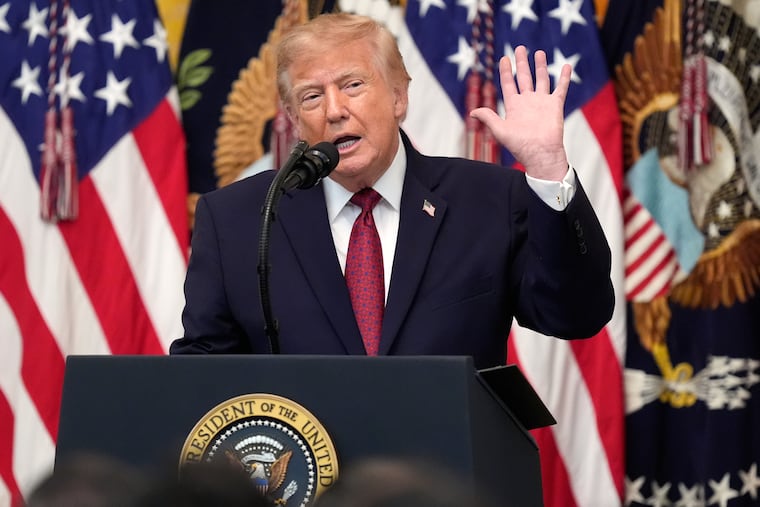
Kesler found Anton’s tone of apocalyptic urgency exaggerated, but he believed that Claremont needed to take ownership of the rising brand of conservatism and formulate a philosophy for it. While the Claremonters thought that Donald Trump was morally flawed, they hoped he would implement their agenda. Consequently, the institute became the nerve center of the MAGA movement.
Claremont embraced a conservative populism that fiercely opposed social justice and fulsomely waged the culture wars. Claremont’s campaign against “wokeism” included opposition to multiculturalism, identity politics, the extension of rights to minority groups, affirmative action and anti-racism decrees that, in the opinion of many conservatives, constituted discrimination against white people, especially young men. But Claremont’s thinkers also clung to the far more radical goal of rolling back the Civil Rights Act by returning it to its original intent of creating a colorblind society and by ending its extension of civil rights to marginalized and minority groups. The Claremonters believed that dismantling the administrative state would accomplish these goals.
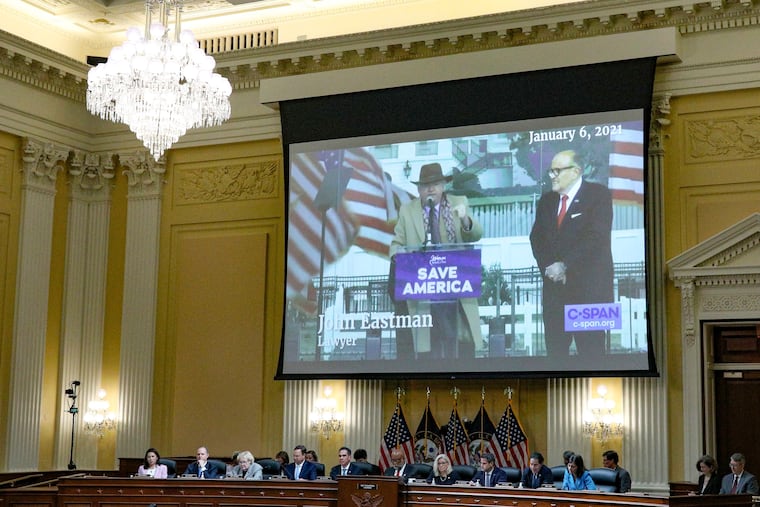
Trump’s defeat in 2020 accelerated Claremont’s embrace of authoritarianism. The institute’s thinkers pushed the “Big Lie” that Democrats had stolen the election and used it as a justification for undemocratic activities. Infamously, Claremont fellow John Eastman gave a speech at Trump’s Jan. 6, 2021 Save America rally urging Vice President Mike Pence to unilaterally overturn the 2020 presidential election.
When these efforts failed, Claremont’s fellows became even more radical. One of them, Glenn Ellmers, began to argue that the Constitution could no longer save the nation from the disaster caused by the advance of progressivism. To prevent this, he insisted, Claremont had to lead a counterrevolution to restore “authentic America” for “authentic Americans.”
yan Williams and Arthur Milikh, both younger Claremonters, embraced the call for “a new Claremont” to lead the counterrevolution. They launched initiatives, including the Center for the American Way of Life, to prepare the way for a new right-wing conservatism under Claremont’s leadership. They also recruited a cadre of “political warriors” — many drawn from the alt-right and the ranks of online extremists — to advance this new conservatism. These new Claremont allies pseudonymously wrote blatantly racist, sexist, fascist, homophobic and conspiratorial articles, many published in Claremont’s The American Mind.
These initiatives helped make the MAGA New Right, embodied by the new national conservatism, or NatCon, movement. The leading Claremonters attended the movement’s conferences and helped draft its “Statement of Principles.” Their goals and priorities included a moratorium on immigration, a robust Christian nationalism, a rollback of LGBTQ+ rights, opposition to globalism, hostility to China and a war against “woke elites” in cultural, academic, economic and governmental institutions.
Most significantly, the Claremont thinkers argued that the NatCon movement could achieve these goals only by transforming the national government into an anti-democratic authoritarian state.
Claremont was one of the co-sponsors of Project 2025, a document that turned national conservatism’s aspirational goals into concrete policy proposals that would help to dismantle the administrative state and restore the family as the centerpiece of American life, among other things. Trump’s reelection in 2024 put Claremont in the driver’s seat to guide his second administration in implementing Project 2025, including its anti-DEI orders, its vigorous efforts to dismantle the administrative state, its mass deportation campaign and its war against universities and museums.
The vision of Claremont’s thinkers in 2026 bears little resemblance to what Jaffa initially envisioned for his institute. He lived long enough to see — and deeply regret — the institute’s shift from restoring what he saw as the principles of the Declaration of Independence to more illiberal, anti-democratic views. Equally troubling for him was the rise of “Trumpian populism” that made some of his disciples believe that saving Western civilization was mainly a partisan project rather than a philosophical exercise.
Yet, while this transformation was dramatic, the history of Claremont shows it wasn’t abrupt. It was more than two decades in the making. Trump hasn’t remade American conservatism. Rather, he capitalized on and advanced an intellectual movement with far deeper roots. History will credit Claremont for the “Trumpian revolution” that has challenged American democracy.
Darrell Munsell is professor emeritus of history at West Texas A&M University, where he taught modern British and European history. He is the author of several books, including Architects of Authoritarianism: The Claremont Institute and the Making of the MAGA New Right, and From Redstone to Ludlow: John Cleveland Osgood’s Struggle against the United Mine Workers of America. During his retirement, he has been involved in historic preservation work in Colorado.
Made by History takes readers beyond the headlines with articles written and edited by professional historians. Opinions expressed do not necessarily reflect the views of The Inquirer.