Rehab of historic Walnut Street buildings will not include salvaged materials
The Historical Commission had hoped that materials could be saved for a future project, but “nothing was salvaged.”
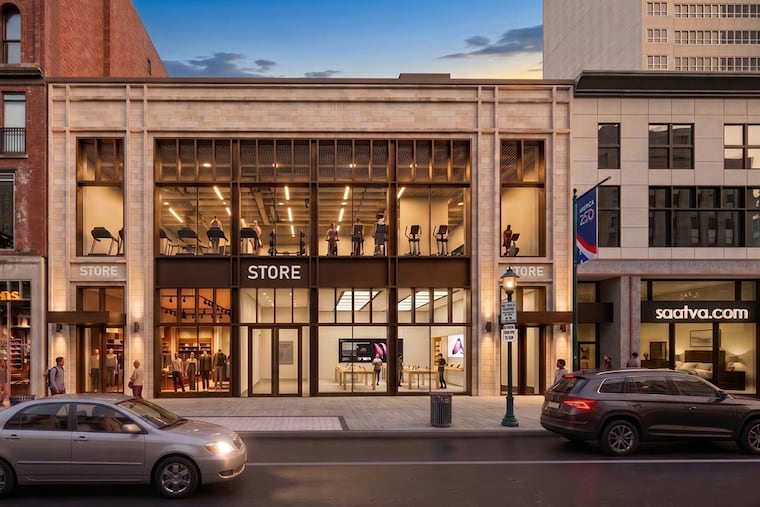
After three historic buildings on the 1700 block of Walnut Street were gutted by arson during citywide unrest in 2020, the owners were asked to save some building materials for future construction.
At the time, the Historical Commission told The Inquirer that the building owners would “have to make laser scans of the facades before starting demolition and incorporate salvaged building materials into the new construction.”
But six years later, as the Gridmark Group plans a two-story retail building at 1706-10 Walnut St. — currently home to the Walnut Garden beer garden — the commission learned the previous owners did not leave anything of the 19th-century buildings behind.
“We do think there was a scan that was done” but it wasn’t shared with the current owners, said Stephanie Boggs Magagna, a land-use attorney with Klehr Harrison Harvey Branzburg, who represents Gridmark. “Nothing was salvaged.”
“When we purchased the property [in 2022], we purchased it as a vacant lot,” she said.
The Gridmark Group’s plans for the site originally featured a large, 30-story residential tower, but owner Ari Weber decided against such a vast undertaking as interest rates and building costs remain elevated.
Instead he plans a two-story, 33,000-square-foot retail building with space for a potential roof deck restaurant.
“The idea would be to relocate the beer garden to the roof,” said Jerry Roller, with JKRP Architects, during a presentation to the Historical Commission’s Architectural Committee.
“We’ve designed a balanced facade that we think works with the rhythm of Walnut Street, picking up materials that mimic similar materials being used on Walnut Street,” Roller said.
The committee mourned the loss of the original building material, but voted to recommend approval of Weber and Roller’s plans with the proviso that they consider adding a bronze cornice to the building.
“There’s no memory here of what was lost,” said Justin Detwiler, an architect who sits on the committee. “We’ve got one large building where there were three before [that were] part of a rhythm of the street, and that rhythm is now lost.”
Roller noted that there is no business yet slated for the building, but the developer has received interest from single tenants to fill the whole space.
Walnut Garden will remain open for the rest of the year, and depending on construction could remain longer.