New Ken Burns-produced crime and punishment doc features Philly prisons and Larry Krasner
"Philadelphia is extremely important because that is the place where the idea of the penitentiary was first expressed and actually brought into fruition," said filmmaker Lynn Novick.
Philadelphia invented American democracy — and the American penitentiary.
Philly’s role in the creation of American mass incarceration takes center stage in episode one of Crime and Punishment in America, the four-part PBS documentary directed by Lynn Novick and executive produced by Ken Burns, and now streaming on WHYY. A sweeping reckoning of 250 years of the American criminal justice system, blending evocative historical imagery, talking heads, and dramatic readings with contemporary scenes from American prisons, Novick traces how the Founding Fathers’ grand experiment of American liberty gave birth to the far messier realities of the American criminal justice system.
Philly reformers, like Benjamin Rush, a physician and signer of the Declaration of Independence, fought for a criminal justice system more befitting the lofty ideals of American liberty — one that moved away from public hangings and brutal floggings for petty crimes to repentance and reform.
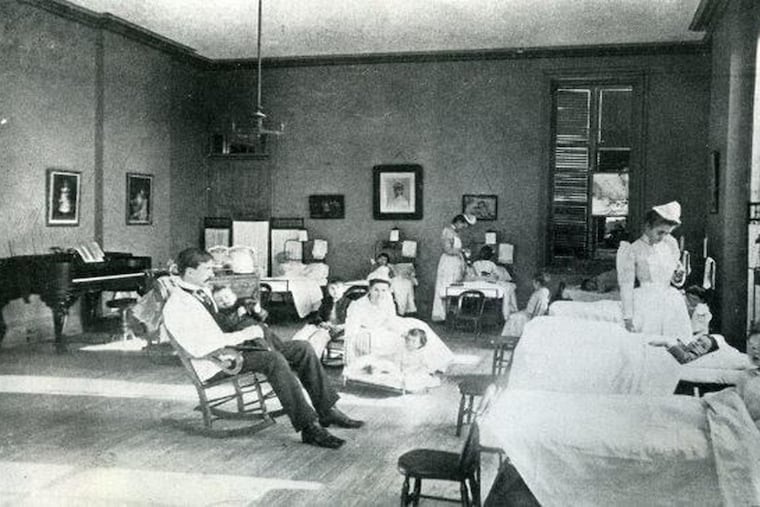
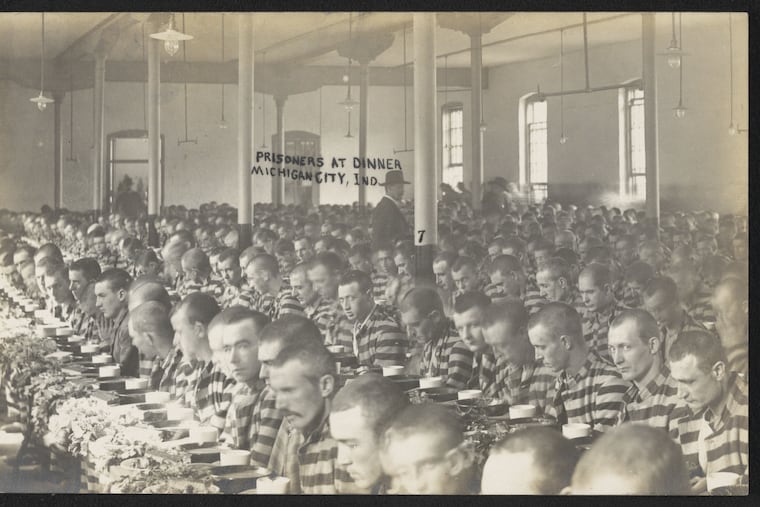
It led to the wretched confines of Walnut Street Jail, first opened across from Independence Hall in 1776, and eventually considered the first true prison in the United States and the world. Those incarcerated were herded from filthy mass holding rooms to individual cells. And at Eastern State Penitentiary, built in a Cherry Field outside downtown Philadelphia in 1829 with chapel-like cells with running water and flush toilets, and the first prison anywhere to emphasize reform over punishment, where inmates initially served in total isolation, 24 hours a day.
“The centrality of Philadelphia in developing the model of incarceration as both a punishment and a method of rehabilitation cannot be overstated,” said Novick. “It has become so baked into our way of thinking about what justice looks like for those who break the law that we can’t even imagine a world where that wasn’t the case — and it all began in Philadelphia.”
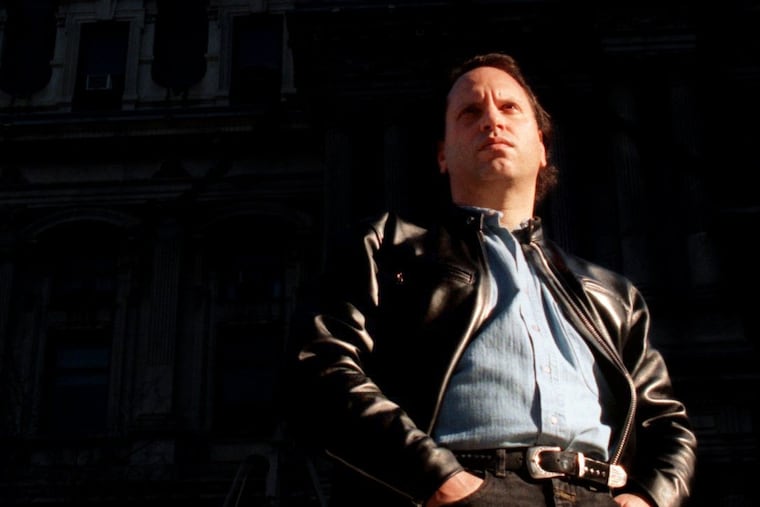
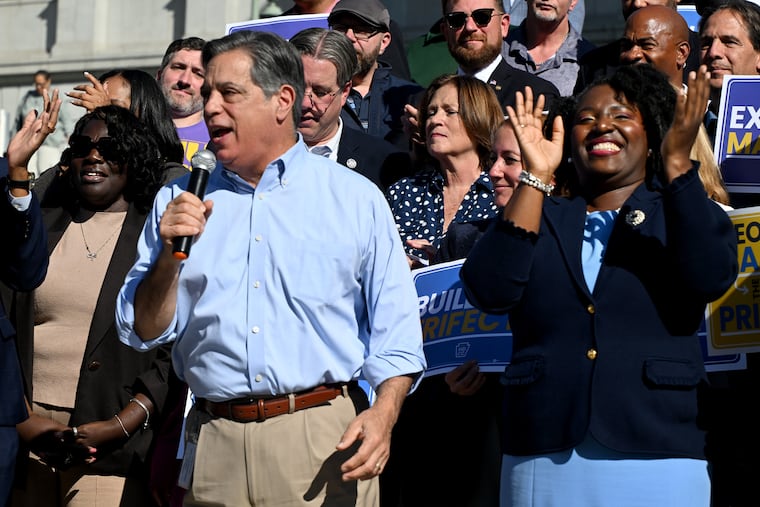
In later episodes, Philadelphia District Attorney Larry Krasner emerges in form as one of the more provocative interview subjects, bluntly eviscerating a criminal justice system stacked against the poor and vulnerable.
“Broke people get screwed,” Krasner says in “Episode 3: Public Enemies (1929-1969.)” “Would you like more? I mean, that’s how it works. Broke people get screwed.”
In an interview this week, Novick discussed Philly’s founding roots in the American industrial prison system, Krasner, and finally focusing on the thread of American crime and punishment.
The idea of moving away from routine public executions to reform isn’t just an American idea — it’s a Philadelphia idea?
There was a larger conversation going on around the time of the Revolution about public punishment and about capital punishment. So it wasn’t unique to Philadelphia that people were asking questions about [whether] our system of punishment and justice appropriate for this new democracy? Philadelphia is extremely important because that is the place where the idea of the penitentiary was first expressed and actually brought into fruition.
The Founding Fathers could literally peer into the wretched wards of Walnut Street Jail, where colonial prisoners were held for trial and punishment, from the courtyard of Independence Hall?
There were terrible unsanitary conditions, to put it mildly. Disease was rampant. Food was inadequate. People were just thrown together. There was disorder, chaos, violence. They were seen as breeding grounds for crime.
This didn’t sit well with newly minted Americans?
There was a sense of outrage that the jails were a danger to the society at large and to the people inside there. The first idea was we’ll take part of the Walnut Street Jail and create this new thing called the Walnut Street Prison. They created individual cells. The intention was to separate people from each other, give them time and space to repent.
But that didn’t sit well with those incarcerated.
It was a new idea, and I don’t think it was welcomed by the people that were held there. Before this, when you broke the law, you would be punished and held up, and then you would go back about your business if you weren’t put to death. Now you’re being deprived of your liberty. There were riots. People tried to escape. They’d be leaning out the windows, trying to sort of harass passersby.
And all right in the heart of the city.
Eastern State Penitentiary was sort of a response to that — they created this institution that was built on the idea that pure isolation for of people was the goal.
By 1842, a visiting Charles Dickens described the total isolation of Eastern State as “being buried alive?”
We are social animals. We need exposure and companionship to thrive. Depriving human beings of any contact with any other human beings for long periods of time is cruel and, to some degree, torturous
So many strains of your and Ken Burns’ other subjects, from the Revolution to the Civil War to the American West and Prohibition, appear in the film, but with a new angle.
We’ve done many different walks through American history, but never focused on the prison system and the justice system. And it’s right there the whole time. We just sort of shifted the focus over here.
Why did you feel Larry Krasner was an essential voice?
He has his detractors — he’s a controversial figure. He’s not speaking about his career. He’s just sharing his perspective on white collar crime, on deinstitutionalization, on policing, on sentencing, and how the justice system functions in our society. He’s very direct. He doesn’t beat around the bush. I’ve interviewed a lot of public politicians and public officials, and they tend to be very careful and speak in platitudes, and that isn’t necessarily what you want when you’re making a documentary like this. Larry Krasner is really the opposite of that.