Five ideas for Pennsylvania’s new Democratic majority
These five ideas won’t solve every problem facing Pennsylvania, but each offers an opportunity to improve people’s lives, writes state Sen. Joe Picozzi.

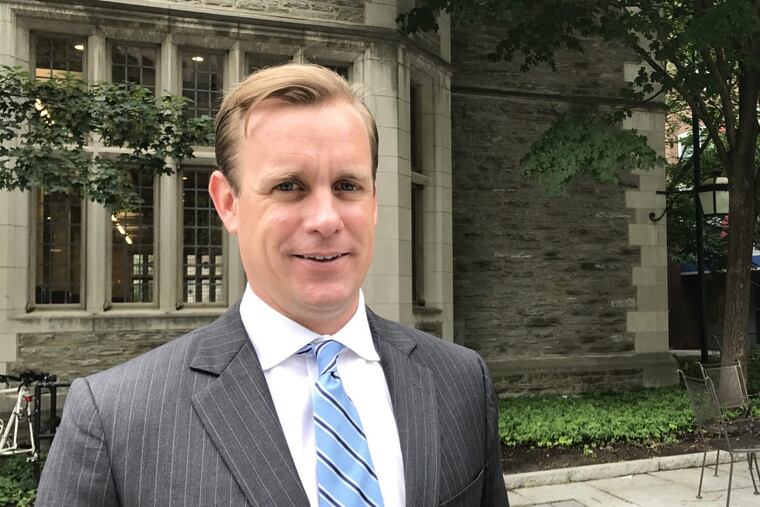
Joe Picozzi is the state senator serving Northeast Philadelphia’s 5th Senate District. At 30, he is the youngest member of that legislative body and the first Republican elected to represent Philadelphia in the State Senate since 1996.
Congratulations to my Democratic colleagues on winning the State Senate majority. As we prepare for a new legislative session, I hope we can find common ground on an ambitious agenda for Pennsylvania. Here are five ideas worth building on together.
1. Free SEPTA passes for every student
Transportation shouldn’t be a barrier to education, employment, or opportunity. SEPTA already provides free passes to eligible students, but we should expand that benefit to every school student in Southeastern Pennsylvania.
Philadelphia City Council’s Resolution 240757 called for universal student passes without time or distance restrictions. Let’s build on that proposal and provide students with free SEPTA access seven days a week, including evenings and summers.
A student should be able to get to school, a part-time job, an internship, or a library without worrying about the fare. It’s an investment in young people and a way to introduce the next generation to public transportation.
2. Save our community hospitals, and try something different
Across Pennsylvania, community hospitals are closing, eliminating good jobs and leaving families without nearby emergency care.
Rep. Craig Williams proposed a $200 million Hospital Acquisition Assistance Fund to help reopen shuttered hospitals. We should build on that idea by giving the commonwealth the ability to acquire distressed hospitals directly.
Let’s establish a pilot program for publicly owned, professionally managed community hospitals. Set clear standards for patient outcomes, financial performance, and access to care, and see whether a different model of hospital ownership can succeed where the existing system has failed.
3. Go big on literacy and workforce training
Every child in Pennsylvania should learn to read proficiently, and every young adult should have a path to a good-paying career.
Sen. Devlin Robinson’s Senate Bill 700 would strengthen early literacy screening and evidence-based reading instruction. Sen. Lisa Boscola’s Senate Bill 1343 would expand career and technical education and construction-trades pre-apprenticeships. I was proud to co-sponsor both.
Let’s make literacy and workforce development major statewide priorities, with measurable goals and significant investments in tutoring, technical education, and apprenticeships.
We should also build on Sen. Gene Yaw’s proposal for a data center impact fee, ensuring that major new developments contribute to the infrastructure and workforce investments necessary to support Pennsylvania’s economic growth.
4. Reimagine passenger rail across Pennsylvania
Southeastern Pennsylvania has one of the most extensive regional rail networks in America. We should be using it to its full potential.
SEPTA’s Reimagining Regional Rail plan envisions frequent, reliable, all-day service, including trains every 15 minutes on major corridors. Let’s fund a serious implementation plan and transform Regional Rail into a system people can rely on for more than their morning commute.
We should think bigger about intercity rail, too. Earlier this year, Sen. Sharif Street and I introduced Senate Resolution 349, urging Congress to pass the American High-Speed Rail Act.
Let’s build on that bipartisan effort by commissioning a comprehensive feasibility study of higher-speed and high-speed passenger rail connecting Philadelphia, Harrisburg, Pittsburgh, and other Pennsylvania cities. We should determine what it would cost, where it could work, and how federal and private investment could help make it happen.
5. Invest in big economic development projects
Pennsylvania should be willing to invest in major projects that create jobs, attract private investment, and transform regional economies.
Look at the Philadelphia Navy Yard. A former military installation has become a major center for research, manufacturing, and commercial development. Last year, the commonwealth committed $30 million through PA SITES to prepare another 54 acres for development.
We should identify the next generation of projects like the Navy Yard and help finance the infrastructure necessary to make them happen.
That means investing in industrial redevelopment, ports, energy infrastructure, and major employment centers across Pennsylvania. The proposed liquefied natural gas export terminal in Southeastern Pennsylvania, previously examined under Act 133 of 2022, deserves serious consideration, including its economic feasibility, safety, and environmental impacts.
I hope we can find common ground on an ambitious agenda for Pennsylvania.
We already have tools like PA SITES and the Redevelopment Assistance Capital Program. Let’s use them to support ambitious projects, with clear expectations for private investment, permanent jobs, and economic returns.
Alongside major development projects, Pennsylvania should invest in our entrepreneurs innovating and building new businesses in the Commonwealth. We should increase annual state funding for Ben Franklin Technology Partners, which provides early-stage capital and business expertise to technology companies across the commonwealth. That support helps ambitious founders develop products, reach customers, attract private investment, and create more jobs here.
These five ideas won’t solve every problem facing Pennsylvania. They won’t all be easy, and they certainly won’t all be inexpensive. But each offers an opportunity to improve people’s lives, strengthen our economy, and deliver something tangible for the communities we represent.
The commonwealth should be in the business of building things again.
About guest essays
Guest essays, or op-eds, are commentary pieces that present the opinion or perspective of the author. Many are submitted to us by Inquirer readers and writers with insight on the news, but we also solicit op-eds from authors on specific topics. For more information visit our guidelines.