Duchamp said art can be anything. So we walked through Philadelphia to see if that's true.
“Everything in life is art,” Marcel Duchamp once said. “If I call it art, it’s art; or if I hang it in a museum, it’s art.”
There’s a lot of Duchamp art hanging at the Philadelphia Museum of Art these days in the form of the first major U.S. retrospective on the French American artist in more than five decades. The PMA can rightly claim dominion over the topic, since, even outside of this show, the museum holds the largest collection of Duchamp anywhere in the world.
But there’s unavoidable irony in going to see these works in a museum. Duchamp is known for advancing the idea that anything could be art; therefore, art is everywhere, not only where you expect to find it. His concept of “readymades” — everyday, mass-produced items like a bicycle wheel or bottle rack — opened up a new visual vocabulary, and art was never the same.
Andy Warhol — he of the soup cans and Brillo boxes — flowed directly out of this concept. Other artists, like Bruce Nauman, took the idea and ran with it, declaring everyday actions as art.
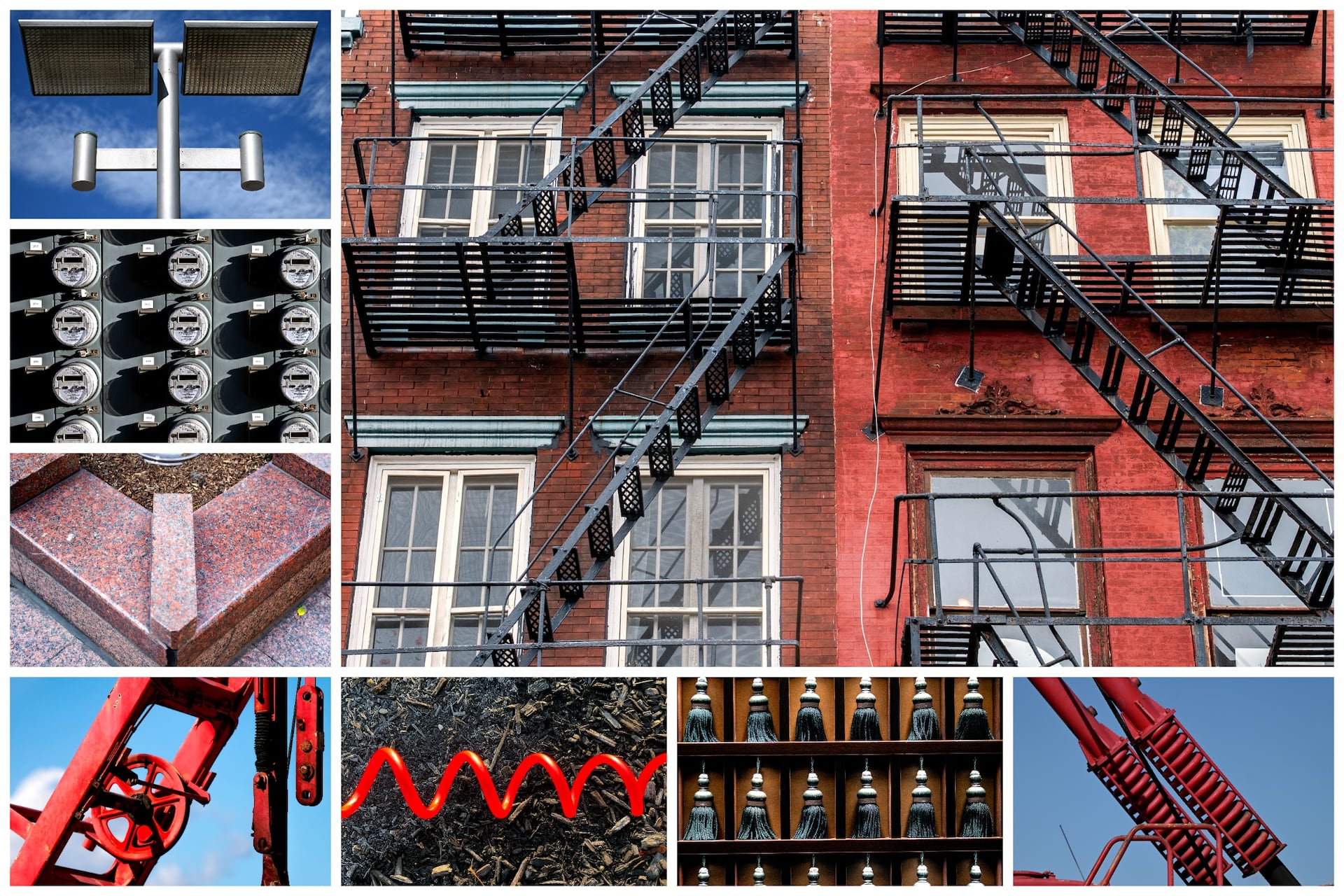
There’s something both liberating and ennobling about the idea that all of us are engaging with art as we go through the day — that anything in our path is art if looked at as such. And so Inquirer photographer Tom Gralish and I combed the city periodically over several weeks, looking at everyday objects through — literally — that lens.
What we found was art of staggering beauty, complexity, and invention. Unwitting art. Challenging art. Unlikely art. But art nonetheless.
On the Market Street Bridge, now closed and ripped up for restoration, we peered through construction fencing at what appeared to be a heavy-duty wire saw. The geometry of its variously sized wheels hanging on a frame created an aesthetic we’re sure Duchamp would have recognized as a kindred spirit.
Sometimes the visual echoes are almost literal, as in the shadowy silhouettes of stemware referencing a Man Ray rayograph, or a brightly painted hunk of utilitarian steel recalling Mark di Suvero.
Other encounters sit quietly waiting for you to make a connection, like the weave of leftover staples and paper shreds on a wooden bulletin board that now form a Jasper Johns-like texture.
Of course, an exercise like this wouldn’t be complete without a nod to Duchamp’s most notorious achievement. Fountain, from 1917, became a landmark of 20th century art — the ultimate statement that anything could be art, made ultimate by its absurdity.
Smooth, white, and simple, the piece bore a striking resemblance to an ordinary urinal. Because it was. The work was signed by Duchamp with the waggish pseudonym “R. Mutt.”
We found plenty of examples of the species in its natural habitat — no less powerful as pieces of art for being signed by Sloan or Kohler, whomever these artists may be.
“Marcel Duchamp” — organized by the Philadelphia Museum of Art and Museum of Modern Art in collaboration with the Centre Pompidou — runs at the PMA through Jan. 31. philamuseum.org. Philadelphia’s vast collection of art posing as everyday objects is on view in perpetuity.