A Black Philadelphia preacher made Shaker history. Her legacy is fueling a new generation of artists.
Mother Bethel AME Church barred Rebecca Cox Jackson from being a preacher. She left Philadelphia and preached across the country with a lifelong companion.
Rebecca Cox Jackson was often told no. As a free Black woman in Philadelphia at the start of the 1800s, she wasn’t allowed to learn to read. No, she couldn’t leave her husband. No, she couldn’t become a preacher like her brother at Mother Bethel African Methodist Episcopal Church.
Undeterred, Jackson accomplished everything she set out to do — and more.
A pivotal pioneer who founded the only Black-led Shaker community, Jackson became a spiritual leader whose legacy has far outlasted her wildest dreams. Today, some 150 years after her death, the Shaker preacher still draws passionate followers: artists, filmmakers, and dancers who have created work inspired by her trailblazing life and archived writings.
This summer that work took center stage at “A World in the Making: The Shakers,” on view at the Institute of Contemporary Art in West Philly. Running through Aug. 9, the show features several works reflecting specifically on Jackson’s life story as well as highlights of Shaker inventions and creations, like seed packets and minimalist wooden furniture.
(Shaker furniture is still widely sought, fetching exorbitant prices at auction, like one cabinet that sold for $262,500 in 2024).
Shakers have lately seen renewed pop culture interest, with contemporary artists reflecting on the small but impactful Christian sect founded in the 18th century (now only three active members remain). An offshoot of Quakers — initially called “Shaking Quakers” because dance and movement is central to their ecstatic worship — Shakers practice simple communal living, pacifism, celibacy, and gender and racial equality.
“Shakers are kind of everywhere — and we’re hardly the first institution to do a Shaker show — but I think this is a different show because we’ve inverted the emphasis to be on the contemporary contextualization of the Shakers,” said Johanna Burton, the director of ICA.
“All of these artists have independently talked about why it’s so important to them to revisit this material, because it’s about utopia … it’s a kind of flawed model of rethinking society that ultimately has its own conditions that have complications, and nothing’s perfect, but it’s inspirational to watch people do it.”
Revolutionary beliefs
The most prominent Shaker was Ann Lee, one of the founding leaders of the movement that began in mid-1700s England, about 50 years before Jackson was born. An early feminist, Lee believed in a dual nature of divinity that was both male and female, and later was convinced that she was a prophet representing the second coming of Christ, returning to Earth as a woman.
Lee was memorialized in the 2025 film, The Testament of Ann Lee, in which Allentown native Amanda Seyfried stars as the charismatic leader (she received a Golden Globe nomination for her riveting performance). It follows Lee’s spiritual awakening and her journey to Watervliet, N.Y., where her congregation built homes, furniture, and a following.
The idea that a woman could serve as a trusted link to divinity and hold the power of a preacher was revolutionary at the time; even more groundbreaking was the conviction that forsaking marriage for a life of celibacy was a means to get closer to God. At a time when women were only ever considered useful as a wife and mother, the belief that they should have control over their bodies was strikingly liberating.
For Jackson, that journey began with a fateful thunderstorm one night in 1830 when she was 35 years old.
“The cloud bursted, the heavens was clear and the mountains was gone,” Jackson wrote in her diary, according to Gifts of Power: The Writings of Rebecca Jackson, Black Visionary, Shaker Eldress. “My spirit was light, my heart was filled with love for God and all mankind, and the lightning which was a moment ago the messenger of death, was now the messenger of peace, joy and consolation. And I rose from my knees, ran down the stairs, opened the door to let the lighting in the house, for it was like sheets of glory to my soul.”
Motivated by her visions — like Lee — Jackson began preaching, going beyond the confines of Mother Bethel AME Church to lead private prayer groups and causing conflict in her neighborhood, modern-day Bella Vista. She left her husband in 1836 and a year later met Rebecca Perot, the woman who would become her life companion and devoted disciple.
After the church accused Jackson of heresy, she and Perot left Philadelphia to preach across Pennsylvania and New York, where they encountered a Shaker service that left them invigorated and inspired. Following years on the road, they eventually moved to the Shaker village in Watervliet, where Jackson felt deeply aligned with the group and soon adopted the title Mother Rebecca Cox Jackson.
By the mid-1800s, Shakers peaked at some 6,000 members in about 20 communities from Maine to Kentucky. But the primarily white village in New York remained rather isolated from the political chaos in other parts of the country as the Civil War neared. Jackson ultimately felt that they were not doing enough to reach Black followers so she and Perot returned to Philadelphia in the 1850s to create their own community.
The two were so close that fellow Shakers called them “the two Rebeccas.” Today, their relationship has been considered queer, even earning a place on the Philadelphia LGBT Mapping Project.
The pair founded a modest and mighty community of mostly working-class Black women Shakers, including seamstresses, housekeepers, laundresses, who lived and worshipped together at 724 S. Warnock St. (then known as 724 Erie St.).
When Jackson died in 1871, it was Perot who took up the title of Mother Rebecca so that she could continue their important work for decades to come.
Remembering a foremother
In The Testament of Ann Lee, the film hints at the Shaker belief in racial equality. In one instance Lee sees enslaved people on an auction block and shouts, “Shame! Shame! Shame!” Later, some Black women appear in the congregation, though their presence is largely unexplored.
There are no blockbuster movies about Jackson and Perot in development, but Black artists today are ensuring that contemporary conversations about the Shakers do not erase their impact.
As revolutionary as Lee was, Jackson, too, was a foremother for increasingly progressive ideas that still hold urgency hundreds of years later. She fostered a society of Black women in Philadelphia who exercised autonomy over their bodies while slavery remained legal and the Fugitive Slave Act was enforced nationwide.
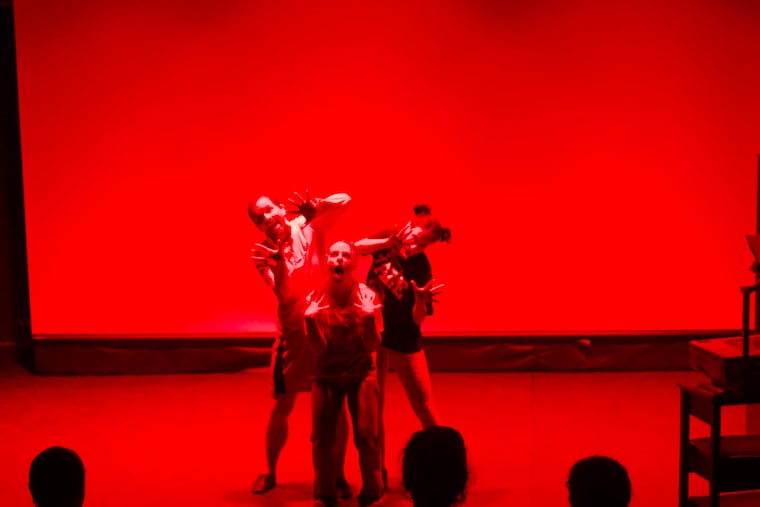
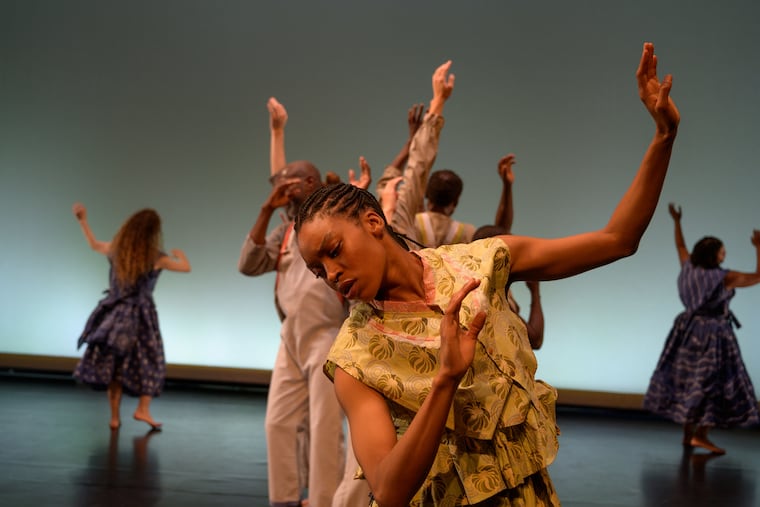
What did their worship look like? How did Jackson’s style of body movement differ from the Shakers in Watervliet? What African influences appeared in their ecstatic dance practices? Those are questions that dancer and choreographer Reggie Wilson has investigated with his Brooklyn-based company, Fist and Heel Performance Group, in recent years. A recording of their dance work POWER, which came to Philadelphia as part of the 2024 Fringe Festival, is on view at ICA.
“I never interpreted the Shakers as running away from their bodies. I felt like they were considering their bodies as sacred. To dance and to move, to go through as much work that they did to have dancing spaces … that’s kind of phenomenal, especially with the legacy of the West of degrading women [and] degrading the body,” said Wilson, who calls himself a “kinesthetic anthropologist.”
In developing the choreography for POWER, Wilson pulled from preserved records of Shaker movements and African traditions of call-and-response, where repetition and rhythm can provide a spiritual experience and lead some into a trance.
“When we started learning the dances and moving together rhythmically in choreographic architecture and patterns and time and space, it just felt good,” said Wilson. “Just the feeling of breathing and moving in unity with other bodies is profound. It’s deeply, deeply profound, sometimes to the point of tears for some members.”
Reaching that profound experience sounds remarkably similar to what Shakers sought to achieve.
“A World in the Making: The Shakers” ends Aug. 9 at the Institute of Contemporary Art, 118 S. 36th St., Phila., 215-898-5911 or icaphila.org.