ABC accuses Trump administration of threatening its broadcast licenses
The network’s response, made in a filing with the agency, contained ABC’s formal renewal applications and sets the stage for a showdown between the Trump administration and ABC over free speech, censo
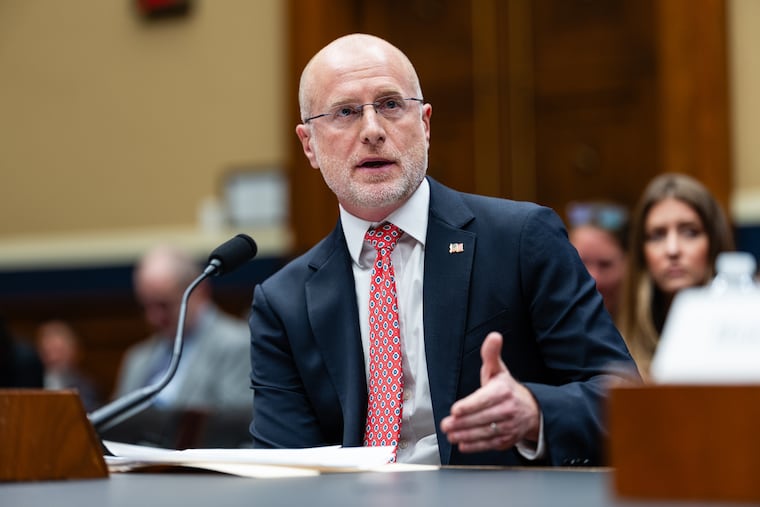
The ABC television network on Thursday issued a rigorous defense of its right to broadcast, accusing the Federal Communications Commission of threatening its station licenses as part of a campaign of “unconstitutional retaliation and coercion.”
Its accusation came in a formal response to a highly unusual move by the FCC in April ordering ABC to apply to renew its broadcasting licenses years before they are set to expire. The request from the agency raised the possibility that the Trump administration would seek to strip one of the nation’s original broadcasters of its television stations.
The network’s response, made in a filing with the agency, contained ABC’s formal renewal applications and sets the stage for a showdown between the Trump administration and ABC over free speech, censorship and political bias.
In its filing, the network said that it was submitting the applications under duress, and that the timing of the FCC’s demand “makes the retaliatory purpose unmistakable.” The order had come just after President Donald Trump and the first lady, Melania Trump, called for the firing of ABC late-night host Jimmy Kimmel over a joke he told about them in a monologue.
Brendan Carr, the FCC chair, has denied the connection. Rather, he said, the agency was acting out of concern that ABC was not fully cooperating with an FCC investigation into its diversity and inclusion policies.
In a statement late Thursday, Carr reiterated that stand, saying ABC was failing to take seriously the agency’s examination of allegations that ABC acted “in violation of federal nondiscrimination laws,” which ABC denies.
“The FCC will follow the facts and law wherever they may lead,” he said.
The filing was the second time this month that ABC, which is owned by The Walt Disney Co., accused the FCC of violating its free speech rights because of what it has called “speech the government does not like.” (The earlier accusation came in a standoff over a smaller regulatory matter involving political appearances on “The View.”) Trump has attacked the network for years, and even sued ABC in 2024. Disney paid $15 million to settle that lawsuit before Trump’s second inauguration.
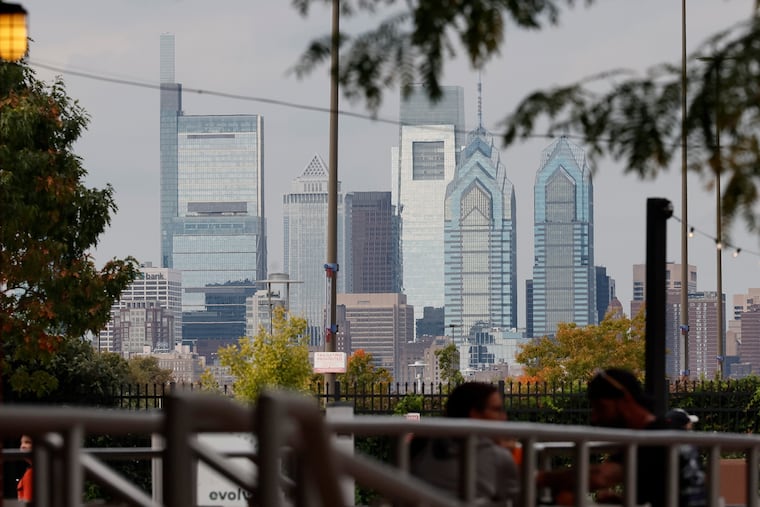
The filing Thursday focuses on the eight stations the network owns in major markets, including New York, Los Angeles and Philadelphia. (It provides programming to more than 240 other stations owned by others.)
The application starts the clock for a process that could culminate in a trial before an administrative law judge or a hearing before the full commission, which Carr controls.
It is exceedingly hard for the government to revoke station licenses under the law, and the process for trying to do so would most likely outlast Trump’s presidency. But a hearing could come much sooner, giving Trump and Carr, his lead attacker against the major networks, a high-profile venue at which to hurl accusations of bias against a presidential media bête noire.
In a public notice issued earlier Thursday, the agency emphasized the rights it has to enforce “public interest standards” for broadcast stations. The standards require stations to provide candidates running for the same political office equal time on non-news shows, to refrain from indecent content and to provide a certain amount of children’s programming each week.
Since assuming the FCC chairmanship at the start of Trump’s presidency, Carr has accused the networks of having a liberal bias that could by itself place them in violation of the public interest standards — raising hackles from free-speech advocates and, most recently, ABC itself.
But the FCC’s public notice asserted that the agency’s authority was a “supple instrument” that could be used to force compliance, and that it had flexibility in deciding when and how to apply its powers, including by calling on stations to apply for their licenses early.
In its filing, ABC noted that the FCC had not called for an early station renewal in more than 50 years and had never done so for an entire group of network-owned stations at once.
“This effort to suppress speech under the guise of bureaucratic process must not prevail,” the network wrote, calling on the agency to “rescind the order.”
In his statement Thursday, Carr said the FCC had ordered ABC to apply early for its licenses after the commission “informed the company that their responses to the agency’s investigation had been disingenuous, deficient and improper.”
But ABC said in its application package that it had supplied all requested documents, numbering in the thousands. It said no one at the agency had indicated that the FCC found its cooperation to be insufficient before the FCC issued its order.
(STORY CAN END HERE. OPTIONAL MATERIAL FOLLOWS.)
The FCC could grant renewals of ABC’s licenses. But if Carr decides against renewing them, he would have to hold a hearing on the issue either before the agency’s administrative law judge or before a gathering of the full commission, which currently has two Republicans — Carr and Olivia Trusty — and one Democrat, Anna Gomez.
Even then, ABC would be able to appeal up to the federal court circuit, opening an entirely new round of litigation. The process could take several years, and ABC would maintain its right to broadcast on its stations as it played out.
But the process would leave a cloud over the network’s future finances, as its stations are important revenue generators. Already, the network said, it was given an unusually short amount of time to draft applications for eight stations. It said that it had asked for a 60-day extension “to ensure a more orderly and thorough diligence process” but that the agency “denied the request without explanation.”
This article originally appeared in The New York Times.