Philly schools could get A/C and heat from geothermal energy, study says
If a geothermal system is installed, it could eventually serve as a template for how to plan other clean energy efforts. With tax credits, the cost could be less than traditional HVAC.
A new study shows it is possible to tap the earth for more efficient heating and cooling for two Philadelphia School District buildings at once, providing a potential path to cleaner energy.
If such a system is ever installed, it could serve as a template for other clean energy efforts.
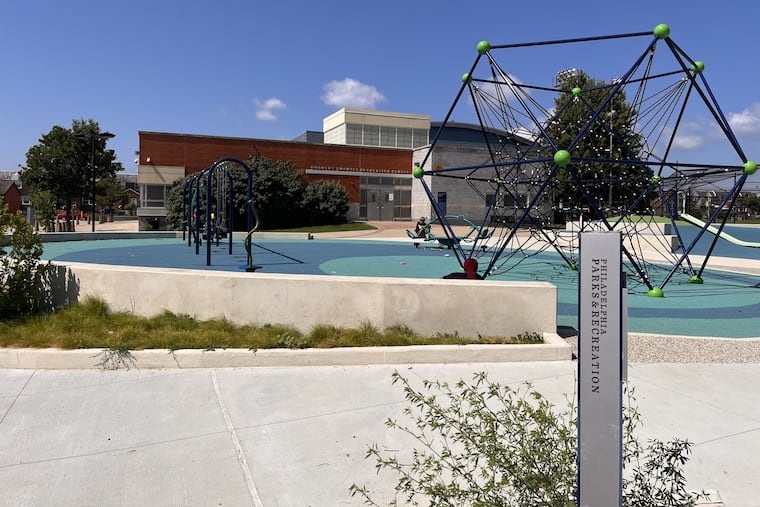
Philadelphia Gas Works set out last year out to examine whether it was technically possible to build a geothermal HVAC system that would serve both the John F. McCloskey Elementary School and the Dorothy Emanuel Recreation Center in East Mount Airy.
Findings were released on Wednesday.
The study estimated that a closed-loop geothermal system for these facilities would cost about $19 million. But that could drop to $11 million with federal tax credits.
With the tax credits, a geothermal system would be less expensive to install than a traditional HVAC system for the two properties.
Kensington High School for the Creative and Performing Arts, built in 2010, has geothermal heating and cooling. Although PGW supplies gas to the school, it was not involved with the geothermal system.
At McCloskey, PGW paid for the study and worked in collaboration with the school district and Philadelphia Parks and Recreation. PGW, which is owned by the city, is the largest municipally owned gas utility in the country.
“PGW is committed to helping the City of Philadelphia lead to a clean energy future,” said Elliot Gold, vice president of corporate planning at PGW.
The McCloskey school, which was built in the early 1950s, and Emanuel rec center are next to each other on the same roughly six-acre property with a combined 77,000 square feet of interior space. Though Philadelphia Parks and Recreation operates the rec center, it is on district property.
A closed-loop geothermal system is essentially a big heat pump that uses the constant underground temperature through buried pipes. A mixture of water and environmentally safe antifreeze is pumped through the loop, creating a large heat exchanger that can be used to heat and cool a building. The heat exchanger is set to either absorb or eject heat.
An ‘ideal partnership’
Victoria Flemming, executive director of the school district’s office of environmental management and services, said the study is a positive step that aligns with the district’s GreenFutures Plan.
The McCloskey school currently has an aging oil-based heating system and no central air-conditioning, she said.
“It is using heating oil, which has low energy efficiency and has a high impact to air quality,” Flemming said. “So I think those were the two things that made this kind of an ideal partnership.”
During periods of extreme heat, the school is forced to pivot to virtual learning and cancel student activities, she said.
The shared property between the school and rec center would give a geothermal project an even higher impact, she noted.
Less expensive than a traditional system
Bucks County-based Alderson Engineering conducted the study.
To install a geothermal system, conditions underground need the right combination of thermal conductivity and geology. Neal Babcock, a principal with Alderson Engineering, said the site meets those conditions.
Geothermal systems might be more expensive up front, he said, but in the long run are less expensive to operate and maintain.
Currently, geothermal systems are eligible for the federal Investment Tax Credit. The One Big Beautiful Bill Act of 2025 terminated credits for solar and wind projects but preserved credits for geothermal systems.
“Geothermal systems reduce the total energy consumption to heat and cool the building,” Babcock said. “Instead of burning fossil fuels like natural gas, they use the cool temperature of the ground to be less extreme than the air temperatures or needing to burn fossil fuels.”
Compressors for the geothermal system studied would be powered by electricity, not natural gas.
Environmental and advocacy groups have been critical of PGW’s reliance on natural gas, saying the utility needs to diversify its energy portfolio and reduce greenhouse gases that help heat the earth.
PGW said the study is part of its efforts to do that.
Will it ever get built?
The study was just a first step. There is no time frame to install such a system, nor is funding in place.
And it is unclear who would own the system. That is important because the tax credits would apply only to a single-owner system.
Gold, the PGW vice president, said that although some of the challenges might seem steep, the utility is serious about clean energy projects.
“We’ve completed the feasibility study, which is good news,” Gold said. “It tells us that this is favorable and that there are no definite technical showstoppers.”
He said the next steps include addressing who would own the system, the cost, and a timeline.
That timeline would likely include the tax credits for geothermal units, which are set to phase out in 2034 and 2035.
Who would pay for it?
The school district typically finances such projects through its capital spending plan for its 300 buildings.
If it owned the geothermal system and had to pay for it, that could mean balancing it against the needs of making fixes at other schools.
The district has said it wants to spend $3 billion on upgrading facilities but can pay for only $1 billion now.
For instance, conditions at Southwark Elementary in South Philly are so dire that kids are begging City Council and the district for fixes, such as working bathrooms and pest control. They are supposed to get them in 2032.
Teresa Fleming, the district’s chief operating officer, said the district is still evaluating the study and must consider the long term.
She said a program like geothermal has the potential to “yield energy savings and greater efficiencies throughout the district.”
Editor’s note: This story has been updated to change the date the findings were released.