Enforcement of Pa. Supreme Court ruling outlawing ‘skill games’ starts Wednesday
Gov. Josh Shapiro said state police had been "very clear that we’re going to enforce the law."
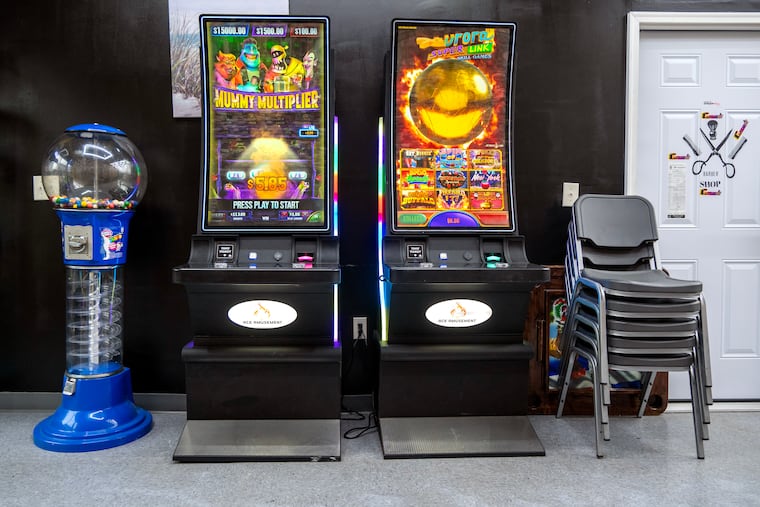
Unlicensed “skill games,” the slot machine-like devices commonly found in corner stores, bars, and other establishments around Pennsylvania, were set to become illegal Wednesday with the arrival of an enforcement deadline that allows for their seizure by state police.
The change comes following a Pennsylvania Supreme Court ruling in June that outlawed the devices, finding that they are slot machines under the state’s Gaming Act. A pause on the court’s order allowed a four-month window for compliance, as well as a chance for lawmakers to legalize, tax, and regulate the devices, though legislators have yet to act.
Now, bars, convenience stores, and fraternal organizations that host the machines are required to have them removed from their premises. Powering off, unplugging, or temporarily disabling the machines is “not sufficient,” and machines that remain on site could be seized, state police said in a statement last week.
Gov. Josh Shapiro, a Democrat seeking reelection in November, said Monday that state police have been alerting establishments that the so-called skill games were illegal gambling machines as of Wednesday.
“We’ve made very clear that we’re going to enforce the law, and that these machines will be illegal, and that the state police will carry out its responsibilities, not in a heavy-handed way, but in a respectful way in the community,” Shapiro said in a meeting with The Inquirer Editorial Board.
(The editorial board, which runs The Inquirer’s opinion pages and decides endorsements, operates independently from the newsroom. Newsroom editors and reporters have no role in endorsements, and opinion staffers have no role in news coverage.)
The issue is “occupying a lot of my time,” Shapiro added. Negotiations continue about how to regulate the machines — and what their tax revenue should fund. Shapiro and House Democrats maintain that the funding should go toward transit, while Senate Republicans have called for the money to be directed to the state’s General Fund, as Pennsylvania is set to spend more than the revenue it brings in this fiscal year.
Lawmakers left Harrisburg last week without taking action on skill games, and are slated to return next week before a recess that will last until after November’s midterm elections.
Authorities have been urging businesses that offer skill games to remove them. In a statement last month, Pennsylvania Attorney General Dave Sunday said officials did not “want to see searches and seizures at storefronts or bar, social club and restaurant establishments.”
“Collaborating with our law enforcement partners, my office will act in accordance with the law which prohibits these machines outside of licensed gaming facilities,” Sunday said. Casinos and truck-stop establishments licensed by the Pennsylvania Gaming Control Board can legally operate slot machines and video gaming terminals.
The devices rose in popularity in Pennsylvania over the last decade, growing to an estimated 70,000 machines statewide, according to the state attorney general’s office. Legalizing and taxing the machines could generate hundreds of millions of dollars in state revenue, The Inquirer has reported.
Staff writer Gillian McGoldrick contributed to this article.