Lower Merion asks court to deny parents’ ‘fearmongering’ request to opt out of computers
Seven families in the Montgomery County community have accused the district of forcing a “digital free-for-all” on students.
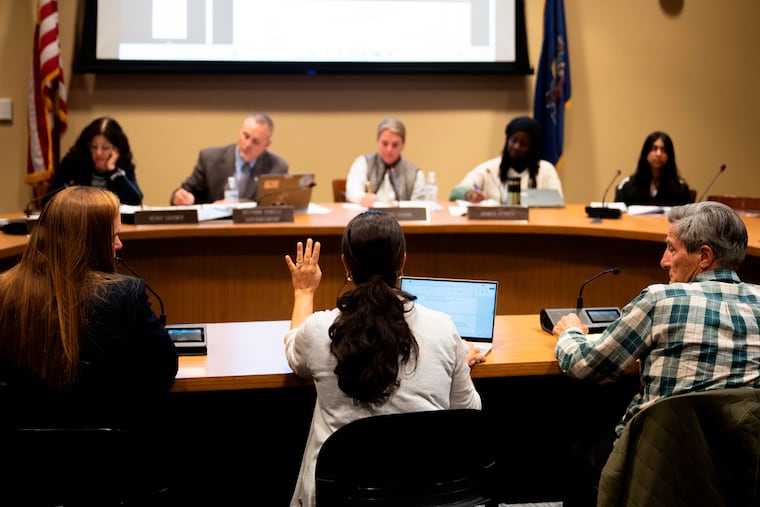
The Lower Merion School District has urged a federal judge to deny a request from parents to be allowed to opt their children out of school-assigned computers, accusing them of “fearmongering” about technology in schools and abusing the legal process to get their way.
In a filing in U.S. District Court, lawyers for the district and school board said seven families who sued the district last month were trying to force the district to align with their preferred approach to instruction.
“There is no constitutional right for a parent to choose which technology their child uses in a public school,” the district said in the Monday filing. It called the lawsuit “just the latest attempt by a small — but vocal — minority of the district community to pressure the duly-elected members of the board of school directors to kowtow to their peculiar views on technology in the classroom.”
The affluent Montgomery County district has been a focal point of a national battle around technology use in schools. Since the spring, Lower Merion parents have been raising concerns about how much their kids are on screens — from worries about kids gaming and accessing inappropriate content on their district-issued laptops, to complaints about the quality of the educational software programs used by the district and that fears that kids’ cognitive abilities are diminishing.
The district revised its technology policy last month, specifying that students in kindergarten through second grades would no longer be assigned individual electronic devices. It also implemented guidelines for screen time by grade level, and announced new tools for monitoring what kids are accessing on their laptops.
But the new policy didn’t include a provision that had previously existed, which specified that district officials would work to accommodate students whose parents didn’t consent to being issued electronic devices. Parents organized under a Pencils Over Pixels group had pleaded with the board not to eliminate that provision, which was repealed in June.
In their lawsuit filed last month — which one of the plaintiffs’ lawyers said he believed was the first of its kind — seven families accused the district of forcing a “digital free-for-all” on students, and violating their parental rights by requiring their children to use internet-connected computers to access their education without adequate safeguards.
They also filed a motion for a preliminary injunction, asking a judge to order the district to either allow them to opt their kids out of personal devices — or to pay for them to attend private schools. Three of the families who sued withdrew their kids from the district.
In its response Monday, the district said parents had mischaracterized its former policy. Families were never permitted to opt out of technology entirely, the district said. While the policy had said officials would make their “best efforts” to work with students whose families declined personal devices, they weren’t guaranteed specific accommodations, the district said.
The district accused parents of trying to force the school system to bend to their beliefs — and said the court would be setting a dangerous precedent if it sided with them.
“This court should decline plaintiffs’ invitation to convert the American public school educational system into a private school, whereby each parent has the right to hand-select each and every aspect of their child’s education,” the district said.
A debate around parents’ rights
In asking Judge John M. Younge to deny the families’ request for a preliminary injunction that would allow them to decline an internet-connected computer, the district said families hadn’t made their case on a number of grounds.
Six of the seven families don’t have standing to sue, the district said. It said four of the families did not have children enrolled in district schools at the time the new technology policy was adopted.
Two families, meanwhile, only had children in elementary schools, where they “would not have been eligible to receive a district-issued electronic device under the one-to-one electronic device initiative because they are not in 5th grade or above,” the district said.
While elementary school students in Lower Merion have had access to personal electronic devices, the district said that its one-to-one program was “never formally extended” to those grades. A district spokesperson did not immediately respond to a question Tuesday about how the iPads and Chromebooks previously assigned to elementary schoolers were not considered part of the one-to-one program.
Families also haven’t shown the district is permanently harming them, the district said. Although several of the families are now sending kids to private school or homeschooling, those decisions don’t constitute “irreparable harm” warranting a preliminary injunction, the district said. It noted that families could be compensated with money damages.
The district also said the harms of using computers alleged by the families were “vague and speculative.” In their lawsuit, families had described risks to physical and mental health, citing manipulative practices by technology companies, the dangers of AI chatbots, and warnings from the U.S. Surgeon General and FBI about youth social media use and groups targeting minors online.
While the district has revised its policies and placed more restrictions on what kids can access, Andrew Liddell, a lawyer for the parents, said in a recent interview that the changes “aren’t even the bare minimum of what the district should have been doing in the 20 years they’ve been giving internet-connected computers to children.”
Liddell, an Austin-based lawyer whose wife founded the EdTech Law Center, said he believed the lawsuit was the first that had been brought alleging school computers were violating parents’ constitutional rights. Lower Merion still isn’t adequately restricting screen time, he said, and is “putting more burden on parents” to monitor what kids are doing online.
While Lower Merion is a wealthy suburb, and some of the suing parents are doctors who can afford private school, Liddell said, “you have a right to a public education.”
The parents “just want our kids to be able to go back to school,” Liddell said.
In its response Monday, the district said parents don’t have the right to dictate what’s taught in public schools.
“At most, the district’s new technology policy (Board Policy 141) only incidentally interferes with a parent’s limited right to direct their child’s education,” the district said.
It also said that granting the parents’ request would cause a “logistical and financial hardship for the district,” requiring it “to develop a non-technological curriculum for each of plaintiffs’ children.”