Paying parents to become influencers and other priorities for Philly schools superintendent in 2026-27
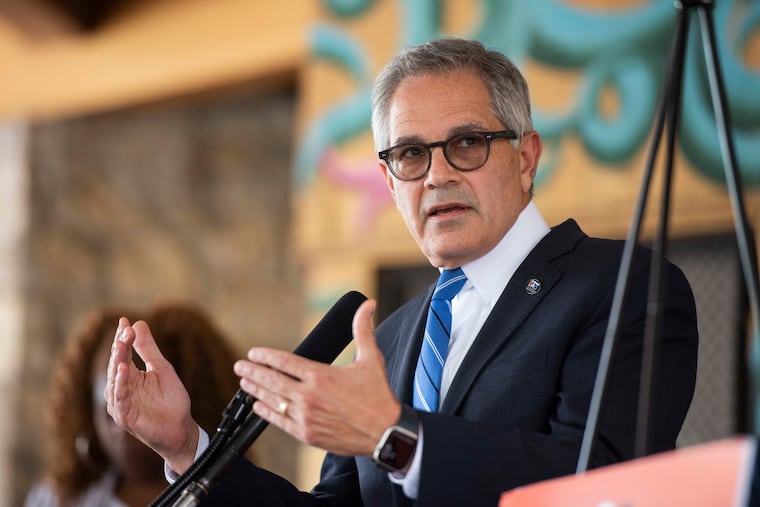
Superintendent Tony B. Watlington Sr. said the Philadelphia School District will begin paying some parent influencers to help improve schools, suggested PSSA scores may have gone down, and more.
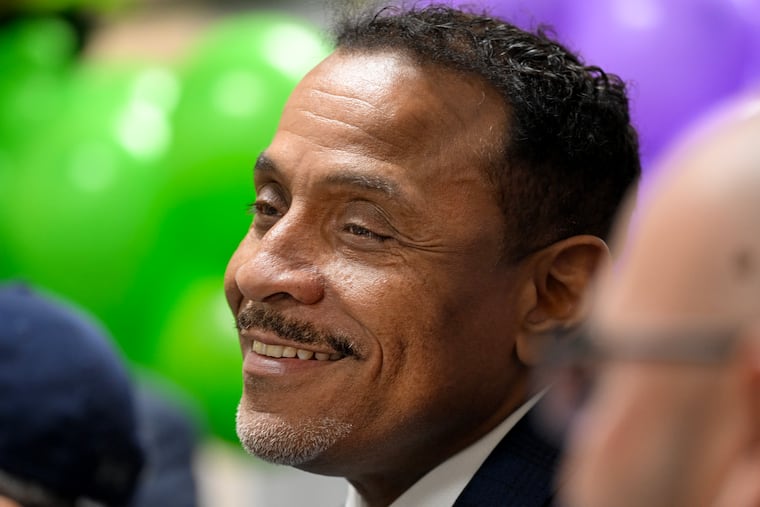
Philadelphia Superintendent Tony B. Watlington Sr. zigzagged the city Monday, visiting seven schools across the city to start the 2026-27 year.
The late-summer weather was perfect, sunny but not sweltering — an important factor in a school system laden with old buildings, where extreme heat sometimes means about a quarter of the district’s 113,000-plus students cannot learn in person or at all,
Watlington is hoping that the back-to-school weather was an omen.
“The way we start is going to be the way that we roll, and the way we finished last year,” the superintendent said. “We started off really well.”
» READ MORE: Philly students head back to school
Watlington sat down with The Inquirer on Tuesday to preview the 2026-27 school year. Here are five things to know from the conversation.
Priorities for this school year
Three priorities will drive his administration this year, Watlington said: academics, customer service, and family engagement.
Though new data are not yet available, Watlington is leaning hard on a study released earlier this year that found Philadelphia School District students’ post-pandemic learning is tops among large urban school systems, according to research out of Harvard and Stanford Universities.
“We want people to stop and digest that for a moment,” Watlington said. “Because people will say, ‘Well, are the scores still too low?’ I’d say absolutely, yes, we’ve got a lot of work to do and it’s not acceptable that two out of three kids don’t read or perform on grade level in math, but we’re getting better faster than the 25 largest school districts, and that’s our goal to be the fastest-improving, so we’re well on our way,” Watlington said.
“We believe it’s important for us to work with parents as equal partners because they are our children’s first teachers, and when we support our parents and families, our kids just do better in school,” he said.
Some parents will be paid to help schools improve
Watlington said this is the year the district will begin paying some parents to help schools reach their goals. He announced a plan to do so in 2023, when he first laid out his strategic plan, but this year it is finally happening.
The Parent and Community Ambassador Program will provide small stipends to “key community members and parents who just have a level of influence and cachet that no teacher, principal, counselor, police officer, or superintendent has in communities,” Watlington said. “If we can figure out how to connect with some of these key community folks, it will do nothing but help us to improve student attendance in schools where there may be some tensions or poor communication between families and school staff.”
The aim, the superintendent said, is to address issues like homework completion, or family cooperation with key school initiatives.
“We think that’s a pioneering effort,” Watlington said. “Families first in 2026-2027.”
The program will begin as a pilot in a limited number of schools. Watlington did not provide details about how much ambassadors will be paid or how many schools will participate initially. He said details will be released soon.
About those PSSA and Keystone scores
There has been significant speculation around the release of state test scores. Pennsylvania released preliminary data to districts in the late spring, as it typically does, but Philadelphia has shared only limited student PSSA scores with select staff. Most Philly principals and teachers have not seen the scores, though other districts and schools have not withheld the data.
The Pennsylvania Department of Education notified districts last week that statewide results, typically available to districts in late August or early September, would be delayed, though the release of the data to parents and the public does not typically happen until the fall.
Philadelphia officials then suggested the state holdup was the reason for their own delay.
Watlington said Tuesday that “we’re just going to wait for the official, verified data to come to us. We’re not trying to hide anything, but we need to get the verified data.”
The superintendent suggested, however, that both statewide glitches in the administration of the test on the first day of PSSAs and the shift to online administration of exams, which research links to decline in student scores, will show an effect when the scores are finally made public.
“My hunch is that, at the end of the day, online testing will have had some impact, but I don’t want to speculate on that across the Commonwealth of Pennsylvania,” Watlington said. “When the state verifies the data, we’ll release it immediately.”
Some students were unable to access tests for up to 40 minutes on the first day PSSAs were administered.
“All things being equal, I personally would like to be able to do over every single first-day test,” Watlington said. “That’s not really financially or time practical, but in an ideal world that would be my, my superintendent’s wish.”
School selection’s still up in the air
The district’s much-watched school selection process will open this year on Sept. 8 and close on Oct. 30. Watlington said its details are still being worked out, given the state score wrinkle.
Students who wish to gain admission to the system’s 37 criteria-based schools typically submit PSSA scores for consideration. Last week, district officials said they would not use PSSAs for school selection.
Watlington said Tuesday that his team was “currently reviewing a number of options about how to handle the fact that we won’t have 2025-26 data in time for our school selection process. So we’re reviewing all of our options. I believe there was a thinking initially that we’d have students who have access to some special test — the Terra Nova, etc. We’ve not finalized a decision there yet, so we don’t want to get ahead of our skis just yet.”
District size, and winning back kids to Philadelphia schools
When Watlington talks about Philadelphia being one of the 10 largest school systems in the U.S., he is counting children enrolled in both traditional district schools and charters — all of which are supported by taxpayer dollars.
Counted together, last year, the district had 113,735 students, and charters enrolled 64,469.
The district’s enrollment grew for the first time in a decade in 2024-25, inching up by a little fewer than 2,000 students. It then lost 794 students last year, which Watlington attributes to a SEPTA strike at the beginning of the school year that caused a pronounced drop in student attendance and, he believes, caused some families to disenroll children from district schools.
“It’s too soon to know exactly where our numbers will shake out, but my expectation and hope would be that we maintain the similar enrollment to last year,” Watlington said. “I expect this school district to grow over time, though.”
Why? Watlington touted Masterman’s recent ranking by U.S. News & World Report as the nation’s No. 3 public high school in the country and the district’s academic gains.
“We just need to tell that story,” Watlington said, “and go out and market ourselves to parents.”