Move over, boba. A new wave of Chinese beverage brands is taking over Philly’s Chinatown.
A slow wave of new Chinese beverage brands has been sweeping through Chinatown.
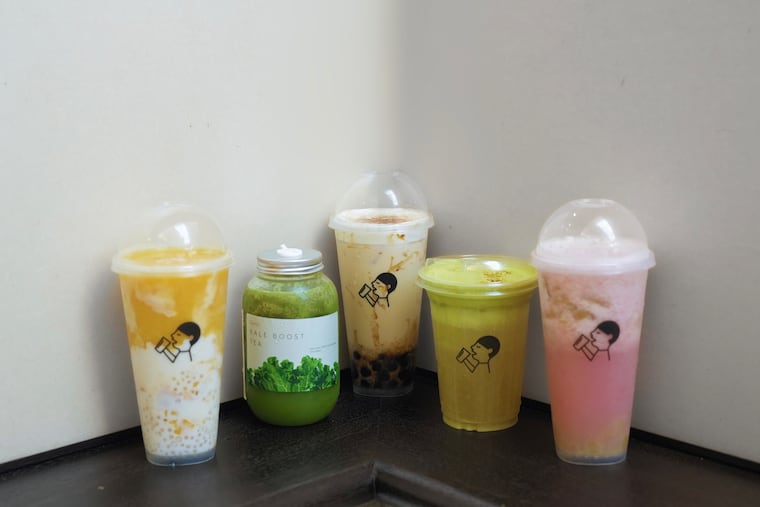
You may not have noticed it, unless you’re a teenager, a college student from China, or a Chinatown resident, but a slow wave has been sweeping through the storefronts of Philly’s Chinatown. There have been many openings in the past year that tap into both global food trends and scarcities in our local food scene that are changing the fabric of Chinatown.
The splashiest opening has been at the corner of 10th and Arch Streets, adjacent to the Chinatown Friendship Arch, where heytea opened its first Philly store. They’ve had to assign bouncers to monitor the line that has snaked back and forth down the block. Heytea, which was founded in Guangdong in 2012 and is headquartered in Shenzhen, China, operates more than 4,000 stores worldwide.
It took 90 minutes to obtain one of their King Jasmine Guava tea beverages ($7.99) last week, during a thunderstorm that did not deter people from waiting in long lines to order. This is not unusual for the brand. According to heytea’s press representative, Yinnan Shen, when the chain opened its Upper West Side store in New York, a few weeks prior to Philly’s location opening, “more than 600 people were in line, stretching nearly three city blocks.”
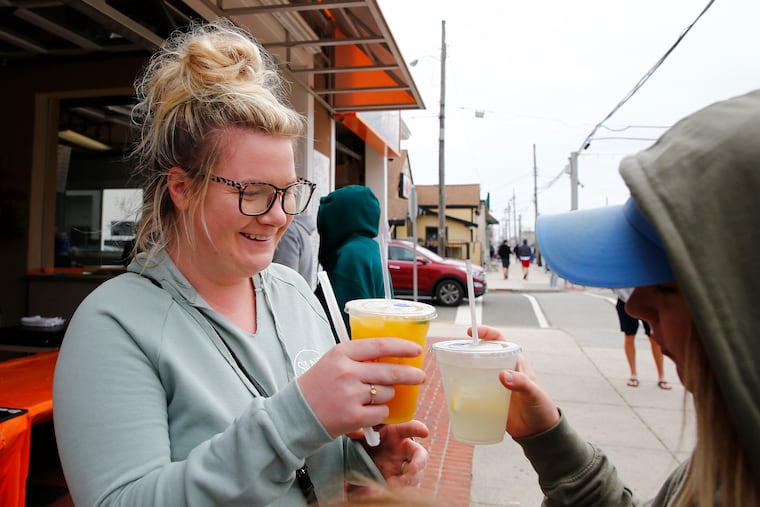
Heytea thus comes with its own built-in tailgate, populated in recent weeks by the tea company’s super fans (many of them teenagers), curious onlookers, and those lured by buy-one-get-one-free opening bargains. It seems to have found a sizable market for what it calls “new-style” tea, most of which pairs brewed, chilled Chinese tea (like oolong), mixed with fresh fruit.
Heytea is just one of a slew of new Chinese beverage chains hitting Philly. Other markets have been whipped into a frenzy by these exports. But this wave has been relatively slow to reach Philly. For years, shops selling boba, or bubble tea, many of them franchises originating in Taiwan, have been plugging along in a relatively stagnant scene. But boba is waning. Chinese coffee, brewed iced tea , and yogurt drinks — all served cold — are on the rise.
Taiwanese chain Vivi Bubble Tea (100 stores in 13 countries) opened in Philly’s Chinatown in 2015. The first Philly Chinatown Kung Fu Tea opened in 2016, and the first Mr. Wish franchise opened in 2017. And the first Teazzi Tea Shop, a few steps away from heytea on Arch Street, opened in 2023.
Chinatown is home to many other now-familiar outposts of relatively smaller tea-focused chains, like the Chinese Tsaocaa and the Taiwanese Gong Cha, Chi Cha San Chen, and Tiger Sugar. Each of these brands have between 80 and 300 stores worldwide. In contrast with heytea, these chains are minuscule.
Non-Asian cafes may have just discovered matcha and ube (Filipino purple yam) to the point where both are now constantly seeing global shortages, but these flavors are generally a footnote on new beverage shops’ menus.
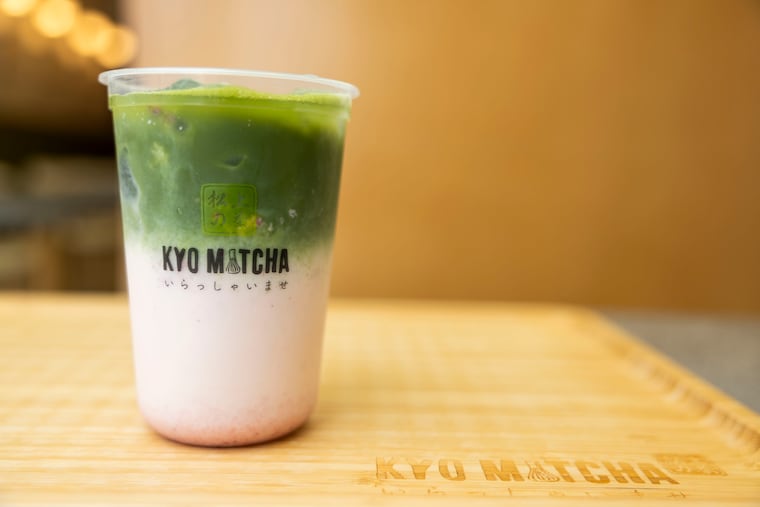
An exception to this is Kyo Matcha, which opened last month, also to dizzyingly long lines. At Kyo Matcha, matcha is, of course, the star, and ube plays second fiddle, appearing in both the shop’s desserts and beverages. It’s owned and operated by two young couples, originally from mainland China. When asked why they didn’t open their own, unique concept, one of the owners, Danya Li, said “Starting a brand from scratch is so hard.”
People aren’t really opening independent, uniquely branded shops in Chinatown these days, with the exception of Super Bao & Cake Girl, which took over KC’s Pastries, and Hen Ji Hou Wei Xuan Cheung Fun, which serves gossamer rice paper rolls and hearty bowls of congee.
The rest of the significant openings in Chinatown in the last year have all been franchises, from Yin Ji Rice Roll to Beard Papa’s to Hey I Am Yogost.
And we’re probably going to see a lot more of them, especially as they spread through other Chinatowns in the tristate area.
Luckin Coffee, China’s largest coffee brand, debuted in Manhattan just over a year ago. It now has 25 locations in New York City alone and 36,310 stores worldwide. The brand is so huge that earlier this year, it acquired Blue Bottle. There isn’t a Luckin location in Philly yet, but it’s only a matter of time.
Luckin, along with fellow massive Chinese coffee chains Cotti (over 18,000 locations worldwide) and Mixue (almost 60,000 locations worldwide) have ingrained themselves into all of New York’s Chinatowns. All of them opened in New York in 2025. They are different in concept from quick service Taiwanese boba chains and cafes that promote lingering (like Starbucks). They prioritize scale, reaching as many people as possible.
Having chains move into Chinatown is a double-edged sword. It is invigorating a neighborhood barely saved from arena-related destruction, which now teems with crowds of young people, lining up for wholesome beverages.
But in Manhattan, these chains have also been pricing out other businesses. It started years ago, with boba chains — it has even been referred to as the “bobafication of Chinatown.” Boba chains were the first to supplant not only immigrant-owned restaurants, but housewares shops, pharmacies, salons, and other businesses.
Grace Young, an advocate for Chinatowns nationwide, asked on Instagram, “At this rate, will Chinatown become Bubble Tea Town?” In the last year, “Bubble Tea Town” has evolved into “Chinese coffee and tea town.”
Philly’s Chinatown has also experienced this unique form of gentrification; it has just, until now, been slower.
All over Philly, the cafe scene is going through seismic shifts, largely bolstered by chains. Rittenhouse’s location of Blank Street, the New York-based chain that sells coffee and matcha, opened yesterday, to lines as dramatically long as heytea’s.
Haraz Coffee Shop is soon to open its third location in Philly, adding to the wave of Yemeni coffee shops making its own wide sweep through Philly.
We’re seeing more international outposts devoted coffee in various Philly neighborhoods, so that now Philadelphians have more options than ever, whether we’re looking for a Korean cafe or new wave Vietnamese coffee.
But no neighborhood other than Chinatown has been subject, at the hands of cafe chains, to such a condensed, rapid rate of change. Their influx means Chinatown will see fewer independent businesses and consume more from multinational conglomerates.
But it does make a younger generation, attuned to tea trends, happy. Like all forms of gentrification, it serves some communities while displacing other ones.
Inquirer Food Festival
Get your ticket to Philly’s ultimate food party! Join top Philly chefs and bakers for one unforgettable day of food.