How to get paid for providing home care services in Philadelphia while vacationing in Jamaica
Electronic visit verification systems were designed to guard against fraud, but are easily evaded, as shown in Philadelphia criminal cases filed last week.
A federal law passed in 2020 required state Medicaid programs to implement electronic verification systems to verify that personal-care services were actually being delivered where they were expected.
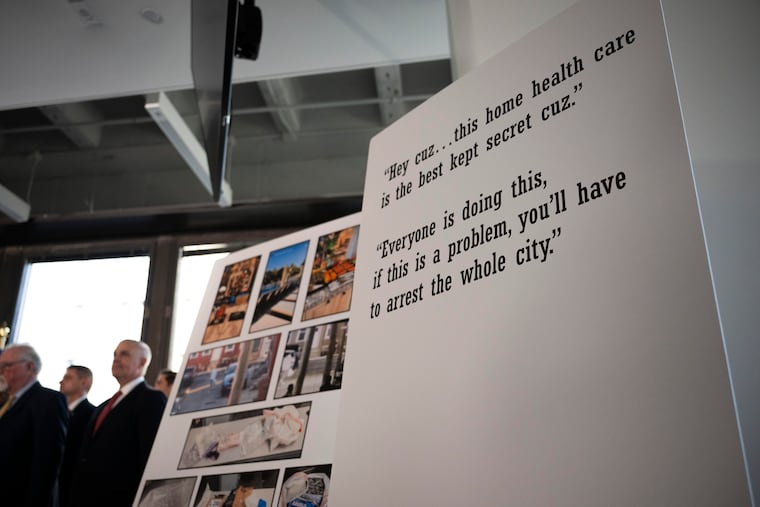
The systems were adopted to prevent the sort of fraud unveiled this week in Philadelphia by federal and state prosecutors, who charged 18 people for allegedly billing Medicaid while they were in prison, working at one of the city’s sports stadiums, relaxing on a cruise, or vacationing in Jamaica.
Why don’t the electronic visit verification (EVV) systems work better?
“It’s tough to verify that the services are actually being rendered,” David Metcalf, the top federal prosecutor in Philadelphia, said Tuesday. “The caregiver or the client behind closed doors simply can tap a button on their smartphone app or call in, and that record doesn’t actually establish that the person was actually there.”
If location services on the smartphone are turned off, the system does not register where the caregiver is, Metcalf said. When a caregiver calls to check in or out of a shift, the system does not pick up where the caregiver is but, rather, where the phone is registered, he said.
“EVV was not sufficient to prevent people from scheming the system,” Metcalf said.
Federal officials from the Department of Justice and the Department of Health and Human Services did not discuss how the system might be improved. But T. March Bell, inspector general for the health and human services agency, said after Tuesday’s news conference that some states have adopted stricter controls.
The Pennsylvania Medicaid program requires caregivers to submit a location as part of visit verification, but it does not limit services to the client’s home because they sometimes happen elsewhere in the community, according to the Pennsylvania Department of Human Services.
If the human services department suspects fraud, it refers the matter to the state attorney general’s Medicaid fraud-control section, the agency said.
National anti-fraud efforts
The showing of federal officials in Philadelphia on Tuesday was part of a nationwide effort by the administration of President Donald Trump to root out healthcare fraud.
In May, the administration implemented a temporary moratorium on the enrollment of new home care and hospice companies into Medicare, the federal insurance program for people 65 and up.
Pennsylvania followed with its own six-month moratorium on enrolling new hospice companies in Medicaid, which is jointly funded by state and federal taxes, “after reviewing the risk levels of Medicaid hospice services in Pennsylvania,” state human services officials said in an email Friday.
Kimberly Brandt, deputy administrator and chief operating officer at the U.S. Department of Health and Human Services, on Tuesday encouraged Pennsylvania to follow through on home care and “take the action needed to protect beneficiaries and taxpayer dollars.”
Pennsylvania said it is still determining whether a temporary moratorium on home health providers is needed.