Wonderfully welcome Jane
The Public Broadcasting Service, long affected by an advanced case of Anglophilia, this evening goes full fem. This is a most excellent turn of events.
The Public Broadcasting Service, long affected by an advanced case of Anglophilia, this evening goes full fem.
This is a most excellent turn of events.
Masterpiece Theatre debuts a season of sheer-muslin delight with televised treatments of all six Jane Austen novels, plus a biopic. The programs are introduced by the first female host in the British showcase's 37-year history, Gillian Anderson, so haunting as Lady Dedlock in 2006's Bleak House.
It is already the year of the woman, or more precisely the PBS Sundays of 19th-century women, an empire-waist antidote to the day's domination of shoulder-padded men. Masterpiece just aired Jane Eyre, the 20th interpretation according to Internet Movie Database, which is perhaps more brooding in dank gothic manors than can be good for anyone.
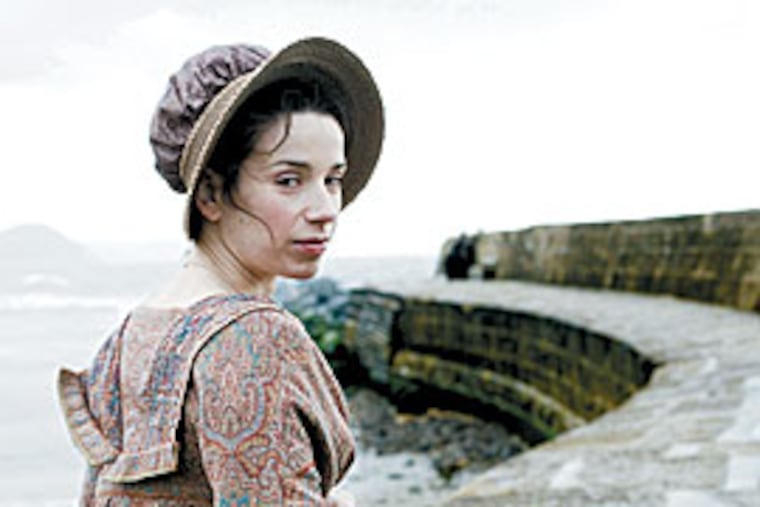
Four Austen novels are treated to lavish new productions, beginning with tonight's Persuasion, Austen's last finished work. "A weak spirit which is always open to persuasion, first one way and then another, can never be relied upon," says Captain Wentworth, announcing that an ideal wife possesses "firmness of character, a woman who knows her own mind."
The 90-minute broadcast stars an excellent Sally Hawkins as Anne Elliot, the most solitary and oldest of Austen heroines. Rupert Penry-Jones is her Wentworth, an actor whose name, looks (Beckhamish, without the pecs and peroxide) and performance are more than up to the task. The festivities end with perhaps the longest, most hesitant uptilting kiss in memory.
The Janefest Emma is a rebroadcast of the 1996 BBC version with Kate Beckinsale, fortunately in that some of us never fully recovered from the Gwyneth Paltrow movie of the same year. Emma Woodhouse is many things - handsome, clever and rich - but Malibu blond is not one of them.
Masterpiece's Pride and Prejudice, devout Janeites will be delighted to learn, is the definitive 1995 BBC broadcast starring fetching Jennifer Ehle and Pemberley pond-plunging Colin Firth, the Darcy to end all Darcys.
Once one has Ehled and Firthed, it is unnecessary to search elsewhere.
The problem with loving Jane, a woman who lived a quiet existence in the Hampshire countryside and viewed Bath as the wicked city, is sharing her with so many. A romance with Austen, as with Vermeer, resides in the very intimacy of such pleasure.
That Austen got so big is her due, but it doesn't make the industry easier to embrace. The PBS preview arrived with an Austen action figure. The irony is welcome; the plastic, less so.
The grand irony of Austen's work is the cinematic quality of her writing, vivid characters, exquisite script-ready dialogue flush with coruscating wit, all confined to a highly photogenic Eden of the world.
P&P and S&S (Pride and Prejudice, Sense and Sensibility) have been the most favored by the screen because they offer two heroines, multiple heroes, a rake (every Austen requires a rake), and, in P&P, an all-you-can-eat buffet of comic characters for overactors.
Two-thirds of the Masterpiece Austen season was penned by Andrew Davies - Northanger Abbey, Sense and Sensibility, Emma, and Pride and Prejudice. The alarmingly prolific Davies appears to have been hired to script the entire British canon: the coming Brideshead Revisited theatrical feature, signed to Middlemarch, and author of A Room With a View, airing on Masterpiece this spring.
Northanger Abbey airs next week, with gothic novel-addicted Catherine Morland the perfect complement to Persuasion's internalized Anne. Northanger is Austen's first work, and features a 17-year-old protagonist suffering the effects of an overactive imagination.
The PBS ending is truncated, the character of General Tilney given short shrift (as is the estate of the title) but actors Felicity Jones and JJ Feild are wonderful in the leads, as is Carey Mulligan as feckless flirt Isabella Thorpe.
Mansfield Park fares less well, mostly in the mistaken casting of British tabloid staple Billie Piper as Fanny Price. With tousled hair and Bardot lips, Piper is too ripe to play an innocent country maiden.
Previews weren't available for the new Sense and Sensibility, though a version without the divine Kate Winslet and Alan Rickman is painful to contemplate.
Miss Austen Regrets, the Austen biopic, conjures unwanted comparisons to Cole Porter's Miss Otis Regrets, his tarnished subject a far cry from noble Jane Austen. Another turn at Austen's restrained life, after last year's Becoming Jane, seems a folly given that her days were consumed by family and writing, and few letters or images survive. That Sunday in February surely won't culminate in typical Austen fashion, with a wedding, a proposal, a sumptuous bouquet of joy, as dear Jane never married though she left us all so much love.