How is Opera Philadelphia adapting Tennessee Williams’ ‘Suddenly Last Summer,’ a play about madness, sexual violence, and cannibalism?
The tale that’s both retrogressive and prescient may well be a Rorschach test for our times. “I didn’t have a template for this. And that’s why it opened up things creatively,” said its composer.
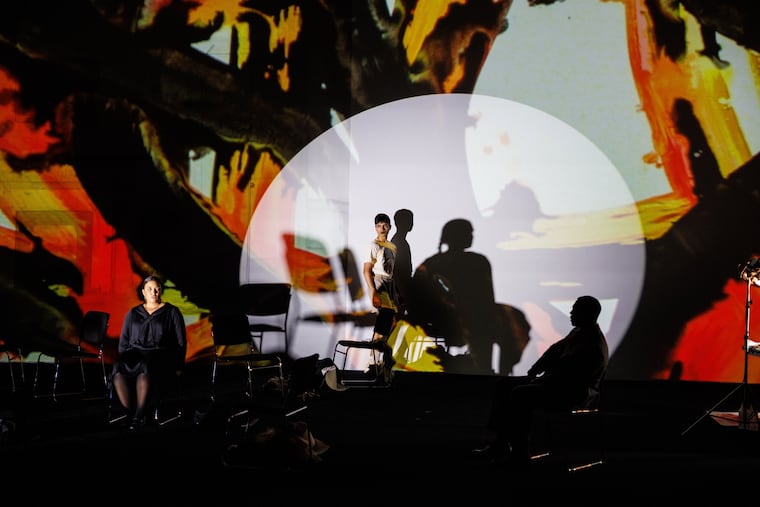
Suddenly Last Summer — the Tennessee Williams play lauded for its dark poetic writing but marginalized by grisly subject matter — is reentering the mainstream as an opera, but one that could never be typical.
Composed by Courtney Bryan and adapted by director Daniel Fish, the Opera Philadelphia production arrives Oct. 22, 23, 25 at the Forrest Theatre with a tale of entitled predatory sex that’s hushed-up in ways both retrogressive and prescient.
It comes from a time when abuse wasn’t discussed under any circumstances but peers into an era that refuses to ignore it.
“Who would believe her, Doctor?” exclaims the rich, dignified, aging Violet Venable, disputing an eyewitness account of her socialite son Sebastian being killed by a mob of boys he had abused while on vacation in Spain.
It’s 1958, and Mrs. Venable dismisses such talk as “babble.”
Not a plot spoiler but a fasten-your-seat-belts advisory, Suddenly Last Summer is about silencing the truth through a proposed lobotomy — plus furthering gay stereotypes as abusers — all amid the veneer of New Orleans gentility. Characters are dressed for 5 p.m. cocktails, masking power dynamics to come.
Playwright Williams (1911-1983) had a taste for the gothic, but was deeply troubled by his own sister’s lobotomy and faced all the trauma that came with living as a homosexual celebrity in the 1950s.
But, how to frame this in 2026?
“In the time Tennessee Williams was writing this, you were not allowed to show anything remotely positive about being gay onstage. You could get arrested. They would padlock the theater,” said Anthony Roth Costanzo, president and general director of Opera Philadelphia. “I think he was trying to write a piece about being silenced.”
Very tough stuff — though successfully premiered at Bard (College) Summerscape 2026.
Is the Philadelphia crew troubled by living with a scenario that, by the way, also includes cannibalism?
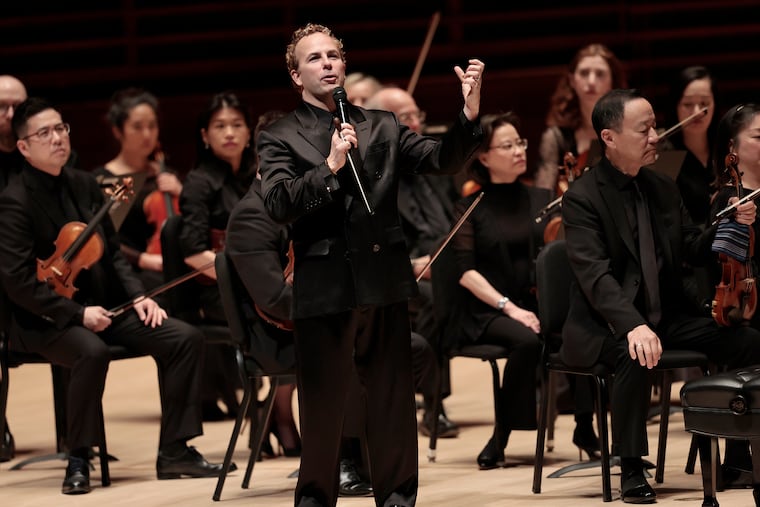
“Not yet,” reports conductor Nathan Koci. “It’s a different flavor of shock … definitely an opera and a play simultaneously. The music doesn’t start with a grand overture.”
And, musically, the characters emerge gradually.
As adapted by Fish and Gideon Lester, the piece is a hybrid. The instrumental score is nearly pervasive and has an insinuating presence with underscoring that tells much about characters, whether or not they’re singing. The orderly, intractable Mrs. Venable is surrounded by a tone row that hails from a strict compositional system, fashioned to her controlling temperament, according to composer Bryan.
Catherine — Sebastian’s cousin, who witnesses his death — has vocal lines not without high notes, but the music don’t doesn’t aim for operatic hysteria or the kind of high-pitch Oscar-baiting portrayals by Katharine Hepburn and Elizabeth Taylor in the 1959 Suddenly Last Summer film.
Catherine (played by Mikaela Bennett) is given a truth serum — likely to be Sodium Pentothal — with a tranquilizing, trancelike effect on her already fragile psyche; she has already survived a a date rape.
“While some characters talk themselves in circles, only one character [Catherine] is able to sing her truth,” explained Costanzo in his program note. Musically, the drug renders her words less-than-intelligible at first, later they become elongated, but eventually have a laserlike focus.
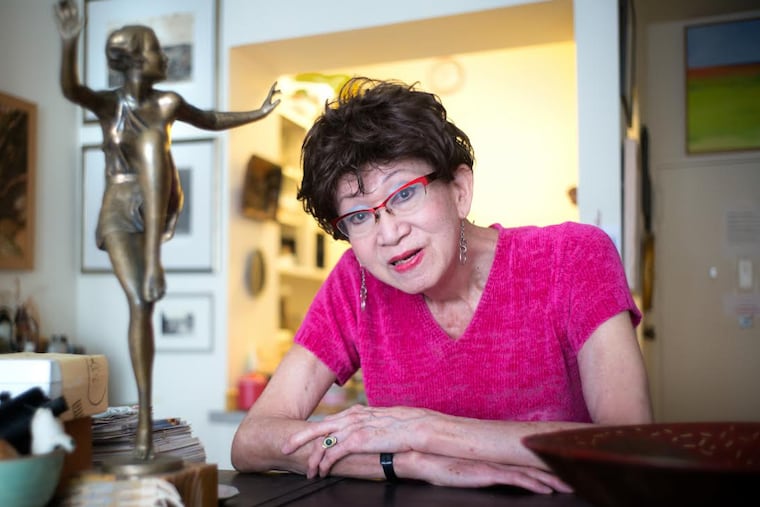
“I didn’t have a template for this. And that’s why it opened up things creatively,” said the New Orleans-born Bryan, now in her mid-40s, having received a MacArthur Fellowship and been the resident composer at Opera Philadelphia 2022-2024.
“Each character has so many complexities … I could almost hear the music right away,” she said.
Bryan came to Suddenly Last Summer with a backlog of improvised vocal line to draw on, but for greater authenticity, retreated to familiar ground that, in her case, was Gulfport, Miss. She needed to be near water. Having grown up with the expressivity of gospel-music, she took to improvising more vocal lines, choosing what suited the dramatic temperature of any given scene.
She also re-experienced her native New Orleans through the lens of Williams, who wrote poetically about the climate’s languid rainy afternoons in houses built for the heat.
Over multiple workshops, Bryan collaborated directly with soprano Bennett (no stranger to complex roles in musical theater and modern opera) by creating chord progressions over which Bennett spoke and sang the Williams text, drawing on that to write the finished version. Bennett was well primed by director Fish to keep her acting style authentic, cautioning her not to frame or even portray the character in any traditional ways, but to exist in it, moment by moment.
“Give them permission to take away what they want,” said Bennett. “My job as Catherine is to relay the information … I’m just a messenger, singing the text in a way that’s honest and truthful and not biased. Never tell the audience what to think or feel.”
At one point in the play, Catherine recalls, “Cousin Sebastian said he was famished for blonds, he was fed up with the dark ones and was famished for blonds … that’s how he talked about people, as if they were — items on a menu.”
The idea is to let the words speak for themselves. And they do.
Two phantoms haunt the play and this operatic production. One is another actress named Taylor — Laurette Taylor — who starred in Williams’ first hit play The Glass Menagerie, and brought a more low-key, naturalistic kind of acting to the character of Amanda, in what became one of Broadway’s legendary performances.
The other is “Black Jack” Bouvier, the well-known Wall Street socialite, dapper-on-the-outside, troubled by numerous vices on the inside — not necessarily a model for Williams’ Sebastian, but what some commentators have recognized as a possible point of reference.
Near the end, he was too drunk to participate in the 1953 wedding of his daughter Jacqueline to John F. Kennedy. In the spirit of Mrs. Veneble, he was hauled off in an ambulance to save face and died the year Williams wrote Suddenly Last Summer.
Williams eventually created a piece that seems to gain its power from unanswered questions. Did Catherine’s truth serum reveal the truth? (Some of the Opera Philadelphia crew members wonder about that). How could Mrs. Venable and Catherine have such radically different views of Sebastian? Is it denial? Delusion?
Might these questions be a Rorschach test for our times?
“Suddenly Last Summer” plays 7 p.m. Oct. 22, 8 p.m. Oct. 23, 2 p.m. Oct. 25 at the Forrest Theater. Tickets: $11-250. Information: 215-732-8400 or www.operaphila.org.