EPA expected to erase limits on climate pollution from power plants
The Trump administration plans to announce Monday that the United States will no longer limit the planet-warming pollution that power plants pump into the air.
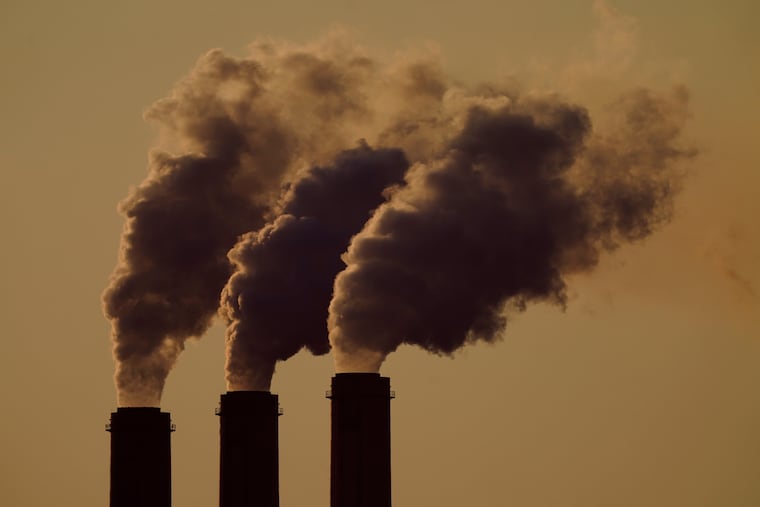
The Trump administration plans to announce Monday that the United States will no longer limit the planet-warming pollution that power plants pump into the air while burning coal and gas, according to two people familiar with the proposal.
The shift by the Environmental Protection Agency would complete the administration’s erasure of the most consequential climate policies of Presidents Joe Biden and Barack Obama. If the move survives expected legal challenges, it could also prevent future administrations from regulating greenhouse gas emissions from power plants.
The power sector is the second largest source of carbon dioxide and other greenhouse gases in the United States. This pollution accumulates in the atmosphere, where it traps the sun’s heat, raising temperatures and supercharging extreme weather events around the globe.
Lee Zeldin, the EPA administrator, is expected to announce the change during a meeting of energy ministers from the Group of 20 nations in Houston, according to the two people familiar with the matter, who requested anonymity to describe the proposal before it is made public.
Representatives for the EPA did not immediately respond to a request for comment late Sunday evening.
Environmentalists and energy experts have opposed the move, which has been in the works since last spring. They have noted that if the U.S. power sector were its own country, it would be the fifth-largest climate polluter in the world after China, the entire United States, India and Russia.
President Donald Trump has derided climate change as a “hoax,” and in his second term, the EPA has systematically dismantled policies aimed at slowing global warming that have been criticized as costly by oil, gas and coal companies. The administration has tried to make it easier and cheaper to produce and use fossil fuels, especially to generate electricity that can meet growing demand from artificial intelligence data centers.
Earlier this year, the EPA eliminated greenhouse gas standards for car tailpipes and eased restrictions on planet-warming chemicals used in air conditioners and refrigerators. Most consequentially, the agency repealed the scientific determination that gave it the legal authority to create climate regulations in the first place.
Under the plan expected Monday, power plants would still be subject to some limits on mercury, arsenic and other contaminants, though the EPA has already loosened restrictions on how much mercury they can emit.
The Biden administration’s climate rules for power plants, finalized in 2024, applied to coal-burning plants that were in operation and gas-burning plants that could be built in the future. To comply, coal plants could have installed technology to trap carbon emissions before they are released into the air and store them deep underground. Gas plants could have operated on cleaner fuels such as hydrogen, which produces no emissions when burned.
The Biden administration estimated that the regulation would also prevent other pollutants, such as soot, from escaping into the air, resulting in $120 billion in public health benefits by 2047. It projected that in 2035 alone, the rule would prevent up to 1,200 premature deaths, 870 hospital and emergency room visits, 360,000 asthma attacks, 48,000 school absence days and 57,000 lost workdays.
Under the Trump administration, the EPA has stopped estimating the public health benefits of reducing pollution in the cost-benefit analyses necessary for clean-air regulations. Instead, the agency has estimated only the costs to businesses of complying with the rules.
The coal industry had complained that Biden-era restrictions on emissions were costly and unworkable. It had predicted that many coal plants would have closed instead of spending billions of dollars on new pollution controls.
Coal is the dirtiest of the fossil fuels; when burned, it produces more air pollution and more greenhouse gases than any other source of energy. The economics of coal are also unfavorable; experts say new coal plants are more expensive to build and operate than gas plants and renewable energy sources such as solar and wind power.
The use of coal in the United States has been declining for decades. While coal generated more than half of the nation’s electricity in 1990, that share fell to roughly 17% in 2025.
Many of the country’s coal plants are more than 40 years old and are scheduled to shutter in the coming years. Since 2010, 330 coal plants have retired and 60 others have announced plans to close by 2031, according to the Sierra Club, an environmental group.
But many utilities are racing to build new gas plants to power energy-guzzling AI data centers. More than two dozen gas plants were built in the United States last year, according to Cleanview, an energy data company.
Democratic-led states and environmental groups have said they intend to challenge the EPA’s plan in court. Legal experts have called the plan vulnerable.
Courts have wrestled with the EPA’s authority to regulate climate pollution from the power sector for more than a decade. The Supreme Court in 2016 blocked the Clean Power Plan, Obama’s signature effort to curb carbon emissions from coal plants.
In 2022, the Supreme Court ruled that the EPA could limit these emissions but could not force a nationwide transition away from the use of coal. Instead, it allowed the agency to pursue only narrower policies that dictated the operations of individual power plants.
This article originally appeared in The New York Times.