Vance skeptical execution will be livestreamed, says he won’t watch if it is
Several Republican lawmakers also decried Pete Hegseth's plan to allow the public to watch a firing squad execute Nidal Hasan. FCC Chairperson Brendan Carr said he'd defer to Hegseth.
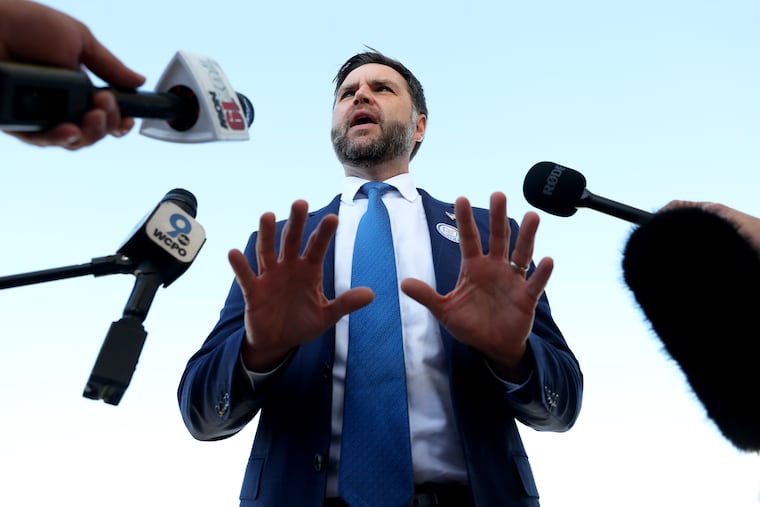
Vice President JD Vance said Friday he would not watch the planned livestreamed execution of Fort Hood shooter Nidal Malik Hasan and expressed skepticism over whether it will be broadcast.
On Thursday, the Pentagon said Hasan’s execution by firing squad would be livestreamed for the public to watch. It would be the first time the U.S. military broadcasts an execution live on the internet. Hasan’s execution is scheduled for Dec. 3.
Vance, a Catholic who previously has said he supports the death penalty, was asked by reporters aboard Air Force Two how he reconciled his faith with the Pentagon’s decision to livestream the killing. He underscored that Hasan “brutally murdered” innocent people but added, “If it’s ultimately livestreamed, I’m not going to be watching it.”
The vice president also expressed skepticism that the livestream would take place.
“I don’t know that that’s actually going to happen,” Vance said. “Let’s sort of see.”
Vance’s comments mark the first time a top Trump official has signaled some unease with the Pentagon’s decision to make the execution public.
Earlier Friday, Federal Communications Commission Chairperson Brendan Carr said he would defer to the Pentagon over whether to potentially broadcast the execution on television networks.
Carr said on CNBC’s Squawk Box that the potential livestream falls outside the FCC’s regulatory power. The Pentagon has not indicated that the execution will be broadcast on television, and major networks have not said they plan to carry the feed. But broadcasters could still pick up the live feed if no restrictions are set.
“I trust what [Defense] Secretary [Pete] Hegseth said. He’s implementing the laws and the regulations that are, you know, relevant to the Department of War, and I think he’s doing a great job, and I trust that he’s making the right call on these issues,” Carr said.
When pressed on whether the FCC would allow Pentagon officials to broadcast the execution if they wanted to, Carr responded, “Ultimately, we’re going to defer to Secretary Hegseth and his decisions on how to move forward with this.”
The United Nations and Amnesty International swiftly condemned the plan to livestream Hasan’s execution. The U.S. Conference of Catholic Bishops, with whom Vance has at times publicly disagreed, also called the livestream of the execution “a barbaric promotion of a culture of death.”
In Washington, some Republicans have also said they oppose the effort.
Sen. Thom Tillis, a retiring Republican from North Carolina, wrote on X on Thursday that Hasan “should face the death penalty” but that making his execution public and streaming it is “beyond disgusting.”
“Public executions are what oppressive dictatorships like Iran and Afghanistan do,” he said. “It should not be happening in America.”
Rep. Austin Scott (R., Ga.) joined Tillis, writing on X that while he “absolutely” supports the death sentence for Hasan, “livestreaming executions is what Islamist militants do. America is better than that.”
Sen. John Curtis (R., Utah) urged Hegseth to reconsider livestreaming the execution, writing on social media that “broadcasting a death diminishes us and is not an effective deterrent.”
President Donald Trump this week approved the firing squad execution of Hasan, a former U.S. Army psychiatrist who in 2009 shot dozens of people at the Soldier Readiness Processing Center in Fort Hood, Texas. Hasan uses a wheelchair after officers responding to the attack shot him, leaving him partially paralyzed.
In his first public comments after the Pentagon announced the livestream, Trump said Hasan’s planned death is justified.
“We’re giving a man the death penalty … through firing squad, and he deserves it,” Trump said Friday at a Columbus Day event ahead of the Monday holiday.
While a few countries still conduct public executions, government-sanctioned executions in the United States have long been hidden from public view.
Hasan’s execution would mark the first U.S. military execution since 1961, according to the nonprofit Death Penalty Information Center. The military’s last known firing squad execution was carried out by “musketry” on Nov. 9, 1945, according to the group.