The first Marcel Duchamp retrospective in 50 years opens at the Philadelphia Museum of Art
The show arrives from MoMA, with additional pieces that are only on display at the PMA. The Philadelphia museum holds the largest collection of the artist's delightfully eccentric work.
After opening to fanfare at New York’s Museum of Modern Art, the long-awaited Marcel Duchamp retrospective lands at the Philadelphia Museum of Art this weekend.
It’s a homecoming of sorts for the rule-breaking, relentlessly inventive French modernist who has fascinated and puzzled art lovers for decades, as PMA boasts the largest collection of his delightfully eccentric works in the world.
“Marcel Duchamp,” running through Jan. 31, 2027, marks the first major U.S. retrospective of his work in more than 50 years, with some 300 paintings, sculptures, prints, photographs, and ready-mades (a term Duchamp invented to describe manufactured objects, like a divisive urinal titled Fountain, that he bought, altered slightly, and put on display to rankle and humble the stuffy art world).
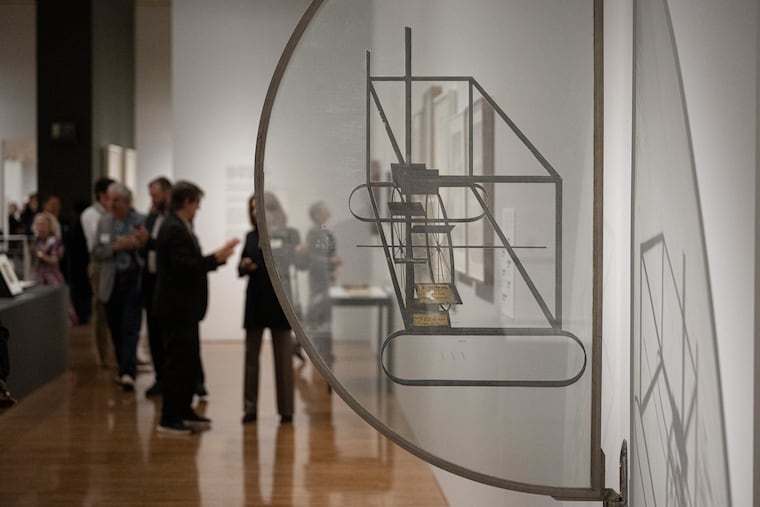
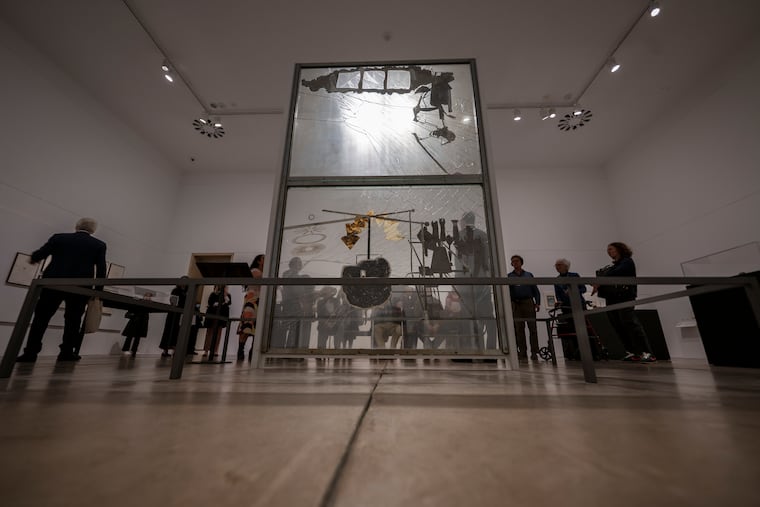
The Philadelphia iteration features exclusive artworks that can only be viewed at PMA, including the radical, abstract glass piece, The Bride Stripped Bare by Her Bachelors, Even (1915-1923), also called The Large Glass, which Duchamp installed himself in 1954.
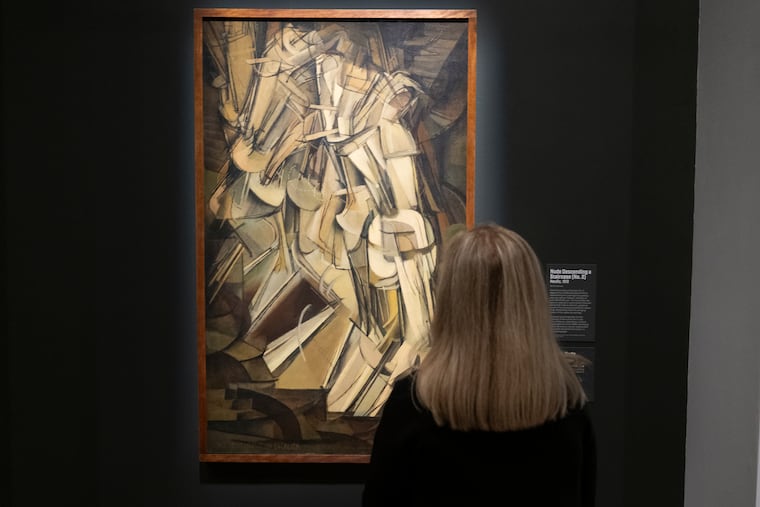
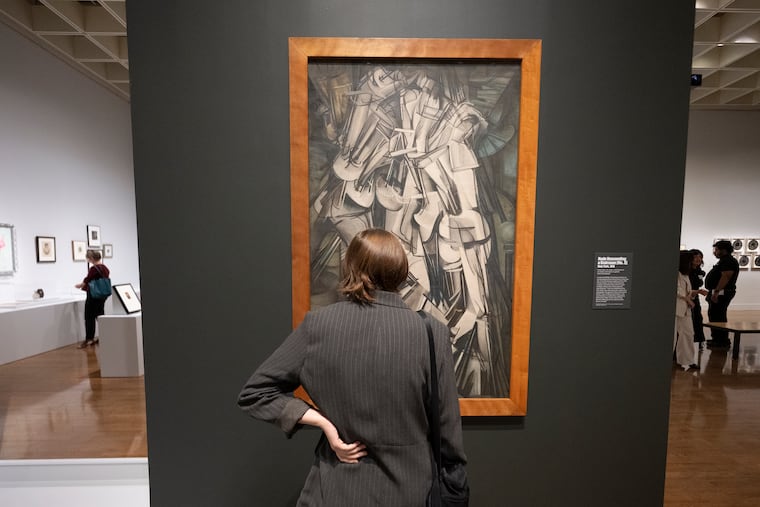
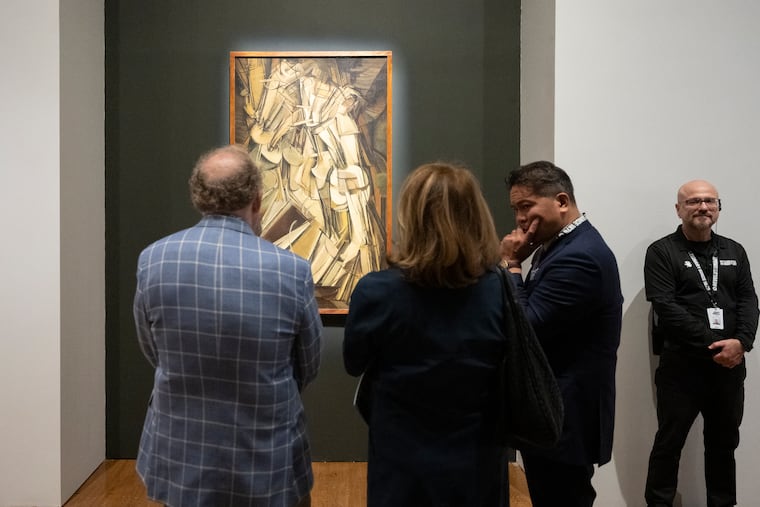
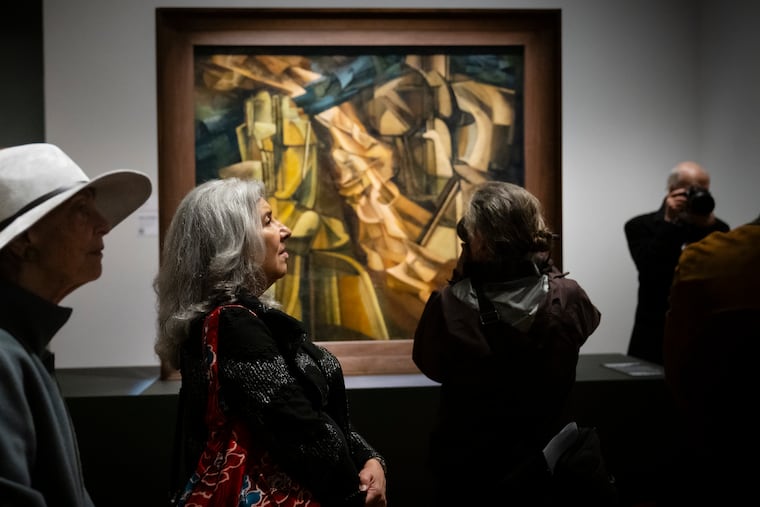
The chronological show starts much like any other; at the beginning of the artist’s career as he learned through experimenting with watercolors, etchings, and oil painting, like his groundbreaking cubist work from 1912, Nude Descending a Staircase (No. 2) — the PMA also presents a rare display of versions one and three. But the exhibition quickly transforms into a more eccentric display, which curators and fans alike dub “Duchampian.”
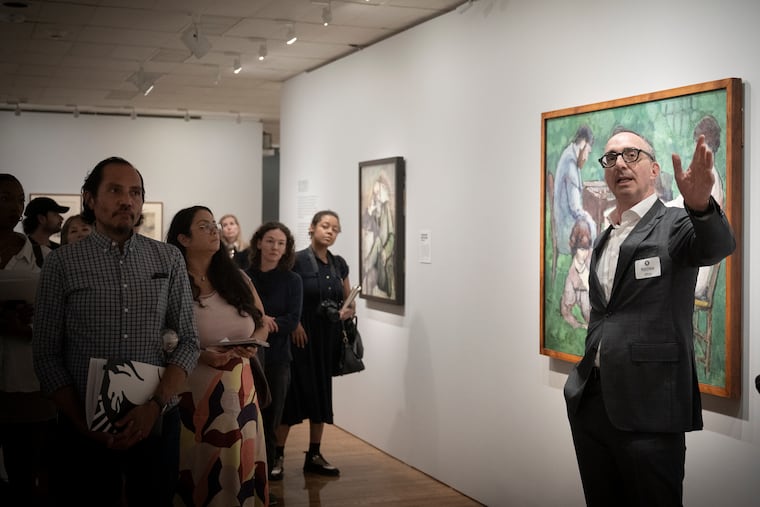
“Chronology seems like a very simple, straightforward logic for an exhibition, but as with all things Duchampian, what seems normal actually becomes very strange,” said exhibit co-organizer Michelle Kuo, MoMA’s chief curator-at-large and publisher, at the Art Museum’s press preview on Thursday.
Duchamp’s many eras of reinvention fuel the Alice in Wonderland-like journey from traditional to unconventional as the viewer descends into his perplexing, cerebral artistic expressions that gleefully defy expectations. Subversive and playful, these works include the trippy film Anemic Cinema and machines that evoke optical illusions, like 1920’s Rotary Glass Plates and 1925’s Rotary Demisphere. Spirals appear frequently, like the moving projection above the exhibit’s entryway inviting audiences inside a whimsical portal.
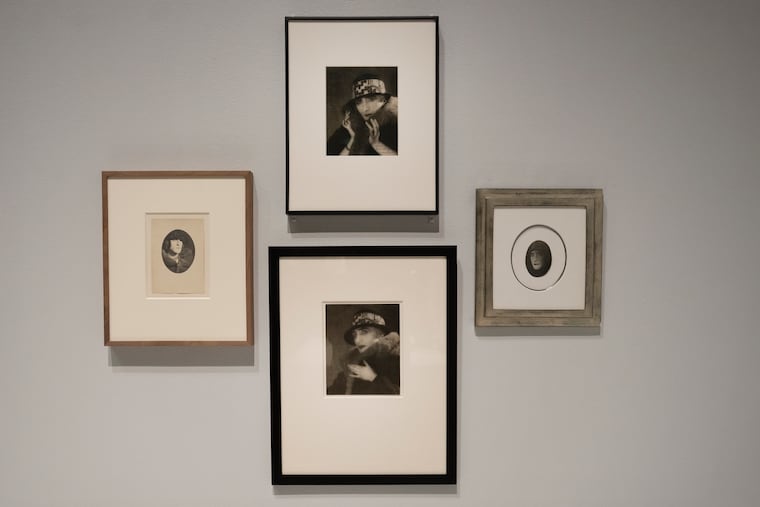
There’s much rich cleverness to explore, like the artist’s female alter ego, Rrose Sélavy, a punny name that in French sounds like, “Eros, c’est la vie,” loosely meaning “eroticism, that’s life.” Several portraits feature Duchamp in drag as Rrose, photographed in the early 1920s by South Philadelphia-born surrealist Man Ray.
The following gallery, though, is where patrons are “supposed to start getting a little bit dizzy,” said Matthew Affron, the Muriel and Philip Berman curator of modern art at PMA, on the press tour.
Multiple urinals, snow shovels, bottle racks, and replicas of L.H.O.O.Q. (Duchamp’s mustachioed rendition of Mona Lisa) underscore the power of repetition in the ready-made genre. His boîte-en-valise works are miniature versions of artworks he made previously, serving as portable museums that he made as he moved to the U.S. to escape the war in France.
Museums, though, were not keen on his modernist inventions for much of his career, and that contentious relationship is also examined at PMA.
“It’s an interesting paradox that Marcel Duchamp didn’t really like visiting museums. He was suspicious of their authority. He thought they gave too much weight to what is already in the past,” said Affron.
“At the same time, he knew that he needed the institution of the museum to take care of the legacy of his work, so that future generations — us — could evaluate it.”
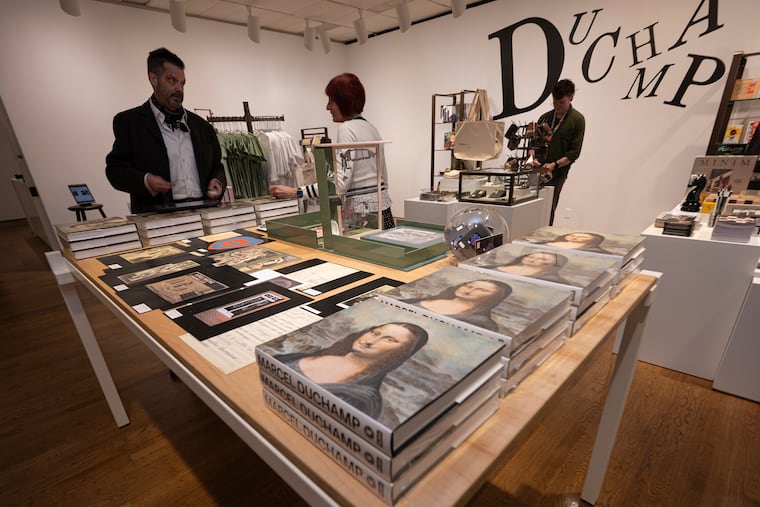
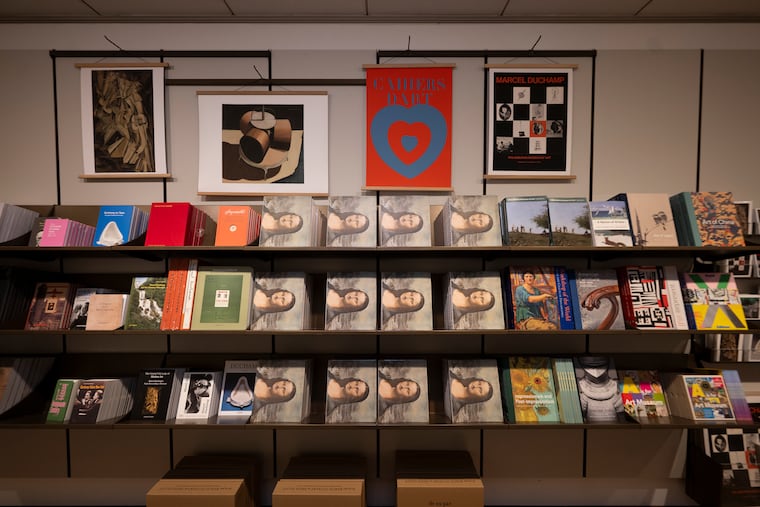
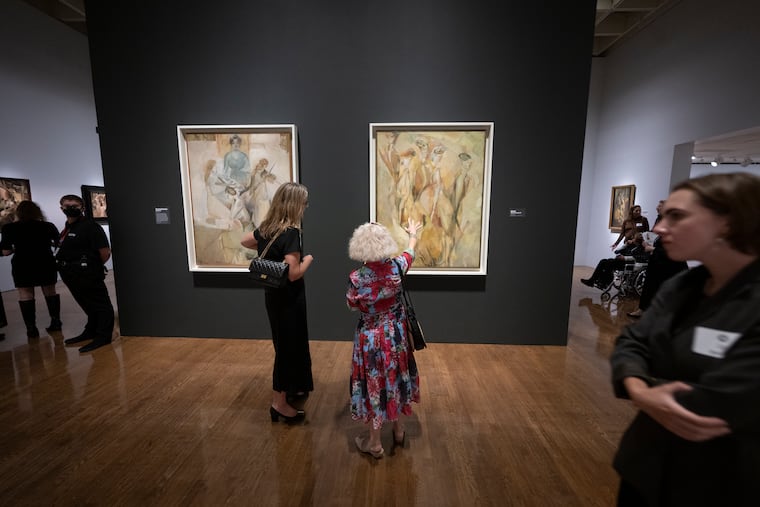
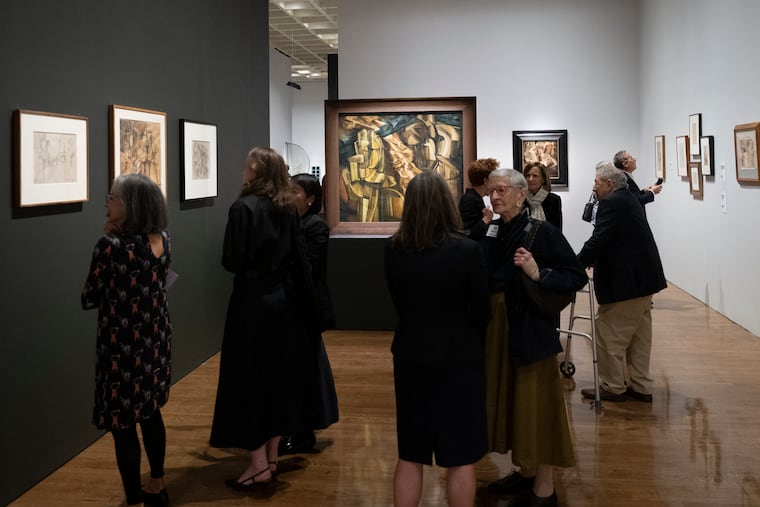
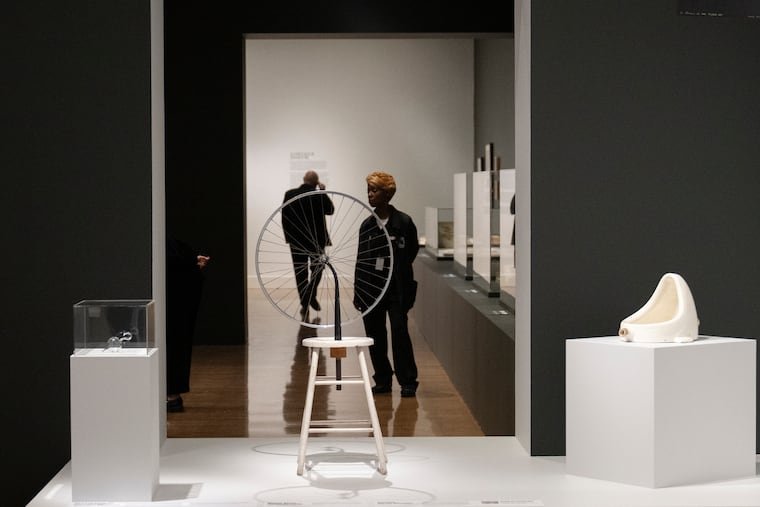
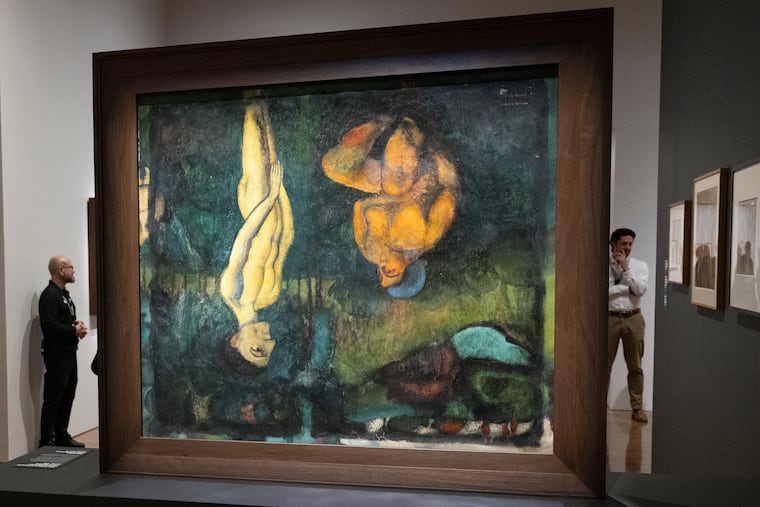
Maybe the most important thing to keep in mind for visitors is that the exhibit pathway, fittingly, requires a counterintuitive detour after the show-specific gift shop.
Philadelphia art fans who are familiar with the museum’s Duchamp gallery in the North Wing already know this, but newcomers might need a bit more guidance to reach galleries 281-283, where two unmissable, immovable artworks are on view: The Large Glass and Étant donnés, an assemblage that Duchamp created secretly toward the end of his life, when the art world believed he had retired from artmaking to pursue his passion for chess.
(Chess serves as another essential element here, as visitors can play casual games on the East Balcony during the exhibit run; in January, the museum will host a chess tournament with Philadelphia champion Jennifer Shahade.)
Étant donnés is in a small, dark, nondescript gallery where it hides behind large wooden doors under a brick arch, visible only through two peepholes. A naked woman lies on a bed of grass, legs splayed, holding a gas lamp in one hand as her head is obscured. Artist Jasper Johns once called it “the strangest work of art in any museum.”
It’s just one example of Duchamp’s undeniable, groundbreaking weirdness — part of a body of work that curators tried to avoid over-interpreting for contemporary audiences.
“I’m not trying to unriddle all the riddles,” Affron said.
“Marcel Duchamp” runs through Jan. 31, 2027, at the Philadelphia Museum of Art, 2600 Benjamin Franklin Pkwy., Philadelphia, 215-763-8100 or philamuseum.org.