A huge ICE detention center in Pa. could be sold to the federal government. Here’s what that means for Pennsylvanians.
GEO Group won an extended contract at Moshannon Valley detention center.
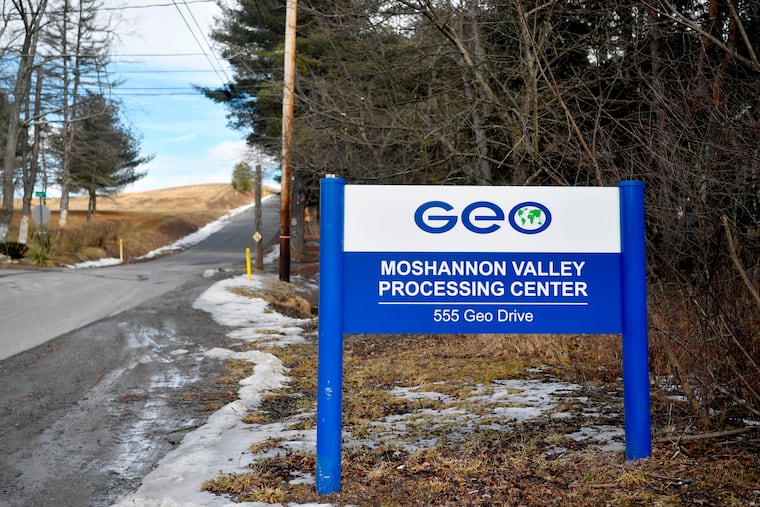
Big change could be coming to a giant ICE detention center in Central Pennsylvania, but not the kind that advocates have demanded at a facility facing federal complaints for medical neglect and assaults against detainees.
The Moshannon Valley Processing Center could end up being sold to the federal government, a move critics fear could insulate the center from some state regulation.
In the meantime, a controversial extension of the current operating contract was approved by county officials on Tuesday, ensuring the largest detention center in the Northeast United States can run unimpeded for at least the next six months.
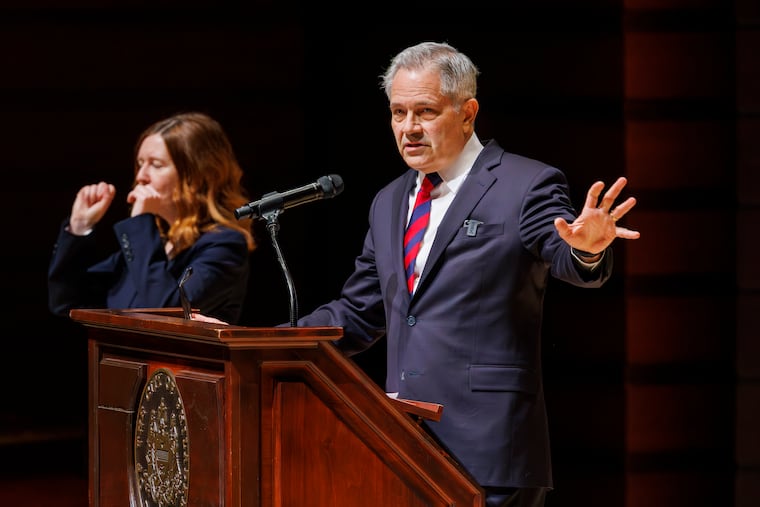
The contract between Clearfield County and Florida-based GEO Group, the for-profit owner of the 1,876-bed facility, was set to expire at the end of September. But on Tuesday, Republican commissioners Tim Winters and John Sobel voted 2-1 against Democrat commissioner Dave Glass to extend GEO Group and ICE’s contract to operate the Moshannon center.
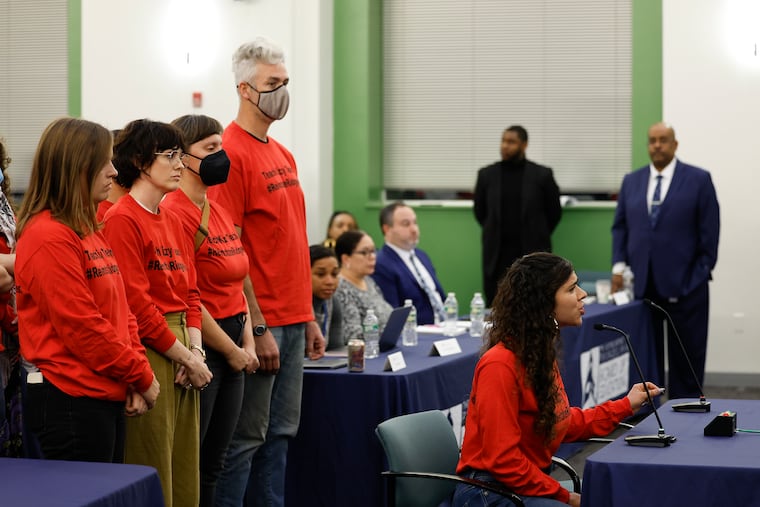
The vote came at a contentious morning meeting at which speakers from the audience mostly voiced opposition, questioning why the county had become entangled in federal immigration policy and doubting the true worth and use of the $100,000 payment.
“Blood money!” one person shouted at the commissioners after the vote.
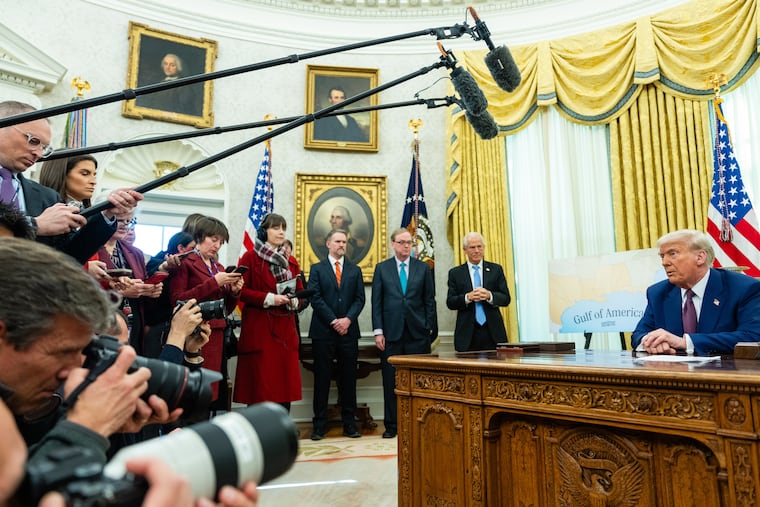
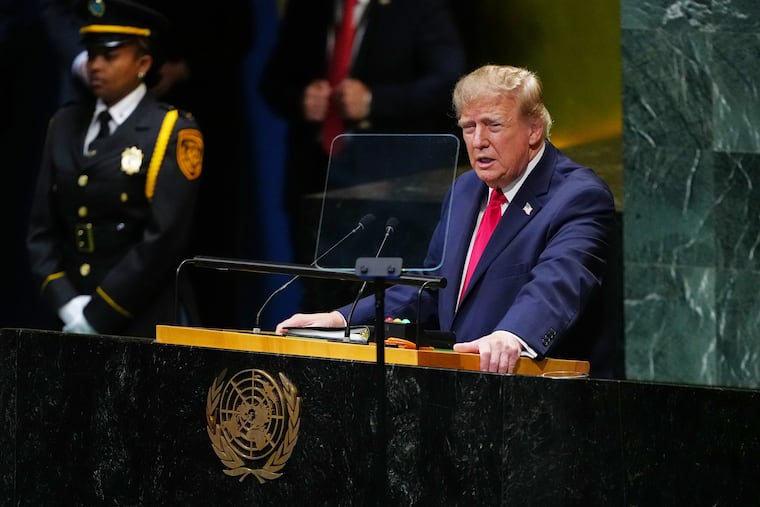
Clearfield’s vote took place as President Donald Trump’s administration quietly mounts a takeover of private detention centers like Moshannon, as it’s called, to expand bed capacity to support its mass-deportation goals.
Some local officials and immigration advocates think Moshannon may be next to be sold. In a statement, the Department of Homeland Security said ICE does not discuss potential facility acquisitions.
“The long-term solicitation process remains ongoing,” a spokesperson said.
Federal ownership could insulate the properties from compliance with certain local and state laws, important to the Trump administration when other expansion plans, like turning empty warehouses into detention centers, bogged down against community and legal opposition.
Moshannon is a common destination of those arrested for immigration violations in Pennsylvania. A recent unannounced congressional oversight visit found that out of the 1,417 adults detained there, roughly 78% lack serious criminal charges or convictions of violent behavior — a contrast to Trump and his allies’ arguments for increased detention.
Trump’s push for mass detention and deportation
Congress voted to allocate $45 billion over the summer to the Department of Homeland Security for immigration detention, more than a decade’s worth of typical funding. At the time, Trump immigration officials touted the funding as a way to treat deportation “like a business,” with Acting ICE Director Todd Lyons saying he wants to see the deportation system run “like [Amazon] Prime, but with human beings.”
DHS, which oversees U.S. Immigration and Customs Enforcement, went on to spend millions on reopening shuttered prisons, another $1.2 billion to house thousands in tents on a Texas military base, and attempted to convert nearly a dozen warehouses across the country into mega detention centers to the tune of $1 billion.
However, in June, ICE made plans to offload seven of those warehouses, totaling $700 million, by giving them to other agencies or selling them outright, according to the New York Times.
With a near-record 65,000 people in detention, ICE’s latest push has been to buy established private detention centers and build more facilities alongside them, as seen with the summer sale of four private detention centers owned by CoreCivic, the nation’s other large private prison owner, to ICE.
GEO Group’s founder and executive chairman, George Foley, said in a May earnings call that the private prison company is “engaged in an active process for the sale” of several facilities to ICE. In the call, Foley acknowledged that Democrat-led states are considering more active oversight in detention centers, and “I think the logical solution to much of that is federal ownership of the facilities.”
Both CoreCivic and GEO Group reported $1.4 billion in quarterly revenue this spring, not including the closed or potential sales of detention facilities.
GEO Group did not respond to a request for comment.
The potential sale of Moshannon to ICE
GEO Group has not officially stated its intention to sell Moshannon to ICE. But recent ICE contract bid requests and local dealings with the center’s warden are leading local officials and immigration advocates to suspect a sale.
Earlier this month, ICE requested 10-year contract bids for “turnkey” detention facilities across the country, including in the Philadelphia area. Moshannon is the only private facility in the region that fits that criteria, said Jasmine Rivera, executive director of the Pennsylvania Immigration Coalition, which had called on county commissioners to deny a contract extension.
Rivera said the proposal requests include provisions that could lead to the potential sale of private detention centers to ICE, similar to its dealings with CoreCivic. GEO Group and ICE’s contract extension “is a stopgap measure” so the parties have “the time to finish the land assessment in the sale of Moshannon,” Rivera said.
In a Sept. 8 commissioner’s meeting, Clearfield County Commissioner Glass said he directly asked Moshannon warden Leonard Oddo whether the Clearfield detention center could be sold to ICE. Oddo said no, according to Glass. Two weeks ago the commissioner e-mailed Oddo the same question, to which Oddo responded, “I’ll have to refer you to GEO corporate on that,” Glass said.
“I took that as kind of a red flag that there may be some kind of a sale,” Glass said at the meeting.
What it means for Pennsylvania residents
Having Moshannon fall under federal ownership means many of the tax benefits Clearfield County receives for serving as a middleman will cease, Glass said.
“Whatever you think about the facility, having that facility sold to the federal government and losing the tax base on that would be a huge blow,” he said.
Clearfield Commissioners have no say in approving the sale if GEO Group and ICE agree to terms.
Clearfield County collects a $200,000 administration fee from ICE for serving as a middleman for ICE funding, allowing more than $5 million monthly to flow through Clearfield County to GEO Group for operating Moshannon. That avoided a ban on federal agencies contracting with private prisons, which Trump reversed in 2025.
The county also receives $688,000 in annual property taxes from the facility, and GEO employs 400 people there. However, Rivera points out that ICE still owes more than $230,000 in unpaid medical services provided by the regional EMS providers — a debt Sen. John Fetterman has urged ICE to repay.
Winters, who voted to extend the ICE contract, said that while current federal immigration policy is “not working,” losing a seat at the table with ICE and GEO would leave Clearfield County worse off.
“We need federal immigration reform,” Winters said. “But the problem with a ‘no’ vote [on the contract extension] is it eliminates our communication and our ability to investigate claims. Our oversight ability is very small, but we still have it.”
For Rivera, any sale is concerning because ICE could ignore Pennsylvania lawmakers’ attempts to protect public health, environmental and zoning standards, and the safety of those detained, she said.
Even if the commissioners had denied the contract extension, ICE would have continued operating without a contractual federal agreement, said Winters, as it did with CoreCivic in New Mexico last year after its contract with Torrance County expired.
The newly extended contract will allow ICE to continue paying GEO Group for operating Moshannon through Clearfield County until mid-March 2027. At that point, GEO Group and ICE could approach the county with a new contract, or, as advocates and some local officials fear, federal ownership could come into play.