Judge orders Trump to sit for a deposition in his defamation lawsuit against the BBC by Dec. 11
Trump, who has often avoided depositions, accused the publicly funded broadcaster of defamation as well as deceptive and unfair trade practices related to a documentary, “Trump: A Second Chance.”
MIAMI — A federal judge on Thursday ordered President Donald Trump to sit for a deposition in his $10 billion defamation lawsuit against the BBC by Dec. 11.
The order from U.S. Magistrate Judge Enjoliqué Lett came as lawyers for the British broadcaster complained that Trump had delayed his appearance. Charles Tobin, attorney for the BBC, said that with two months left in the discovery period, “we still haven’t been able to depose the plaintiff.”
He noted there was an agreed-upon date of Oct. 16, but said Trump had canceled it for a “matter of national importance.” Tobin said the Republican president was in fact campaigning in Georgia that day. “He was participating in party politics and prioritized that over sitting for the deposition,” Tobin said.
Lett said Trump must sit for a deposition by Dec. 11, or face sanctions up to dismissal of his lawsuit — unless the discovery period is extended past Dec. 18.
Discovery, where lawyers for both sides exchange documents and other evidence, is scheduled to end Dec. 18, and the BBC’s attorneys want to make sure they have Trump’s deposition before that deadline. Lett said only the presiding judge assigned to the case can alter the trial schedule, and the defense said it would be open to scheduling the deposition at a later time if the trial schedule was also moved back.
Trump, who has often avoided depositions, filed his lawsuit against the BBC last December. He accused the publicly funded broadcaster of defamation as well as deceptive and unfair trade practices related to a documentary, Trump: A Second Chance.
The BBC acknowledged that filmmakers spliced together quotes from different sections of the speech Trump delivered to his supporters on Jan. 6, 2021, before the storming of the U.S. Capitol, to make it seem he was directly urging violence. The broadcaster apologized over the editing, and the head of the BBC and its top news executive both resigned. But the BBC has denied Trump’s claims that it defamed him.
Trump’s attorneys also argued against recording his deposition on video, asking for only a court reporter. The judge ruled that the deposition could be recorded on video but only for attorneys, meaning it wouldn’t be released to the public.
It remained unclear whether Jack Smith would be allowed to sit for deposition
To bolster its defense, the broadcaster subpoenaed former special counsel Jack Smith earlier this month. Trump’s lawyers have argued that there was no good reason for Smith, who is not a party to the case, to appear.
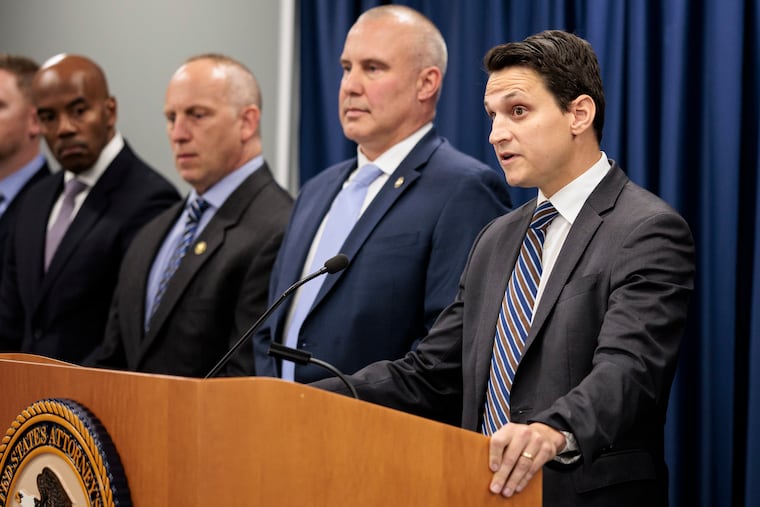
After arguments Thursday, it was not clear whether Smith would be allowed to sit for a deposition. One issue raised was whether Smith had received the legally required permission from the Department of Justice. Assistant U.S. Attorney Matthew Feeley told the judge that Smith had sent a letter to the department saying he would not testify without permission, and the agency had not yet responded. Lett ordered the department to respond to Smith by Nov. 2.
Earlier in the hearing, Tobin, the BBC lawyer, told the judge that Smith has not objected to being deposed for this case, meaning the only objection is coming from Trump. Tobin said the BBC is not trying to relitigate the events of Jan. 6, but Smith is one of the leading experts in what happened that day, and his deposition could lead the BBC to evidence that could help their case.
“We can argue later on whether his testimony is admissible,” Tobin said, “but we are entitled to that deposition.”
Trump’s lawyer, Alejandro Brito, said Smith has no personal knowledge of Trump’s Jan. 6 speech or Trump’s state of mind when he gave it. All of Smith’s knowledge about the case is secondhand, Brito argued, and the special counsel’s report, along with Smith’s testimony before Congress, is all public and available to the BBC’s attorneys, he said.
Judge says the BBC can see membership records for Mar-a-Lago
Turning to the damages issue, the judge agreed that the BBC should be allowed to see records for the total number of applications for membership at Trump’s Mar-a-Lago resort in Florida from Jan. 6, 2020, through Jan. 6, 2026, as well as the total cost of membership and initiation fees for new applicants.
Tobin said one aspect of any defamation case is showing actual damages, and the popularity of Mar-a-Lago is a significant indicator of Trump’s reputation. The BBC’s lawyer described the private club as “a place where he exhibits his reputation in front of people who are important to him.”
Brito argued that Trump does not actually run Mar-a-Lago, and that his reputation is not associated with the club.