For U.S. Latinas of my generation, there is no cultural hero comparable to Dolores Huerta
No one else so celebrated the possibilities of what we could bring into being if we just got off the sidewalk and walked into history together, writes Sabrina Vourvoulias.
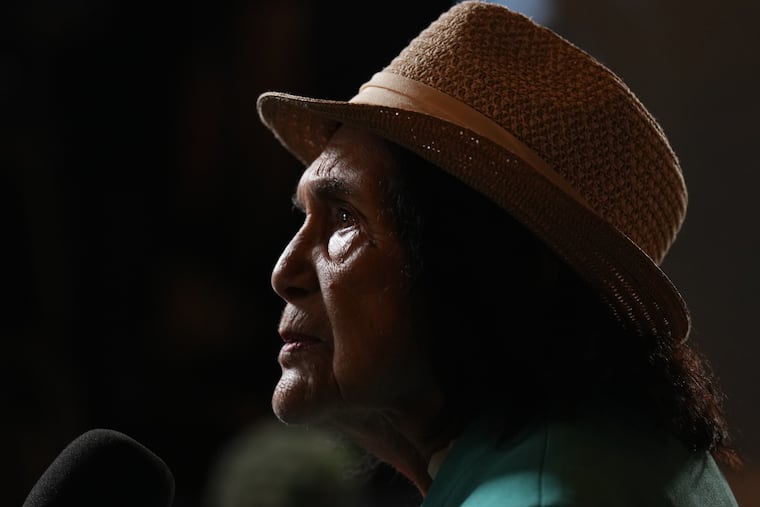

I am irrationally angry at Dolores Huerta for dying right now.
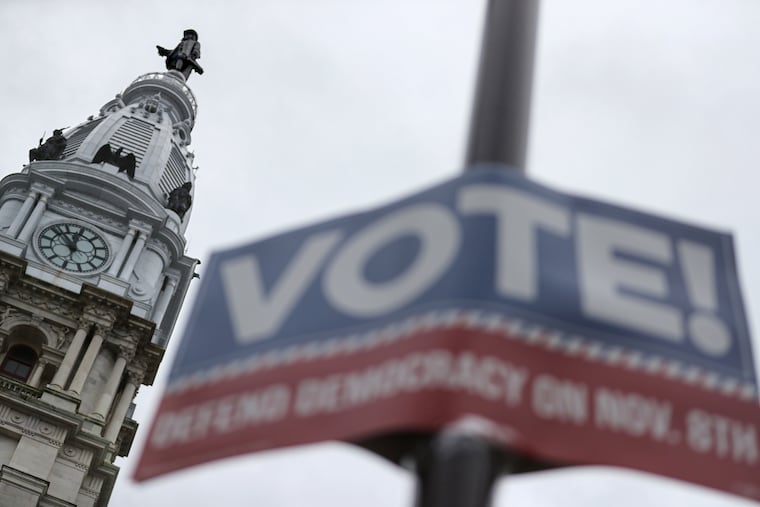
Not before the midterms, I want to say to her. Not before we know whether this democracy can survive the machinations of an administration so besotted by power, entitlement, and malice that it is willing to tear down the very edifice of our communal home. Not yet, I want to say, not before the young people you always encouraged to get out to vote take their turn at the polls.
I am angry, because my grief at her passing is so deep. For U.S. Latinas of my generation — raised on handmade tortillas, Catholic social justice, and compadrazgo — there is no cultural hero comparable to Huerta. No one else so often raised up the concerns of ordinary, working-class Mexican Americans and other Latinos, or more generously shared her platform to advocate for change.
No one else so celebrated the possibilities of what we could bring into being if we just got off the sidewalk and walked into history together.
I first encountered Huerta in a photograph — the iconic one where she’s standing tall during the Delano grape strike in California in 1965, holding up a Huelga (Strike) sign — when I was a teenager recently come to the United States from Central America. I could lay no cultural claim to her — she was a Mexican American, born in New Mexico and shaped as an activist in California — or her fierce fight for farmworker justice, but I knew I wanted someday to be as cool and strong as that photo told me she was.
I committed to memory the story of how the union she cofounded, which later became the United Farm Workers, was first discussed with César Chávez at her kitchen table, as her family milled about. All struggles for justice worth their salt should have family and food mixed into them, am I right?
But it wasn’t until I was doing research for her entry in the Smithsonian’s Nuestra América book I was writing in 2019, that I realized there were seven children (of the 14 she’d eventually have) at hand during that kitchen table deliberation — and that she knew she had enough strength and energy in reserve to be a mother to them and create a union from scratch. 🤯
It is almost as mind-boggling to realize that Huerta would keep organizing and protesting for workers rights — and being arrested for it — until she was well into her 80s. “Lolita Siete Lenguas,” as reportedly she was nicknamed as a child given her loquacious nature, didn’t stop advocating then, either. Through the Dolores Huerta Foundation, she kept working to the last, to protect the human rights of migrants and unaccompanied minors, and as recently as last July met with Pope Leo XIV at the Vatican to discuss their overlapping concerns.
It is well worth your while to read a fuller biography of her life and her many accomplishments, but it is important not to sanitize the fact that she also paid a steep price for her extraordinary commitment to her causes over the years.
In 1988, at the age of 58, she was brutally beaten by police in San Francisco while protesting the danger to farmworkers in the use of pesticides to grow table grapes. The severity of the injuries incapacitated her, and she had to undergo physical therapy to be able to walk again.
And earlier this year, Huerta revealed that Chávez had raped her twice during their years building the farmworkers movement together. She kept silent about those violations, she said, because she didn’t want to jeopardize the movement. Two children were born from Chávez’s assaults, and Huerta made the decision not to raise them herself — though they were raised alongside her family.
It stings a bit to realize that Huerta’s refrain — Sí, se puede — which President Barack Obama readily admitted inspired his catchphrase “Yes, we can” is these days, at least on the East Coast, better known than the woman who coined it.
Her long history of transformative organizing and civil rights work didn’t prevent Bernie Sanders supporters from shouting “English only!” to shut her up when she — who was a Hillary Clinton supporter — offered to translate into Spanish during a Las Vegas caucus in 2016. Rosario Dawson (who played Huerta in the 2014 movie Cesar Chavez) subsequently wrote a dismissive op-ed about the incident in the Huffington Post, in which she accused Huerta of being an establishment shill.
Nor did Huerta’s bona fides or years of support for the Democratic Party earn her a speaking spot at 2024 Democratic National Convention. I felt disgruntled about that slight all the way through Alexandria Ocasio-Cortez’s primetime convention speech, even though I knew she had nothing to do with setting the programming for the event.
But maybe the young standing where the old had stood just one electoral cycle before is how Huerta would have wanted it, scripted it even. Because each of the four times I had the opportunity to meet and talk to her in person, her sí, se puede was focused on young Latinos.
The last time was June 28, 2016, at a People for the American Way event outside of City Hall in Philadelphia. “It’s our challenge to get to them [young people] and make them understand how important they are and how important their vote is,” she told me and my fellow journalist Emma Restrepo. “And that they can control their future with their vote.”
In this time of Kavanaugh stops, out-of-control Immigration and Customs Enforcement arrests, and escalating fear of government interference with voting, it is hard to imagine that young voters — no less young Latino voters — will turn out in such numbers that their vote alone drives out the democracy-killing legislators and governors who have enabled the worst from this administration.
But if there is a single lesson I take away from Huerta’s life, it is that we never have to accept a no se puede. That it is, actually, incumbent upon us not to.
@msrebeccaaguilar 6/26/2025 “Shout so loud for all the haters out there,” says civil rights leader Dolores Huerta to Jimmy Kimmel’s audience. The 95-year-old led the audience into a #SiSePuede chant along with Diego Luna_ who did a great job hosting this week. #inspirational #tiktok #love #news #empowerment ♬ original sound - Rebecca Aguilar
So on Nov. 3, after the polls close, I’ll light a candle in Huerta’s memory and repeat sí, se puede until the last return comes in.
Gracias por todo, Dolores. Por fin, descansa.
About our columnists
In contrast to news reporters, who operate within an independent, nonpartisan framework, columnists are charged with including their perspectives, opinions, and viewpoints when presenting their reporting. Inquirer columnists include Jenice Armstrong, Will Bunch, Luis F. Carrasco, Paul Davies, Daniel Pearson, Trudy Rubin, and Sabrina Vourvoulias.