Why Philly's next congressman Chris Rabb took a detour to Brazil
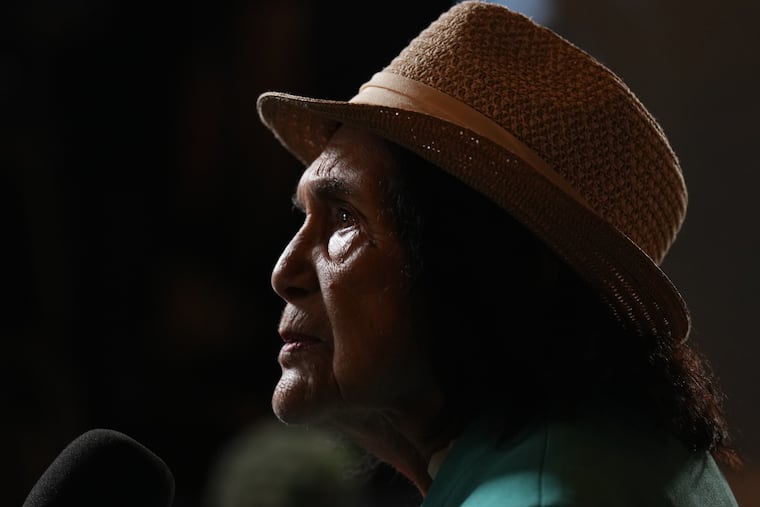
A Philly Democrat’s show of support for Brazil's leftist Lula hints at a very different brand in next year’s Congress.

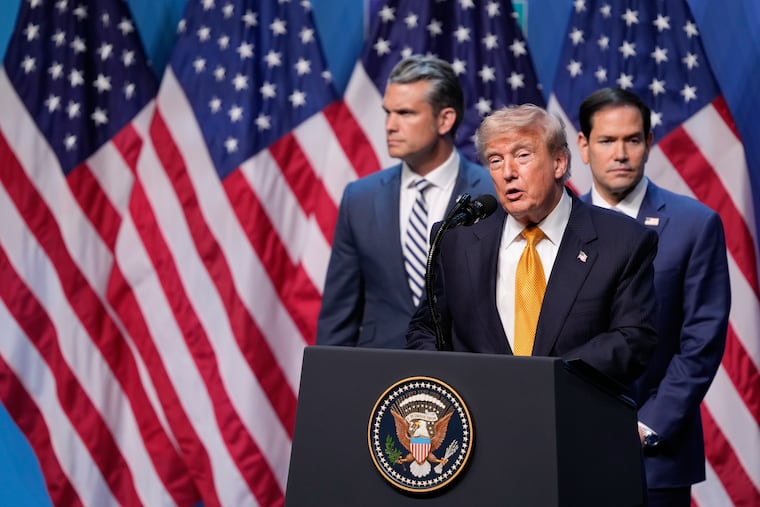
On the last Sunday in October before a make-or-break midterm election, as campaign volunteers knocked on tens of thousands of doors from coast-to-coast and Donald Trump rallied in the autumn chill of Port Huron, Mich. where he praised Nicki Minaj’s “beautiful,” um, derriere, Philadelphia’s next new member of Congress had other ideas.
Democratic state Rep. Chris Rabb, who only faces an obscure independent in Tuesday’s election in the Philly-based, ultra-blue 3rd Congressional District, took his campaign to the deep South.
No, not Mississippi. Think deeper. The Global South.
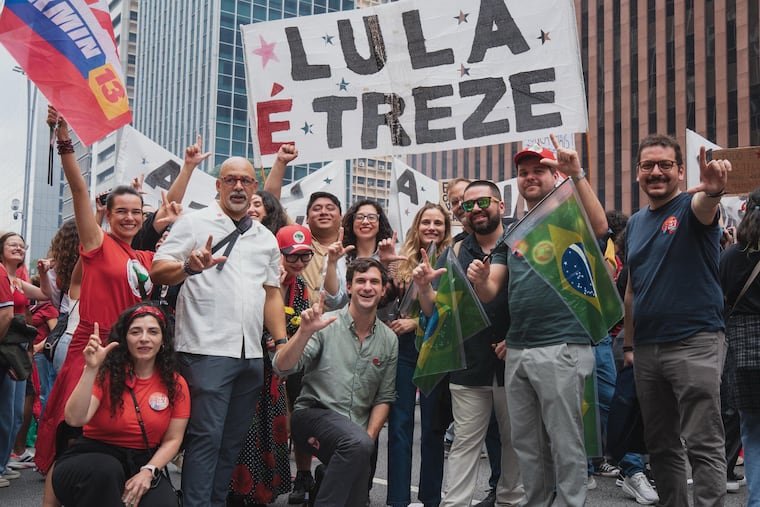
Some 5,110 miles south of Trump’s Michigan rally, Rabb was in the room Sunday night in São Paulo as a very different kind of world leader — Brazil’s leftist President Luiz Inácio Lula da Silva — was declaring a come-from-behind victory over the right-wing extremist rival Flávio Bolsonaro, who within hours fled to the United States.
For Rabb, his presence on the side of the world stage capped a five-day journey to Brazil — where he’d lived for six months right after graduating from college in the 1990s — in which he visited a polling place and watched hundreds of thousands of Lula supporters march through the capital city. His trip, undertaken through the leftist group Progressive International, only heightened his belief that the fight against right-wing extremism in the U.S. and in Latin America is all the same struggle.
“We need more folks on the federal level who are committed internationalists, who are not isolationists — and also folks who openly oppose imperialism and militarism for the benefit of corporate greed,” Rabb told me on Wednesday, little more than 24 hours after he’d landed back in Philadelphia and hustled off to three local campaign events.
Rabb said he was especially drawn to Brazil both because of his time there — when he learned to speak Portuguese — and because he now considers that county the largest democracy in the Western Hemisphere. “Because I don’t believe the U.S. is a democracy anymore,” he explained. “I believe it’s a fascist state.”
And so the presumed future Congress member wanted to be there to watch a Brazilian movement led by young voters and labor unions “turn the tide after six consecutive wins for far-right administrations [across Latin America] since Trump got back into office.”
You’ve probably noticed by now that Rabb intends to be a radically different kind of U.S. representative from the nation’s founding city — a place that in the 20th century had defined the stereotype of the brass-knuckle ward-heeler congressman who cared not about big ideas but just bringing home the bacon, usually with a few slabs for himself.
After winning a hotly contested Democratic primary in late May, Rabb — somewhat liberated by running in a district where Republicans aren’t even fielding a candidate — has been literally all over the map in showing his different style of repping Philly.
In August, Rabb also travelled to South America — with other leftist House hopefuls including New Jersey Democratic candidate Adam Hamawy, and a couple of sitting members — for a Panamerican Congress of progressives from 15 different countries who strategized in Uruguay about how to fight the rising tide of authoritarianism in Latin America and the United States.
In September, Rabb was making headlines in New York by speaking out at a rally outside the United Nations against the visit there by Israeli Prime Minister Benjamin Netanyahu, whom Rabb branded as “a war criminal” after the military campaign in Gaza that has killed more than 75,000 people in the last three years.
The candidate’s globetrotting has occurred during a political season that’s seen the average voter furious about skyrocketing gas prices and an affordability crisis here on U.S. soil. But to Rabb, a foreign policy defined under Trump by American imperialism and high prices at the pump in Germantown are all connected.
Rabb told me that he intends in Congress to be “very explicit about being anti-fascist and anti-imperialist and anti-militarism” — because pushing for an end to the Iran War, U.S. military aid for Israel, or adventurism in Latin America would free up more dollars for domestic programs — like offering Medicare for All.
“So for all those people who just want to focus on our own borders, when they ask for things that they say we don’t have the money for, we can say, well, we do have the money,” he said, referring to the nearly $1 trillion Pentagon budget. “We don’t have the political will.”
Rabb’s internationalist world view, and his specific interest in Brazil, goes way back to young adulthood. Immediately after graduating from Yale in 1992, he spent six months in the Brazilian port city of Salvador to further his obsession with that area’s unique brand of jiu-jitsu called capoeira that is closely associated with Black resistance.
“I decided to live abroad for a while while I was young and unencumbered, and learn about other Afro-Atlantic communities outside the U.S. — and Brazil has the largest Black population outside of Nigeria,” Rabb said.
This past week, Rabb watched as Salvador and the surrounding Bahia region — more Black, and with a higher poverty rate than the nation as a whole — played a key role in delivering the 10 million additional votes that powered Lula to a runoff victory over Bolsonaro, after the son of Brazil’s now-imprisoned ex-president had led in the first round.
Mike Elk, a Pittsburgh-based labor reporter who also has close ties to Brazil and was there to cover the election for his Payday Report website, agreed with Rabb’s assessment that massive organizing — including large pro-Lula marches and clever use of messaging tools like WhatsApp — turned things around for Brazil’s left. They see lessons for pro-democracy advocates in the United States.
“We need to start using WhatsApp more as a way to directly communicate with people,” said Elk, describing how millions of Brazilians in a group called Lula’s Army connected over their phones for actions like banging pots and pans during a Bolsonaro appearance on national TV. The channel bypassed political interference on other social-media platforms.
Said Rabb: “They don’t have the resources of this wealthy nation we call the U.S. And yet they leveraged every tool, every technology to mobilize and make a difference.” He also marveled at the mechanisms such as a Sunday election, and universal registration and compulsory voting, that allowed for more than 128 million ballots, or a turnout of more than 80%.
Rabb hopes to leverage his connections to join the Congressional Brazil Caucus after he is sworn in on Jan. 3, in addition to signing onto the existing Block the Bombs Act that aims to cut off military aid to Israel.
» READ MORE: Chris Rabb and the Democrats’ ‘double wave’ could change America for good | Will Bunch
That proposed legislation has a way to go before gaining enough support for passage, although the election of other left-wing candidates like Rabb would surely bring that goal closer. Indeed, political pundits say it’s looking all but certain that Tuesday’s election will give the Democrats a majority in the House, and possibly in the Senate as well.
I wanted to ask Rabb not only about his Brazil adventure but also his thoughts on just what his party’s priorities should be if the political prognosticators are right about Tuesday’s result. The Democrats’ 2024 nominee, former vice president Kamala Harris, caused an online kerfuffle last weekend by arguing that the party should shun impeachment of Trump or his higher-ups, and focus solely on “getting stuff done.”
Rabb said it’s critical that House Democrats investigate corruption and hold the regime to account even as it also presses affordability issues like a higher minimum wage. “When we’re worried about affordability,” he said, “it’s because the corrosive influence of money in politics, and both legal and then through the corrupt ways that people buy influence to this current fascist regime...”
And he believes the alliances he’s helping forge between the American left wing and global progressives will only help that agenda. One thing on Rabb’s wish list for after a Trump presidency is welcoming a Brazilian delegation to Washington, and maybe accomplishing one last thing that didn’t happen on his recent trip: Meeting Lula in person.
“I was 50 feet away from him,” Rabb said.
Fifty feet from stardom, but getting ready for his own closeup in just over two months.
About our columnists
In contrast to news reporters, who operate within an independent, nonpartisan framework, columnists are charged with including their perspectives, opinions, and viewpoints when presenting their reporting. Inquirer columnists include Jenice Armstrong, Will Bunch, Luis F. Carrasco, Paul Davies, Daniel Pearson, Trudy Rubin, and Sabrina Vourvoulias.

Sign up for the Will Bunch Newsletter