Wu Shaoping escaped China’s repression, only to get busted by ICE in Pa.
The U.S.’s reputation as a safe haven for the world’s dissidents takes another hit with Pennsylvania’s arrest of a Chinese human rights lawyer.
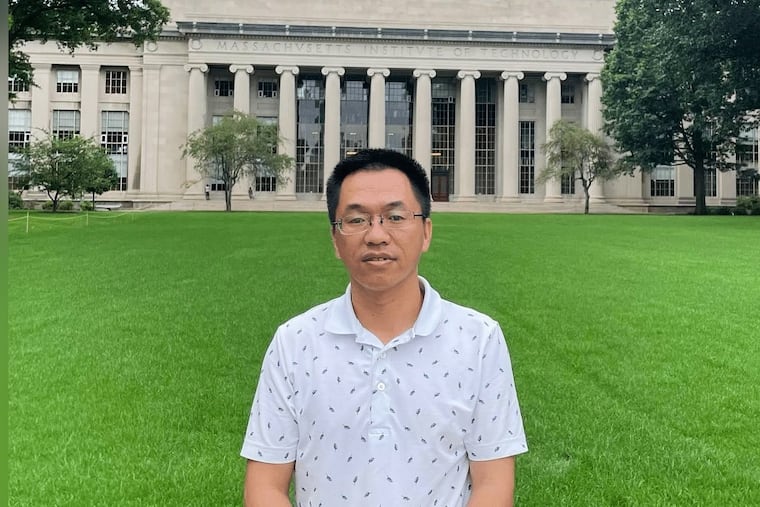
Seven years ago, the walls were closing in on Wu Shaoping in his native China.
Like a firefighter who rushes into a burning building, attorney Wu had watched China’s repressive Communist Party arrest scores of human rights lawyers under a crackdown that began in 2015, and responded by joining their dangerous cause, representing practitioners of Christianity or the Falun Gong sect.
“It is simply a duty of my profession, part of my responsibility, to uphold the legal right of every person,” Wu said in a 2023 video urging his fellow Chinese to quit the Communist Party, or CCP. “It’s one of the things we should do as lawyers.”
In late 2019, China’s totalitarian government began arresting human rights advocates who’d attended a secretive conference in the southern city of Xiamen and charging them with subversion of state power. Wu was at that confab, and — fearing he’d be next — he fled with his wife and young daughter to a place that had offered a safe haven to so many Chinese dissidents: the United States.
Wu’s family traveled to New York on a tourist visa, and before that expired, the attorney applied for political asylum. As his case lagged in the clogged U.S. immigration courts, Wu built a life in his new country.
In 2023, the family moved to a more affordable town just outside Lancaster and joined a local Chinese Christian church, while Wu’s daughter enrolled in Hempfield High School. Wu supported them by driving for Uber, delivering packages for Amazon, and trying his hand at construction work. But he also built up his connections with the diaspora of Chinese dissidents while using his newfound free speech to speak out against the CCP.
It took just one traffic stop in Donald Trump’s America to turn everything upside down.
On July 15, Wu was making Amazon deliveries in Cumberland County, Pa., when a local police officer pulled him over and later placed him in the custody of U.S. Immigration and Customs Enforcement. Despite having a work permit and an active application for asylum — which should have shielded him from deportation — Wu was quickly sent to ICE’s notorious Moshannon Valley Processing Center in Northwestern Pennsylvania, which has been criticized for squalid conditions.
Wu’s arrest and detention have stunned and demoralized the close community of Chinese political refugees on U.S. soil, who for years have faced harassment here from agents and allies of Xi Jinping’s dictatorship. Now they find themselves fighting on a second front as the reality sets in that the U.S. government they saw as their protector is no longer a reliable ally.
“The CCP is the ultimate source of fear, whereas the threat of being detained by ICE like this is more kind of imminent, immediate,” Zhou Fengsuo, who’d been jailed as a student leader of the 1989 Tiananmen Square uprising and gained asylum and U.S. citizenship after fleeing here in 1995, told me on Wednesday.
But Wu’s arrest is also a powerful symbol of an inhumane mass deportation policy that has become a mindless and lawless machine of evil banality. It is sweeping up all kinds of refugees to fill its gulag detention quota, without any thought to why its victims have come to America or preserving the U.S. legacy as a safe place for the world’s stateless dissidents, which is getting permanently destroyed by this meat grinder.
How can anyone possibly make sense of the twisted logic of the Trump regime, which in arresting Wu has targeted an outspoken critic of communism and the Chinese government — the same government the president has just accused (with no evidence) of attacking our elections.
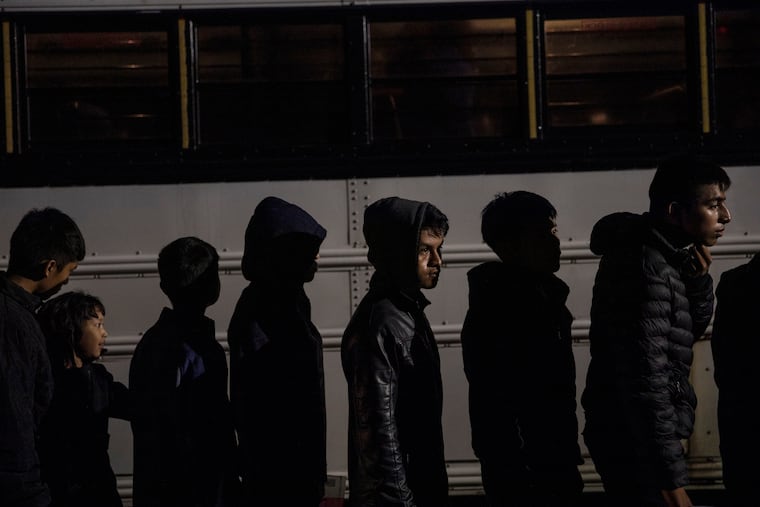
But locking up an asylum-seeking Chinese dissident is no less illogical than the Minnesota ICE raids against the Hmong people who came here after aiding the CIA in Laos in the 1960s and ‘70s, or the detention of Afghan nationals who worked with U.S. troops after 2001, or so many others who thought America offered them safety. Instead, there is terror — not just for the detained and their families, but for those who fear they could be next.
» READ MORE: The U.S. welcomed this child of the Vietnam War. Why did he die in ICE custody? | Will Bunch
“I came here not only for my freedom, but for the freedom of other Chinese people,” Wu said this week in a conference call from the Moshannon Valley lockup that was translated into English by a dissident friend and reported by Lancaster Online. He added that he shouldn’t have been arrested because “America is a country built on the rule of the law.”
Well, it was supposed to be.
Wu’s passion for fighting injustice has burned since he was a teenager and took a year off from his studies in 1997 to leave his rural home and earn some money by working in bustling Shanghai. The cramped, filthy back alleys where factory workers lived looked nothing like the thriving communist state he’d learned about in school. He started tracking down banned books, where he learned the truth of the 1989 Tiananmen Square massacre that the government had lied about when he was in third grade.
“It was upside down,” Wu said, as translated in the 2023 video. “They lied to the world and praised themselves, making the butcher the sweetest person in the world.” He said his dissatisfaction with China’s regime only grew after he became an attorney and witnessed rampant bribery, or saw residents whose homes were getting demolished for new projects get beaten by police when they tried to complain.
The turning point was a date that’s little known to most Americans but holds great significance in the Chinese dissident community: July 9, 2015. More than 300 human rights lawyers and activists were detained in a government crackdown that launched that day, while others lost their law license and have been subjected to harassment.
That’s also when Wu stepped up his legal representation of clients targeted by the regime — especially those facing persecution for their religious beliefs in the officially atheist nation. That’s how he came to be one of roughly 20 pro-democracy activists who attended the private December 2019 meeting in Xiamen, and why he fled when two prominent attendees were arrested, and others felt they were in the crosshairs.
Wu’s life in America with his wife, Li Caoliu, and their daughter, now 17 and entering her senior year at the Lancaster County high school, has been divided between his quest for a normal family life and his tireless political activism. He helped found the Overseas Chinese Human Rights Lawyer Alliance — refugee attorneys who continue to advocate for the rule of law in their homeland.
The family converted to Christianity in 2022, and joined the Chinese Bible Church of Lancaster after moving to Pennsylvania. The pastor there, the Rev. Daniel Luo, described his congregant Wu as a busy man who nonetheless would drop everything to drive cancer-stricken Chinese children from New York City airports to a hospital in Hershey.
“He was so inspired by these persecuted Christians that he represented, and he felt a conviction to follow Christ,” said Wu’s close friend, the Rev. Bob Fu, the leader of the Christian diaspora group China Aid, who baptized the entire family during a 2022 retreat.
Big changes were happening for Wu — except for his asylum case, which stalled as the surge at the southern border in the early 2020s slowed immigration courts to a crawl.
The details of what happened when Wu was stopped by police earlier this month remain somewhat murky. Wu’s attorney in Montgomery County, John C. Visher, didn’t return calls or emails, but he’d previously told the New York Times that Wu was pulled over by police in Mount Holly Springs, Pa., while making his Amazon deliveries, and informed the officer of his work permit and his pending asylum application. But the officer called in ICE, whose agents detained Woo and eventually shipped him to Moshannon Valley.
An ICE spokesperson claimed last weekend that Wu lacks legal status and had overstayed his visa by six years. Advocates find the arrest baffling and are hopeful the case can be resolved in Wu’s favor in a scheduled hearing before an immigration judge on Monday.
His plight has gained support from two members of Congress — Republican Chris Smith of New Jersey and Democrat James McGovern of Massachusetts, who said in a letter to Homeland Security Secretary Markwayne Mullin and Secretary of State Marco Rubio that Wu “would face a severe risk of persecution — including detention and harsh punishment — if returned to China.”
Fu said that on this week’s call from Moshannon Valley, his friend was grateful for the support, but “he’s very, very nervous, very concerned about the possible deportation.” His friends and allies agree that returning Wu to China would ensure the arrest he thought he’d avoided when seeking asylum in the United States.
But he’s already been arrested, in a nation where the beacon of democracy has nearly died out.
This man who has done absolutely nothing wrong is behind barbed wire walls in his adopted homeland, in a detention center where others have complained of rotten food and medical neglect. The irony is painful: Trump’s increasingly senseless human rights nightmare has totally lost the plot.

Sign up for the Will Bunch Newsletter