New face of home ec: Boys, nutrition, and technology
KANSAS CITY, Mo. - Once upon a time, no self-respecting high school boy would take home economics. Home ec was for "Becky Home Ecky" types or girls who were looking to get their M-R-S degrees.
KANSAS CITY, Mo. - Once upon a time, no self-respecting high school boy would take home economics.
Home ec was for "Becky Home Ecky" types or girls who were looking to get their M-R-S degrees.
Boy, have times changed.
Traditional "home ec" has not been removed so much as rethought. Today it's called family and consumer sciences - known as FACS or FCS - and in many ways it's a new experience. We talked to three teachers - Cecilia Jaggard, Harriet Haxton, and Betty Jones - about home ec's new face:
Do you have boys in your class today?
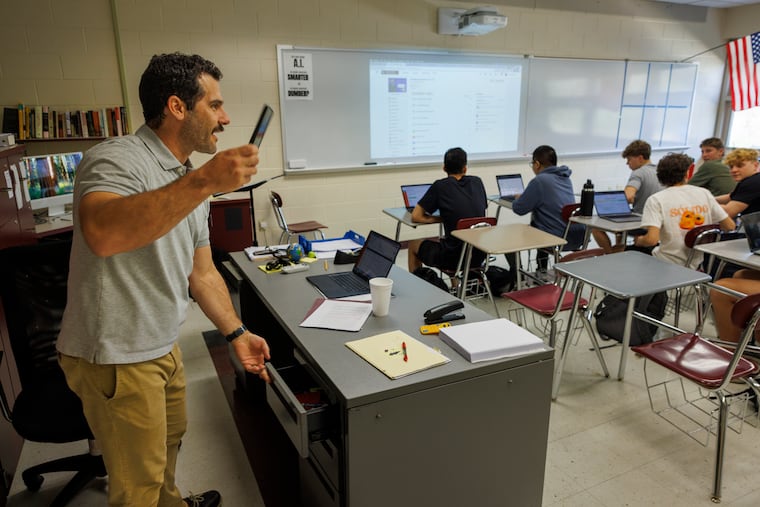
Jones: I have football players, wrestlers, all the big Bubbas. They don't treat it like, "Oh, that's something a girl should do." They get right in there and have a blast.
Jaggard: I tell them knowing how to cook is a chick magnet!
How have things changed?
Haxton: They used to have "mother teas" where the students would prepare cookies and invite their mothers. It was all very proper, because in those days [most] mothers stayed at home. Today our students are focused on the best ways to prepare food if you have challenges with regard to economy or if you're in a hurry. And with the obesity problem and the fact that we eat out more, we talk more about what you can make from scratch that's going to be more nutritious.
Jaggard: We focus more on wellness. We look at sugar and salt and try to update recipes so they're healthier.
Any other way the class has changed?
Jaggard: We help kids prepare for careers. We help them write resumes and cover letters and give them job skills.
Have TV cooking shows sparked more interest today?
Jones: I think so. Like Ace of Cakes? Last year we did a cake-decorating contest, and I mean everybody wanted to win. And one day a student threw something in his pot and said, "Bam!" And I'm like, "OK, he's been watching Emeril."
Haxton: They've made [FACS classes] more popular and brought a lot more creativity. They'll say, "I saw that recipe on Iron Chef." Sometimes they'll even ask to have food competitions.
Do your kids ever teach you?
Jaggard: Yes. When we did the pumpkin pies, the girls took their leftover dough and baked little leaves and topped their pies with them. I was inspired and put them on my pies. So when I had a dinner [people said], "This is really cool." And I said, "My students inspired me. They saw it on television."
Does technology play a role in how you teach?
Haxton: Huge. We record our demonstrations, then students who were absent can watch it on DVD. We also use computers.
Jaggard: We're going to get an overhead projector with a camera so they can see on the screen down into the pot. Then we have a computer lab where we can do dietary analysis. I have them write down what they eat. From that we calculate their food groups and say, "You're lacking in fruits and vegetables, or you're not drinking enough water, or you're eating too much bread." I had one girl who said, "I'm going to get my boyfriend in here!"
What's important for people to understand about FACS?
Haxton: We're bringing practicality to what students learn in core classes [such as reading and math]. Kids want to know what they're going to get out of it. We bring that purpose. They're going to benefit their entire lives.
What's a fun experience you'll always remember?
Jaggard: We made brisket, and I brought my electric knife. These girls had never carved anything. . . . They [went] "Rrrrrmm! Rrrrrmm!" And they go, "This is neat! I want to do more of this!" We never let girls carve anything! It must be like the rush of power tools. Every woman ought to have an electric knife.
What are your students getting out of this, and what do you get?
Jones: It is so delightful for me to see how excited these kids get. Like when they made pizza crust from scratch and talked about how great - and easy - it was. And when they made homemade pie crust and apple pie before Thanksgiving, they went all-out.
Even the parents are happy. Parents don't have time to make homemade pies, so the child says, "I'll do it." And that's good, because when they get into college and are a little bit broke they can think, "Well, I can make my own pizza or my own pie pretty cheap." And that's neat.