Art | For museums, pressure to be popular
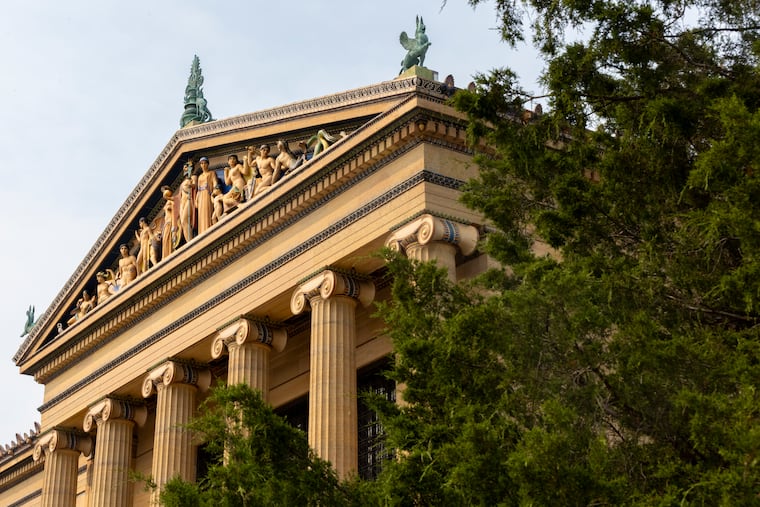
Art museums must be doing well because they always seem to be adding rooms. Three years ago, the Museum of Modern Art nearly doubled its capacity. Early in 2005, the Pennsylvania Academy of the Fine Arts expanded into a second building, gaining much-needed galleries for special exhibitions. In four weeks, the Philadelphia Museum of Art also will open a new annex, the Ruth and Raymond G. Perelman Building.
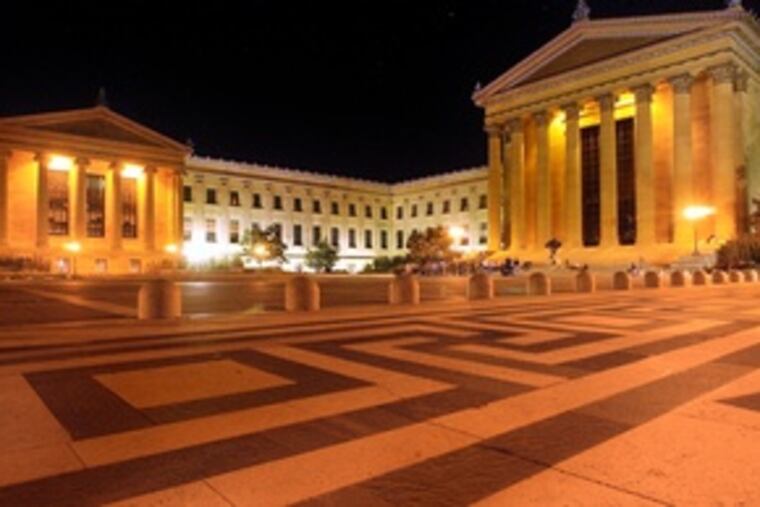
Art museums must be doing well because they always seem to be adding rooms. Three years ago, the Museum of Modern Art nearly doubled its capacity. Early in 2005, the Pennsylvania Academy of the Fine Arts expanded into a second building, gaining much-needed galleries for special exhibitions. In four weeks, the Philadelphia Museum of Art also will open a new annex, the Ruth and Raymond G. Perelman Building.
As for the Barnes Foundation, its board hopes to choose an architect for its proposed palace on the Parkway later this month. This is both an expansion and a relocation, the better to serve the thousands of frustrated art-lovers who find traveling all the way to Merion inconvenient.
Adding floor space might be the easiest part of running an art museum. Construction projects generate favorable publicity, especially if institutions hire celebrity architects. Buildings that create a buzz, typified by Frank Gehry's Guggenheim Museum in Bilbao, Spain, and Santiago Calatrava's Milwaukee Art Museum, attract visitors regardless of what might be on view inside.
These museums would be worth visiting if they were empty.
Jazzy buildings are a supremely promotable asset, but, ironically, what should be every museum's primary attraction, the permanent collection, is sometimes its least marketable feature.
Resolving the inherent tension between the museum's traditional role - collecting, conserving and exhibiting top-quality aesthetic objects - and the need to show museum-goers a good time has become the most difficult aspect of contemporary museumship.
Directors have tried to bridge the divide between high and popular culture by exhibiting such things as motorcycles, cartoons and designer clothing. They sponsor jazz cabarets, fashion shows and family funfests. They do whatever seems reasonable to make museums less intimidating and more visitor-friendly.
Yet for the most part, this attempt to be all things to most people hasn't succeeded: Permanent collections continue to be starved for attention. In the special-exhibitions galleries, the public laps up a steady diet of surefire crowd-pleasers like impressionism, Picasso, quilts and Edward Hopper. One wonders if America's art museums aren't, in fact, inexorably slipping into a twilight zone halfway between serious aesthetic engagement and casual diversion before lunch in the museum cafe.
These thoughts came to mind as I was reading a new book called Museum by London Times columnist Danny Danziger (Viking, $27.95). Danziger didn't so much write this book as transcribe 49 interviews with people who work at, or are associated with, New York's Metropolitan Museum of Art.
The book promises to take readers "behind the scenes" at the Metropolitan, but, sad to report, it falls far short of doing so. Each interview, from director Philippe de Montebello to florist Remco van Vliet, who decorates the Great Hall, is a personal snapshot related in the subject's own words. Too few of those words address daily museum practice; most of the interviews are prosaic biographical recitations, which makes the comments of curator George R. Goldner, chairman of the museum's department of drawings and prints, stand out in high relief.
Goldner is clearly a traditionalist who loves art and decries "the intimidating combination of social, financial and intellectual superstructures we've built around it." He continues:
"I think museums have become utterly paralyzed by the kind of people who become trustees and the kind of people who become directors. Rather than have collectors who think the museum should be about art, boards have become increasingly full of businessmen. You wonder, how much do any of these people know about art. And it's damn little.
"Museums today are all about getting people in through the door. And therefore the museums have to buy and exhibit lots of what the public want. It's a strange treadmill, like a bunch of hamsters running in a circle. No one is enriched, so you wonder, what's the point of it?"
The point, as you say, Mr. G., is getting turnstile numbers up and keeping them there. Why else spend hundreds of millions of dollars to uproot the Barnes from its "Main Line hideaway" (as this newspaper recently described the Merion gallery) two blocks north of City Avenue and plunk it down in the middle of the Parkway?
The numbers game isn't all that distresses Goldner. He believes that the role of curators is declining. He describes de Montebello as "the last great museum director in the country," and the Metropolitan as "one of the last places where curators really matter."
The second half of that statement is true enough, but Goldner is wrong about de Montebello. As long as Anne d'Harnoncourt is running the Philadelphia Museum of Art, he is not "the last of a breed," as the New York Times also described him recently.
D'Harnoncourt, who just marked her 25th anniversary as Art Museum director, is easily his equal in emphasizing the primacy of aesthetic values and art-historical scholarship and in presenting a wide variety of exhibition experiences.
The new Perelman building is a prime example. It contains permanent-collection galleries dedicated to sculpture, photography, design and costumes/textiles. While the museum leavens its exhibition schedules with popular artists (a Renoir landscape show opens Oct. 4), it also has developed shows on more arcane subjects, such as 2006's "The Arts in Latin America, 1492–1820" and the just-ended "Japanese Masters of the Brush."
D'Harnoncourt and Montebello both appear to believe, as Goldner does, that "it is the job of a museum to instruct people on what they should look at." This may be an old-fashioned and even slightly elitist philosophy, but it's no less valid now than it was in the 19th century, when America's leading art museums were founded.
Today there are countless diversions available to people looking to simply get out of the house or kill time, which is why transforming the Barnes Foundation into a tourist-bus destination makes people who know it intimately sad and angry. The Barnes is the purest art experience imaginable, a place where visitors knowledgeable about art can immerse themselves in a unique and contemplative environment.
What the Barnes will become when it moves to the Parkway is anyone's guess. Having ceded control of the school's future to three local foundations, the Barnes board apparently has decided that commercialization is the only hope for continued viability. Like most museums, the Barnes was founded for love of art. And now, like them, it has succumbed to the sound of cash registers ringing.