'Gangster' took a twisted path to screen
Two or three years ago, "American Gangster" seemed destined to go down as one of the expensive non-starters in Hollywood history.
Two or three years ago, "American Gangster" seemed destined to go down as one of the expensive non-starters in Hollywood history.
Universal Pictures pulled the plug on "Gangster" in October 2004, just weeks before the movie - a crime drama about the rise and fall of 1970s Harlem drug kingpin Frank Lucas - was to begin filming in New York.
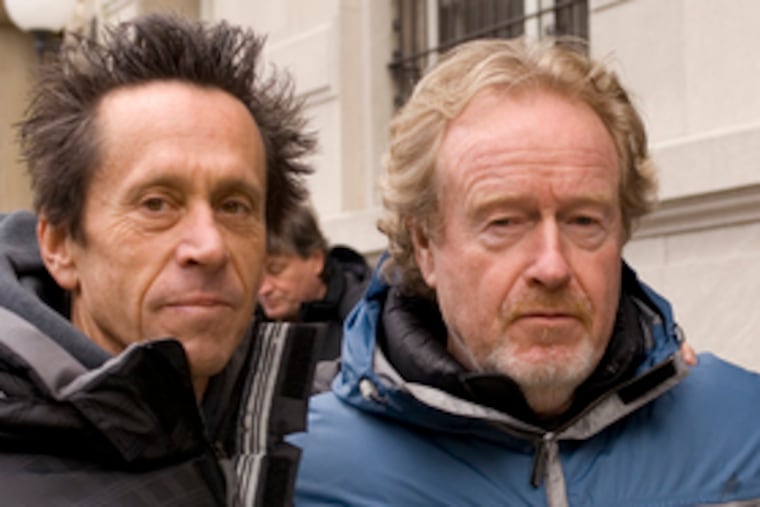
"It was devastating," said producer Brian Grazer, who had a conflicting vision with his original director and was involved in the decision. "We had cast the movie. We had hired every department head. We had costumes, locations, props. We were ready to go."
Universal ended up eating $30 million, including pay-or-play fees to leads Denzel Washington and Benicio Del Toro. Washington, who was to play Lucas, pocketed $20 million alone for his trouble.
But "American Gangster" dusted off the ashes from that early disaster and arrives in theaters today, looking primed for at least a measure of commercial and critical success.
"I don't know of a movie that has been shut down and accrued some serious, substantial costs and then got restarted," Grazer said.
Added writer Steven Zaillian: "It was a long, crooked road that ended up back where we started. Something like this never happens. I mean never happens."
"Gangster" began its long odyssey to the screen seven years ago, when Grazer bought the rights to a New York magazine article about Lucas.
Grazer saw Lucas as a hard-core Horatio Alger, a North Carolina country kid who moved to Harlem, learned the ways of the street from gangster folk hero Bumpy Johnson and ended up selling more than $1 million in heroin a day.
Unlike the high-profile Harlem drug dealer Nicky Barnes, Lucas preferred to remain out of the spotlight. His biggest claim to infamy came after he was busted and it was learned that he sometimes smuggled heroin inside the coffins of American soldiers returning from Vietnam.
The movie follows Lucas' rise and eventual fall, which was hastened by the dogged efforts of Detective Richie Roberts (played by Russell Crowe). Zaillian's screenplay contrasts Lucas, a drug dealer with an exemplary family life (though the film seems to exaggerate this), with Roberts, an honest cop who cheated repeatedly on his wife.
"There's not a clear, singular morality," Crowe said. "And that's nothing more than reality as humanity exists."
Washington was more than happy to revisit Lucas' duality - and collect another paycheck - once he learned Grazer and Universal had signed Ridley Scott to direct.
"Frank Lucas is a very interesting man," Washington said. "He had no formal education, but he was a brilliant student. He was very much a family man, believed in sitting down, like at Thanksgiving, and all that. But he was in the drug business. He didn't look at himself as a killer or even a criminal. He was in a business, and he sold a product - and he did a good job of it."
Scott was the third director to be attached to "Gangster." Antoine Fuqua was on board when Universal shut the movie down. ("As intrigued and excited as he was to make this movie, he didn't have the ability," Grazer says bluntly.)
"Hotel Rwanda" writer-director Terry George was signed in 2005, with the idea of making "Gangster" for about half the original budget. But Grazer didn't like the pared-down version.
"I couldn't cut out Bangkok," he said. "I couldn't cut out Vietnam.
"These were defining aspects to Frank Lucas' character in the story.
"You cut that out, there was no point in making the movie."
With Scott, Grazer said he was able to film on location in New York and Thailand and bring the movie in for just slightly more than its $100 million budget. (Scott and Grazer paid for the overages. Don't worry: They have generous back-end deals.)
"Ridley shoots more economically and can shoot a dense script with a degree of compression," Grazer said. "He's a visualist. He can convey things in a single shot where some directors would need several scenes."
Lucas was sentenced to 70 years in prison in 1976, but was released five years later after providing evidence that led to the convictions of numerous law enforcement officials and drug criminals. Lucas returned to prison for seven years on drug charges in 1984.
Today, Lucas is wheelchair-bound, living, as Zaillian puts it, "hand-to-mouth." He and Roberts served as consultants on the movie. For his trouble, Grazer and Washington bought Lucas a house.
"He went above and beyond our contract, and we wanted to help him out," Grazer said. "He doesn't have any money. In a way, it's sort of a sad story because he was such an underdog. Of course, you can't justify what he did."
Added Crowe: "If Frank Lucas had been befriended by somebody else and had an education in a different area, there might be universities named after him."
However you want to interpret Lucas' life, it makes for a remarkable tale.
"I couldn't let it go," Grazer said. "Look, if ever there was a movie worthy of being restarted, this is it." *