A hand for jazz
Jazz isn't the most lucrative art form. But the Philly-area Jazz Bridge Project (JBP) is looking to change that. Jazz singers Suzanne Cloud and Wendy Simon-Sinkler started JBP to raise money for fellow jazz and blues players struggling with illness, debt, and legal issues. It raises funds as other nonprofits do - using the crowd-sourcing fund-raiser website Kickstar
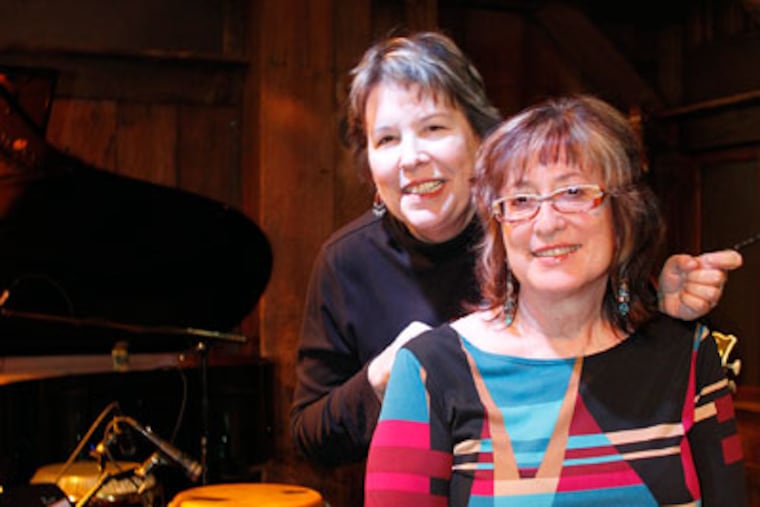
Jazz isn't the most lucrative art form. But the Philly-area Jazz Bridge Project (JBP) is looking to change that.
Jazz singers Suzanne Cloud and Wendy Simon-Sinkler started JBP to raise money for fellow jazz and blues players struggling with illness, debt, and legal issues. It raises funds as other nonprofits do - using the crowd-sourcing fund-raiser website Kickstarter, for example. It's also a concert presenter, staging shows featuring (and on behalf of) local jazz crusaders. And the Jazz Bridge website (www.jazzbridge.org) is a clearinghouse and events list for jazz throughout the area.
The current season is JBP's biggest: more than 40 gigs throughout the region, from October through May 2013. Venues include the Collingswood Community Center, the Cheltenham Center for the Arts, the Unitarian Church in Media, and the Kennett Flash in Kennett Square. Audiences exceed 100 in Collingswood and at venues in Old City this year, and fluctuate at the other venues.
It's every bit a labor of love. Except for two paying positions (not Cloud or Simon-Sinkler, BTW), it's all-volunteer. Offices? Try Simon-Sinkler's house.
Jazz players are notoriously underpaid, working long hours for little cash. A Future of Music Coalition study found that full-time professional jazz musicians, on average, made $23,000 last year. A New York Times feature in March discussed the sad state of jazz elders without health benefits.
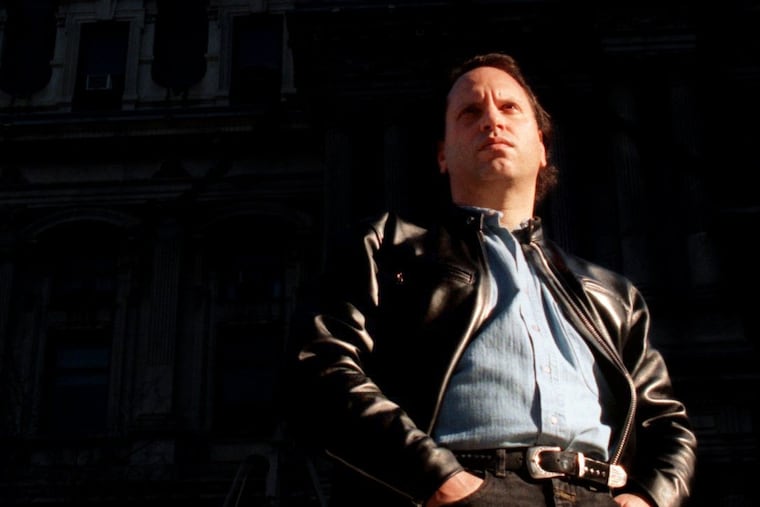
"Let's make this simple," says Bruce Klauber, a Philadelphia jazz drummer and the P.R. guy for Jazz Bridge. "I played my first professional job around 1961, when I was 9, at the Benjamin Franklin Hotel. It was a bar mitzvah, a four-hour gig, with the then-popular Stu Harris and his Orchestra. My pay? Forty-five dollars. Today, more than 50 years later, jazz musicians are lucky to get $100 for a similar gig."
With his usual conviction, Klauber shouts that payment is criminal and JBP is the only organization speaking out and looking for change. He credits Cloud and Simon-Sinkler with tackling issues of wages, health care, and benefits for musicians.
JBP has bought clients new instruments and paid for funerals. And they're not getting money for nothing. Jazz Bridge has held successful Kickstarter projects offering season tickets to its shows - gigs played by other Philly players looking to aid their musical brethren. One Kickstarter campaign reached its $6,000 goal (101 backers, $6,442 raised) in September. In the fiscal year ending Sept. 30, the nonprofit had total revenue of $60,000. It makes a difference.
"I have the good fortune - for now at least - to be able to take care of myself and my family," says local saxophonist Bobby Zankel. "Some can't. It's a good program that's helped several musicians I know well."
Without retirement benefits, health insurance. or decent living conditions, many of Philly's jazz elders are staring at a future of suffering.
Cloud, a Philly jazz singer, remembers the day JBP was born. It was June 9, 2004, when she drove to the apartment of pianist Eddie Green - her collaborator and mentor - after getting a frantic phone call from his girlfriend.
"She said he was sick and needed to see a different doctor," Cloud says. " . . . I got a last-minute appointment with a doctor and picked Eddie up in my car. With one look, I knew he was seriously ill. I was a nurse for years; it was my day gig. It turned out to be pancreatic cancer, and he was dead a month later."
Simon-Sinkler knows many others without resources. "There are organizations that promote and keep the art of jazz alive, but none that actually helped keep the jazz musicians alive and well," she says. "That's when we formed the project."
JBP's cast of advisers and helpers includes bassist Mike Boone, promoter Kim Tucker, filmmaker Jason Fifield, WRTI-FM host Bob Perkins, drummer Rob Henderson, Dreambox label owner Jim Miller, and computer programmer Sarah Hopkins.
"As a hybrid arts organization - presenter and arts service - it's difficult to get grants for operating funds," Cloud says. "Foundations don't know what to do with a nonprofit like us. However, the Pennsylvania Council on the Arts has supported our concerts with small grants for four years." For the just-ended fiscal year, JBP's operating budget was estimated at a little less than $60,000, down from $78,000 the previous year; almost all of that comes from donations.
In 2011, JBP concerts raised $15,158, paid to musicians who played the gigs (each gets $100 for each show). Another $25,181 went for direct aid to players, for everything from eyeglasses to hospital bills.
Most of the help JBP gives is confidential; musicians don't want their business known by the community. Some, however, have allowed their names to be used. Like Camden drummer Charlie Rice, unjustly accused of stealing gas at age 89. JBP held benefits to raise money for his defense before the state dropped all charges.
Sun Ra trumpeter Michael Ray had such financial problems he couldn't get his trumpet fixed. Jazz Bridge took care of rent and shared the cost of a trumpet with the Grammy-based organization MusiCares. The late pianist Sid Simmons suffered from hepatitis B, which was destroying his liver. JBP got him on Medicaid, enrolled him in adultBasic, cut through red tape, and helped find a spot for him on a liver transplant list.
Drummer Billy James saw his house go up in flames, and with it, his drums. Jazz Bridge bought him clothes, drove him to gigs, and lent him a drum set.
Klauber, the most vocal and visible of JBP's beneficiaries, says he was doing well as a player, journalist, video producer, and "partner in the marketing of the only officially sanctioned Gene Krupa Model drumsticks," he laughs. He lived in Florida 10 months out of the year, played music four nights a week, and got paid. Until 2008.
"Overnight, everything went bust," says Klauber. The recession hit the entertainment business, his health tanked, a longtime love died, "and, to be totally honest, what one could call 'heavy drinking' escalated into problem drinking." He lost everything, and Peco turned off the electricity. "It appeared that I might want to start taking messages for Jolson and Sinatra."
One night, sitting at the bar at the 23rd Street Cafe and looking bad, Klauber ran into Cloud. She talked of Jazz Bridge, trying to win him over. "I would not admit I needed or wanted help," he says, "but Suzanne, in her firm but gently understanding manner, drew it out of me. When I told her that I had no drums or computer, I broke down."
In no time, Jazz Bridge got him drums and a laptop. He quit booze, got health insurance, and took the job handling P.R. for Jazz Bridge along with producing CDs, and writing and planning his next gig, a coming-out party at Chris' Jazz Cafe in December.
"When folks see how good I look and hear that I've cut out the sauce, I'm asked 'which 12-step program' I entered," says Klauber. "There wasn't any. Because of Jazz Bridge's faith in me, I was the 12-step program."
Jazz Bridge Presents
The next two shows in Jazz Bridge's Neighborhood Concert Series:
Thursday: Singer Ella Gahant with host Mike Boone, 7:30 p.m., Arch Street Friends Meeting House (East Room), 320 Arch St.
Nov. 21: Percussionist Francois Zayas with host Denise Montana, 7:30 p.m., Unitarian Universalist Church, 145 W. Rose Tree Rd., Media.
Tickets: $10; $5 for students.
Information: 215-517-8337, www.jazzbridge.org.
EndText