The circus in all its glory and seaminess
In 1835, the citizens of Salem, Mass., assembled en masse on Main Street to watch a parade that marked the start of the unofficial holiday called Circus Day.
The American Circus
Edited by Susan Weber, Kenneth Ames, and Matthew Wittman
Yale University Press. 472 pp. $65
nolead ends nolead begins
Reviewed by Glenn C. Altschuler
In 1835, the citizens of Salem, Mass., assembled en masse on Main Street to watch a parade that marked the start of the unofficial holiday called Circus Day.
"One pair of eyes seemed hardly sufficient" to take in all the attractions advertised by the troupe, a reporter exclaimed. "Here are two huge elephants, a band of music, and a train of wagons. There is a procession of Circus mummers in the most fantastic garb, mounted upon piebald horses, with trumpets sounding, and clowns chattering on the necks of their steeds."
Invented by the British, the circus (the term refers to the structure housing the activities) acquired a distinctive identity and pride of place in American popular culture in the 19th and 20th centuries. In The American Circus, a volume designed to accompany a fall 2012 exhibition at the Bard Graduate Center in New York, more than a dozen scholars examine the appeal of "The Greatest Show on Earth" in urban and rural settings; its business practices and uses of technology; its attractions (acrobats, elephants, cats, clowns, and calliopes); its decline; and its dark side (cruelty to animals and "freak shows"). Beautifully illustrated, informative, and engaging, The American Circus will delight kids of all ages.
The essays demonstrate that demographic, economic, and cultural conditions shaped - and were shaped by - the American circus. With its striking imagery and bold texts, the circus poster, Paul Stirton, a professor at Bard Graduate Center suggests, served as a "basic primer" for the emerging advertising industry. Absorbing about one-third of the operating budget of a traveling circus, advertising aimed at saturation coverage: in 1911, for a tour of 143 towns, Ringling Brothers ordered almost one million printed sheets in a combination of posters, handbills, and booklets (to be installed and distributed by "advance men").
The circus, writes Fred Dahlinger Jr., the curator of circus history at the Ringling Museum of Art in Sarasota, Fla., was a large "army encampment," transported from place to place by railroads. At the end of the 19th century, the self-sustaining industrial-style operation included a "big top" (the biggest of which covered an area almost the size of two National Football League fields); menagerie, sideshow, aquarium, horse fair, and museum tents; "black tops" to present magic illusions and films; cookhouses, stables, and sleeping accommodations. In the summer, Dahlinger reminds us, conditions for workers, performers, and customers could be stifling. But even on the hottest days, audience members gaped as they gasped.
As cities grew and cars clogged downtown streets, circus parades became confined to small towns (although the technique was appropriated by Macy's for what became its Thanksgiving Day Parade). And competition from radio, talking pictures, and television reduced the circus' appeal as "The Greatest Show on Earth." By the 1950s, the railroad tent circus was gone. Often dogged by animal rights advocates, circuses survived, albeit much reduced in scale and scope, by converting to truck operations and renting (air-conditioned) indoor venues.
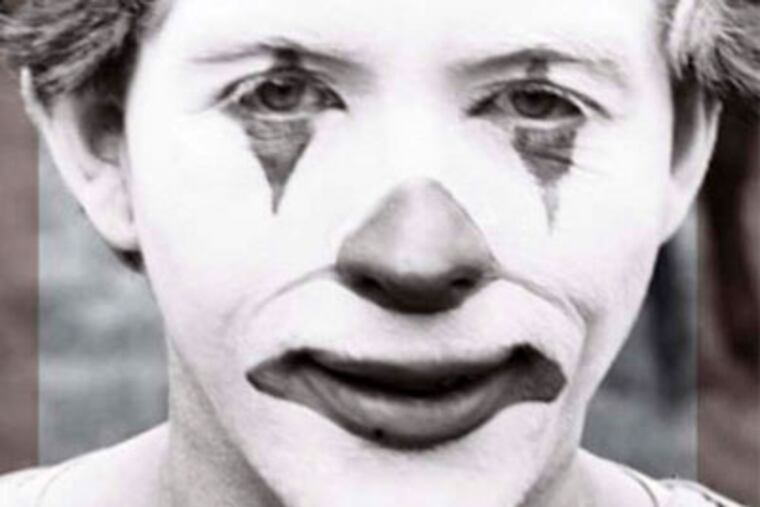
In many ways, however, the American circus lives on. Consider, for example, the enduring appeal of clowns. Instantly recognizable through painted white faces, oversized eyes and mouth, and red bulbous noses, writes Rodney Huey (the former vice president of the parent company of Ringling Bros. and Barnum & Bailey Circus), the clown still makes us laugh and cry without uttering a word in theme parks, cruise ships, and the Cirque du Soleil (founded in 1984).
Standing "shoulder-to-shoulder with ordinary people to rock the boat, question the accepted, flaunt human foibles, and defy common sense," he (or she) earns our affection through innocence, endurance, and purity of heart.