Gallery of surprising small-town citizens
In 1984, photographer Peter Feldstein took portraits of just about every citizen of Oxford, Iowa (population 676), from the doughnut maker to the Pentecostal minister (and buck-skinner), the farmer to the insurance salesman, the husband-and-wife Ford dealers, the schoolkids, babies, moms, dads, teachers, mail clerks, the barkeep, the rodeo rider, the deer hunter, the bank janitor, the trucker, the county attorney.
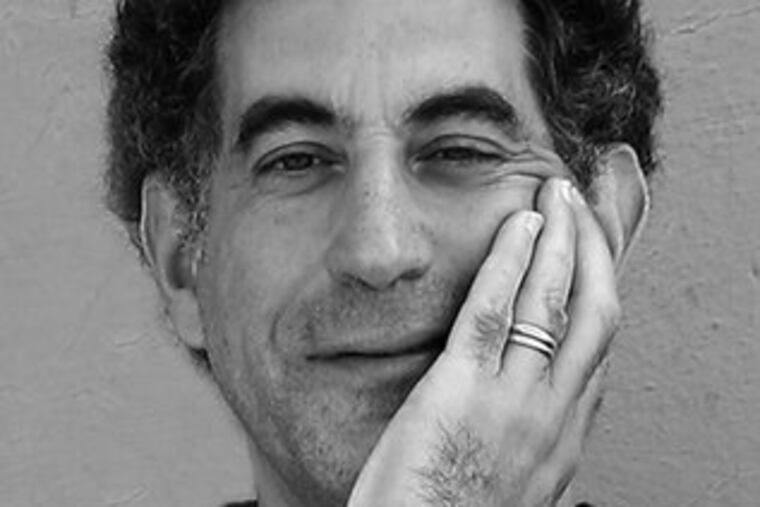
Photography by Peter Feldstein.
Text by Stephen G. Bloom.
Welcome Books. 288 pp. $50
Reviewed by Steven Rea
In 1984, photographer Peter Feldstein took portraits of just about every citizen of Oxford, Iowa (population 676), from the doughnut maker to the Pentecostal minister (and buck-skinner), the farmer to the insurance salesman, the husband-and-wife Ford dealers, the schoolkids, babies, moms, dads, teachers, mail clerks, the barkeep, the rodeo rider, the deer hunter, the bank janitor, the trucker, the county attorney.
In 2005, Feldstein, who likewise lives in Oxford (population now 705), set up his camera for a second go-round. Accompanied by writer Stephen G. Bloom, Feldstein revisited as many of his original subjects as he could find, including more than a few who had moved on - to the next town over, or to Boston, New York, Memphis.
Sarah Palin would call this place, and these people, the real America - Joe the Plumber country. But Oxford's plumber, Calvin Colony, keeps pet lions ("You can train 'em, but you can never tame 'em") and makes annual treks to a nudist resort in the Caribbean. Farmers Jeanne and Patrick Stokes are fiftysomething hippies with six basset hounds and two grown sons named Unity and Cayenne. Angie Aubrecht, a 911 dispatcher, pitched baseball in high school - she's the sixth-winningest hurler in Iowa history.
The Oxford Project
is full of such small, exquisite discoveries - personal stories that defy, and debunk, the pat stereotypes of small-town America. So-called ordinary people who prove to be extraordinary, unique, courageous, curious, happy, sad.
The book is far more than a simple picture book, though Feldstein's photographs, remindful of the portraiture of Walker Evans and Dorothea Lange, are uniformly striking. Like Michael Apted's series of documentaries, starting with
7 Up
, that chronicles the lives of a small group of Brits over the last half-century, Feldstein and Bloom's book offers a sobering survey of time's passage.
Contrast the shots taken in 1984 with the ones from 2005: young girls grown into housewives and mothers; gawky teenagers into husbands; middle-aged marrieds into senior citizens. But such changes are obvious, inevitable. What's more surprising is that in so many of these portraits the Oxford folk take the same stance, give the camera the same grin, across the 20-odd-year span.
A few appear beaten down by the years. Some have gained weight, lost hair, grown beards. A few look wiser, worldlier, better off than they once were. Others have forgotten how to smile.
The Oxford Project
is like a still-life documentary, a narrative about change. This huge, handsome book, with its gatefold photographs, its maps and memories, offers a fascinating piece of contemporary history, a treasure of social and cultural commentary.
And first-person commentary: Erin Hackathorn, scared by the bigness of Chicago, moved back to Oxford; Therese Schebler, shoe-obsessed, a collector of anything with a chicken on it; Jim Hoyt Sr., eighth-grade spelling bee winner and last survivor of the first four U.S. soldiers to liberate Buchenwald. His nightmares about it ended only with his death in August, at 83.
There's something truly remarkable about this book. Art and historical artifact,
The Oxford Project
provides a glimpse into a real America - not the one dreamed up, and exploited, by pandering politicians (at every point on the political spectrum). This is the real thing, riveting and revelatory.