Brain injury survivors talk of hope and continued healing
Like so many who had come to the recent Mind Your Brain conference at Penn Medicine, Janine Kirby wanted to talk about hope.
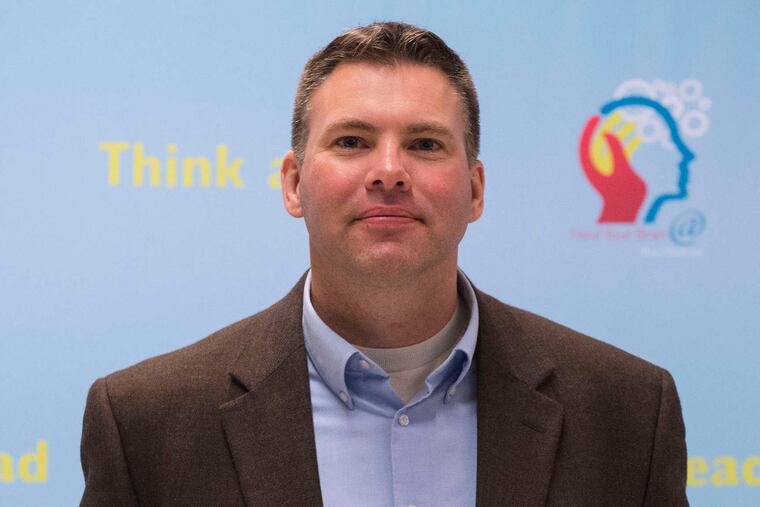
Like so many who had come to the recent Mind Your Brain conference at Penn Medicine, Janine Kirby wanted to talk about hope.
Hers was hard-earned. After a series of concussions from soccer, "life stuff," and boxing, the blow that turned her into a brain injury survivor came at work on 12/12/12, a rare string of numbers that she can remember. A steel beam crashed into her head.
From there, she rode a helicopter to Penn. Eighteen months into her recovery, she started having seizures so severe that doctors had to remove her entire right temporal lobe because it was crippled by scar tissue.
She was part of a survivors' panel at the meeting, which drew about 150 patients and family members to Penn's Smilow Research Center earlier this month.
"My new normal is to continually find a new normal," said Kirby, 39.
"Here I sit before you talking. Through it all, my hope survived."
Hope was a theme as other survivors talked about continuing to see improvements even years after injuries, about finding new friends after the old ones abandoned them, and new purpose after they could no longer work.
Candace Gantt, who was hurt while riding her bike 10 years ago, said many therapists then believed recovery peaked after two years. "Now it's five years . . . but I believe I'm still recovering."
Gantt, 58, a former hotel company executive, helped organize the meeting, which included medical professionals and patients. She has no obvious signs of injury now, but still has memory and word-finding problems. She and others talked about the difficulty of having an "invisible" disability that may make it impossible for them to work and can impair social skills.
Douglas Smith, who is director of Penn's Center for Brain Injury and Repair, said researchers need to do a better job of defining and measuring brain injuries, then figuring out how to measure success. Without all that, they lack the tools they need to compare the effectiveness of treatments.
Drug treatments so far have been disappointing.
"All the drug trials for severe traumatic brain injury have failed, and that tells us we don't understand the disease as well," said M. Sean Grady, chair of Penn's department of neurosurgery.
The keynote speaker was Ben Richards, a retired Army major and West Point grad from Iowa who suffered a brain injury in Iraq after two armored vehicles in which he was riding were attacked three weeks apart in 2007.
Brain injuries had a much lower profile then, and he just kept trying to work. Eventually a long list of medical problems, including headaches, thinking problems, post-traumatic stress disorder, depression, sleeping problems, and chronic fatigue, forced him to quit a military teaching job and apply for disability. He says he would have preferred losing a leg to having brain damage.
His problems were so hard on his wife and children that he believed the only way they could be happy was for him to leave. He didn't and says all is well now.
After five years, the military concluded that there was "no expectation of further healing," but Richards began joining trials of treatments that are still being studied, including hyperbaric oxygen, electromagnetic stimulation, and stem cells. He also tried light therapy on his own.
He is convinced the treatments helped and his brain scans show improvement. He warned the crowd that, outside of trials, some treatments are expensive and that many stem cell providers are "kind of fraudulent."
Smith also had concerns about stem cell treatments and said hyperbaric oxygen has been shown to have a strong placebo effect. These are the kinds of treatments, he said, where clear measures of success are needed.
Richards, 40, said he is now off all of his medications and volunteering for nonprofit organizations. His cognitive problems have improved. "There are times that I feel normal. What I tend to find is I start to be really excited and then I overdo it."
He has applied to a doctoral program in history at a school that has "bent over backward to help me."
Matt Van Kirk, 39, of Philadelphia, said he is still recovering after a car accident on West River Drive two years ago that left him in a coma. He struggled a little with communicating in front of the group, but said he has progressed from needing a wheelchair, to a walker, to two canes, to one cane, to walking unassisted. He hopes to soon run again.
He does not expect to return to teaching high school students. He's still focusing on getting better. "My job right now is myself," he said.
Rebecca Smith, 53, of West Chester, became a triathlete after her brain - and body - were damaged by carbon monoxide. That, plus volunteering, helped her find purpose after the injury derailed her plan to get a doctorate in psychology. Her grit, she said, has helped her find her way after a period of frustration and isolation.
She considers hope an essential ingredient for recovery. "I seek out hope," she said. "I don't wait for hope to inspire me."
She's making the best of what she knows will be a long and hard fight. "I didn't choose the music," she said, "but I'm going to dance."
215-854-4944
@StaceyABurling