Group demands inquest into death of Phila. elephant
Petal the elephant died June 9 at the Philadelphia Zoo. At 52, she was oldest African elephant living in an American zoo.
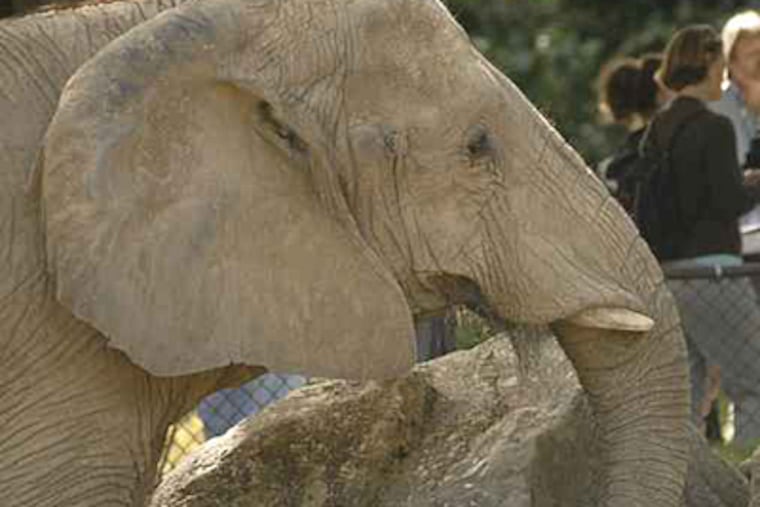
Petal the elephant died June 9 at the Philadelphia Zoo. At 52, she was oldest African elephant living in an American zoo.
But an animal rights group believes it may have been more than old age that killed her.
In Defense of Animals, based in San Rafael, Calif., filed a complaint with the U.S. Department of Agriculture calling for an investigation into Petal's death.
"There's a lot of unanswered questions," said Catherine Doyle, campaign director for IDA. "We want the USDA to review the surveillance video and determine if Petal and the other elephants were being adequately monitored and provided with proper care."
The USDA has already completed its investigation.
"We have looked into it," said Karen Eggert, a USDA spokeswoman. "We found no signs of non-compliance or any issues with the welfare of the animal."
Zoo authorities still don't know what caused Petal's unexpected death.
"It may take several more weeks before the post-mortem is concluded," said zoo spokesman Bill Larson.
Petal appeared to be in very good condition, especially for an elephant her age, Larson said. She showed no recent signs of illness or decline.
"At 52, Petal lived longer than available information indicates most female African elephants do in the wild," Larson said. He put the lifespan of wild elephants at the early to mid-40s.
Though elephants in captivity don't have to face drought, famine or poachers, said Doyle, she said their life spans are significantly shorter than their wild cousins.
African elephants can live up to 70 years in their natural habitat, according to the United Nations Environment Programme. Doyle said elephants in captivity live an average of 33 years.
"In Africa, there are females breeding into their 50s and 60s," Doyle said. "One very famous elephant had a calf in her 60s."
Doyle contends that elephants are not suited to life in urban zoos.
"In the wild, these animal are active 20 hours a day," Doyle said. "They're always on the move. In Philadelphia, the elephants were reported chained overnight."
In a statement, Larson said that Petal was never chained overnight and that the USDA was informed within hours of her death.
By prodding the USDA, Doyle said, she hoped the zoo would eventually provide access to the animal's necropsy and pathology report.
"We feel the public has a right to know," she said.