An unwanted post-mortem
Did a long-ago shooting cause Joe Davis death last month? Does it matter?
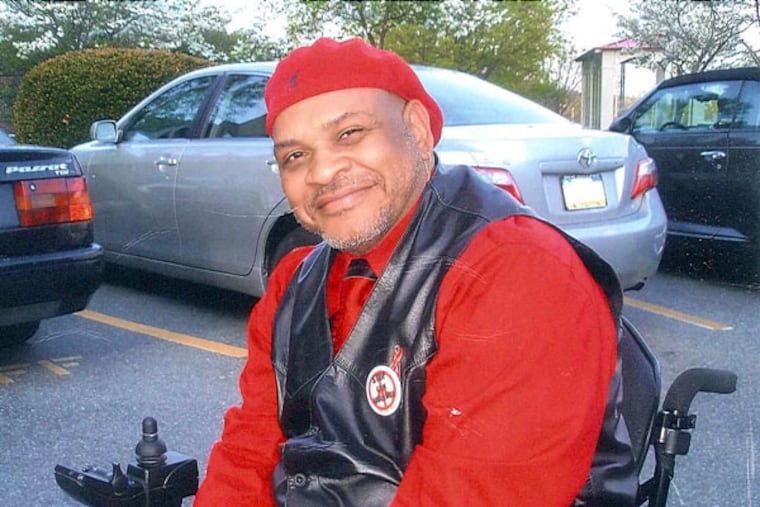
JOE DAVIS had little control over his body when he was alive. So, he wanted to control it when he died.
In conversations with his wife, Terri, he was adamant that he didn't want an autopsy after his death. He had undergone so many surgeries since a long-ago shooting left him a paraplegic, he wanted to spare his worn-out body another stab from the scalpel when he finally left this world.
"He was sick of being cut and sliced," says Terri. "I promised it wouldn't happen."
But it did. Terri feels as if she failed him.
"When he needed me the most, I wasn't there to protect him," she says woefully.
I tell Terri that Joe would understand, but my words are useless. She's a wildly grieving woman who, though she couldn't save her husband's life, thought she could preserve his dignity in death. This is breaking her heart.
What would be a comfort, she says, is for me to tell her story so others might be spared her anguish if they find themselves in similar circumstances.
So, this column is for Terri. But first let's talk about Joe.
He was an all-around bad guy and high school dropout when he was shot in 1981 by a 14-year-old boy who was fed up with Joe's threats. While the boy did four years for the shooting, Joe was sentenced to life in a wheelchair.
By his own admission, the first decade was awful - "I was garbage," he would say. He kept using and abusing, finally swallowing more than 300 pills in a suicide attempt. He survived - and vowed to learn how to live.
He found a job as a hospital clerk. Got his high school equivalency diploma, then a bachelor's degree in mental health from Hahnemann University and, finally, his master's in social work from Penn.
One of his friends used to joke about Joe, saying, "From a crippled drug addict who grew up in North Philadelphia to an Ivy League graduate. Who would have thought it?"
Joe became obsessed with helping young people learn from his mistakes. He found the ideal outlet at Magee Rehab Hospital, a place he knew well from his own recovery, where he became an outreach coordinator. For 20 years, he led the hospital's Think First anti-violence program, urging teens to think before making rash decisions.
"He had a powerful message," says Magee VP Ron Siggs, who was Joe's boss. He says that Joe touched the lives of more than 100,000 young people through Think First. "He had reclaimed, rehabbed and rebuilt his life. He was charismatic, warm and so kind. Kids responded to him."
For the most part, Joe stayed positive about his physical limitations. But two years ago, after his umpteenth hospitalization for complications from his spinal injury, he was done. He told Terri he would never return to a hospital. In the future, he'd be treated at home or not at all.
Early last month, Joe developed pneumonia. The infection made him hallucinate. Hospice staff from the Visiting Nurses Association provided home services, but by Aug. 15, his pulse had grown faint. Terri summoned medics, but Joe died peacefully, three days shy of his 60th birthday.
"That was the worst moment of my life," says Terri, 60, who married Joe 25 years ago after falling in love with him on a bus.
Because Joe died at home, his body was taken to the Medical Examiner's Office instead of a funeral home. Terri says the hospice nurse spoke by phone with someone in the M.E.'s office and stated, repeatedly, that Terri did not want an autopsy.
"The M.E. couldn't promise they wouldn't do it but said they'd call me first if they did," says Terri.
A few days later, when Terri called the M.E. to ask when Joe's body would be released, she was told, "You can get him any time. We completed the autopsy."
"I lost it," says Terri. "They did a full autopsy - they cut open his body, they cut open his head. They did the exact thing Joe never wanted. No one even called to warn me. I didn't get chance to explain anything to anyone."
Terri learned that, because Joe had been a shooting victim, the autopsy was done to determine if his death was a direct result of the bullet he took in 1981. If so, the district attorney might choose to bring homicide charges against the shooter.
Just such a scenario made headlines in Philadelphia in 2007, when 71-year-old William Barnes was charged with murder for the death of former Philadelphia Police Officer William Barclay, who Barnes shot in 1966. Barnes had already done 20 years for the shooting that made Barclay a paraplegic. When Barclay died in 2007, his death was blamed on the long-term complications of the shooting and Barnes was charged (and later acquitted).
Cases like Davis' are not at all uncommon, says First Assistant District Attorney Ed McCann. "By law, the M.E. has to do the autopsy. Although we aren't required to bring homicide charges" as a result.
Although the cause of Joe's death is still pending, Terri fears it might result in charges for the man who, as a boy, shot Joe 34 long years ago.
"Joe would not want that," she says emphatically. "He used to say he hoped the boy went on to have a good life and didn't let that one incident define him. I'd say, 'Well, that one incident defined your life - you're in a wheelchair!' But Joe had no regrets or bitterness.
"He even said that if the shooting hadn't happened, he'd have wound up dead or in jail a long time ago anyway. In a way, he felt it had saved his life."
Jeff Moran, spokesman for the M.E., says objections to an autopsy aren't uncommon, so recording them is done routinely.
"If a next of kin has raised an objection, but it is determined that an autopsy is necessary, it is our practice to notify" the family, he says. In Joe's case, "there is no documentation of an objection. An employee may have failed to document it."
The kicker here is that the M.E. won't issue an official cause of death for 12 weeks. So, Terri can't even begin to settle her husband's affairs, a grueling task even without a cause of death.
"I can't even see tomorrow without Joe," she says. "He was my world."
Email: polaner@phillynews.com
Phone: 215-854-2217
On Twitter: @RonniePhilly
Blog: ph.ly/RonnieBlog
Columns: ph.ly/Ronnie