Inquirer editorial: Wolf veto may give him more leverage
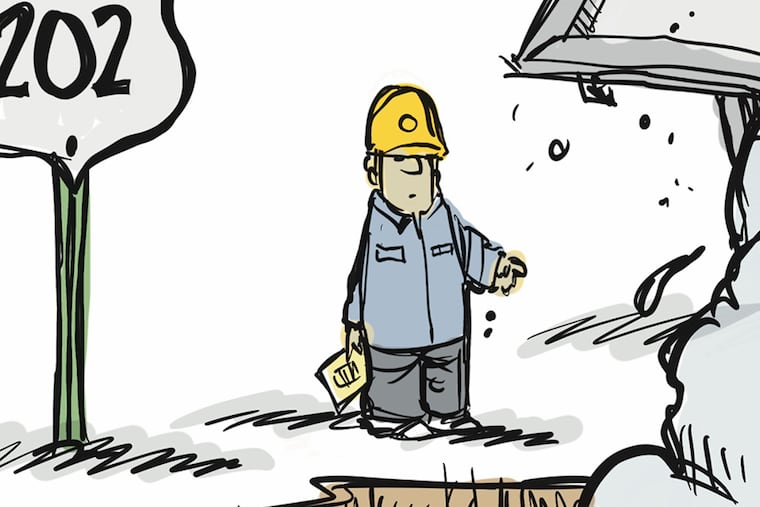
Whether it was his intent or not, one consequence of Gov. Wolf's veto of legislation that details how state allocations must be spent could give him more leverage to get his next budget passed.
Whether it was his intent or not, one consequence of Gov. Wolf's veto of legislation that details how state allocations must be spent could give him more leverage to get his next budget passed.
Wolf last week let a $30 billion budget become law without his signature to end a nine-month stalemate with the Republican-led legislature. But he vetoed the accompanying fiscal code because its distribution of $200 million in new education funds shortchanges strapped school districts like Philadelphia's. Wolf believes the veto gives him the authority to allocate those funds as he sees fit, but Republicans may challenge that in court.
The governor also criticized provisions of the fiscal code that would weaken the state's clean power plan, invalidate oil and gas drilling rules, and authorize $2.5 billion in new indebtedness despite the structural deficit. That the manual that guides state spending would address such disparate issues shows just how twisted Harrisburg's budget process has become.
The code also includes millions in earmarks that designate specific sums to be spent on pet projects in legislators' home districts. In some instances, though, you might need a decoder ring to figure out exactly who is getting what.
For example, there's $35,600, filtered through the Department of Environmental Protection, for "reimbursement of costs incurred by a borough in a county of the third class." Based on population, the state has 12 third-class counties, which means it's hard to know from the fiscal code which borough is getting that cash or how it will spend the money.
Sometimes the fiscal code's jargon is easier to interpret. The code includes $204,000 for "a program promoting cystic fibrosis research in a county of the second class." Allegheny is the state's only second-class county, so the mystery is easier to solve. (Philadelphia is the state's only first-class county.)
Republican leaders, who insist that Wolf's fiscal code veto doesn't allow him to distribute education dollars as he pleases, aren't happy. Senate President Pro Tempore Joe Scarnati said the veto has prevented extra money "from reaching the school districts that so desperately need it." But where was Scarnati's concern when House Republicans killed a budget deal that would have bailed out schools in December?
With projects in their districts placed in limbo by Wolf's veto, more Republicans may be motivated to work with him. The stalemate ended with some big problems left unresolved, chief among them the structural deficit. The pension funding gap must be filled as well. And a viable formula to fund public schools needs to be drafted and instituted.
It also would be good to stop using the state's fiscal code to surreptitiously fund projects with taxpayer money and without appropriate scrutiny.