Northwest Tool Library in Mount Airy aims to make home maintenance more accessible
“We don’t all need to have leaf blowers,” said Jo Winter, executive director of the nonprofit civic group sponsoring the initiative.
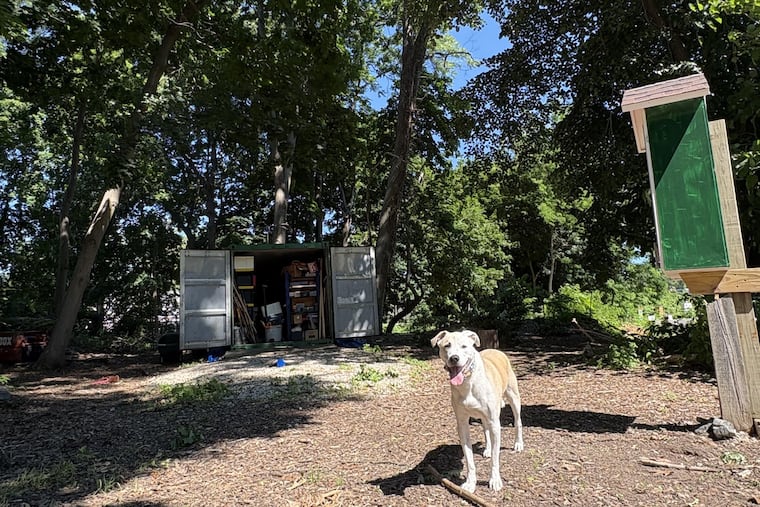
Inside a shipping container on a lot beside SEPTA’s Carpenter train station in Mount Airy, thousands of old tools sit waiting, ready for a new life as part of the new Northwest Tool Library.
Set to open on Sunday, the tool library will lend hand tools, power tools, ladders, and various other gadgets to members in an effort to make home maintenance more accessible.
“We don’t all need to have leaf blowers,” said Jo Winter, executive director of West Mount Airy Neighbors (WMAN), the nonprofit civic group sponsoring the initiative. “If some of us have them in our shared space, it can be another effort to speak to the ethos of our community.”
The idea for the project sparked a few years ago when a Mount Airy resident died and his wife donated his tools to WMAN, Winter said. The neighborhood organization runs EcoLab, a community project revitalizing green space in a once-neglected lot behind a nearby Regional Rail station, and stored the tools in a shipping container on the lot for tree tending.
Mount Airy residents have long traded tools through the Facebook group Mount Airy Tool Exchange, especially as downsizing neighbors wanted to get rid of equipment they no longer had room for. But interest grew in having a designated tool library, as locals looked to the West Philly Tool Library as an example.
Ash Fritzsche was one of those interested residents. As an electrician, she has taught classes at the West Philly Tool Library, but when she moved to Mount Airy, it became too far to frequent. So she got involved in bringing one northwest.
Ultimately, WMAN realized the shipping container, which already housed landscaping tools, could also be used for “this other project everybody’s been talking about,” Fritzsche said.
As a sponsor, WMAN provides organizational support for the library, while volunteers run the day-to-day operations.
“It ticks all the boxes of something that would work in our community,” Winter said. “It’s mutual aid; it’s green; it’s this idea of sharing what you have, not throwing it into the trash.”
Organizers ran tool drives to collect donations, and now the library has thousands of tools in its still-growing inventory. Once the tool library opens, volunteers will run two shifts a week on Wednesdays and Sundays when members can stop by and borrow tools.
To join, members must pay an annual fee based on a sliding scale, so individuals contribute what they can afford. Fritzsche recommends removing three zeros from one’s annual income: If you make $50,000, pay $50 a year to support the library.
The organizers dream bigger than a shipping container — which they have already maxed out with the size of their stock. They hope to move into a brick-and-mortar location and offer programming, such as home improvement and life skills classes.
For example, Fritzsche believes everyone should know how to change a tire, change the oil, and know the basics of their plumbing and electrical systems, so they are empowered to be self-sufficient when something goes wrong.
“Life is so cyber right now,” Fritzsche said. “I’m interested in any sort of simple crafts that can be taught so that people can engage with the real world.”