Former Franklin Mills is no longer for sale. What comes next for the Northeast Philly mall?
With Dean Adler's ambitious remake of the site off the table, few feasible options remain.
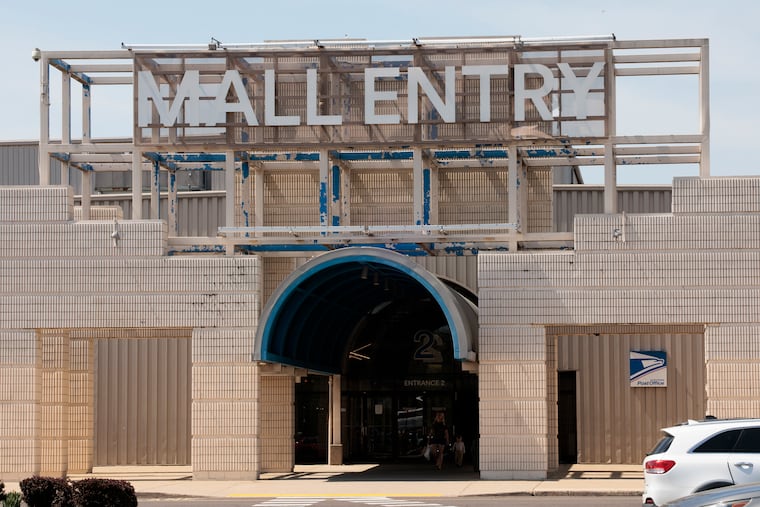
Less than a year after Northeast Philadelphia’s sprawling Franklin Mall was put on the market, the court-appointed receiver of the distressed property said this week that it is no longer for sale.
In April, local real estate magnate Dean Adler made headlines with his bid to purchase the property formerly known as Franklin Mills for over $60 million, with plans to redevelop it as a mixed-use site with housing, athletic fields, a hotel, and a water park.
It became clear over the summer that Adler would not be completing the purchase, but the receiver found that the April news still dominated AI and web results for the property making it hard to attract new tenants.
“We wanted to make sure that the tenants, as well as their customers, know … we’re investing in the mall,” said Brenton Hutchinson, CEO of OPEX CRE Management.
The deal with Adler, “never got anywhere near a transaction, so we thought it was a disservice for that messaging to still be out there,” said Hutchinson.
Hutchinson is serving as a receiver because the previous owner, Simon Property Group — the country’s most successful mall operator — relinquished control of the distressed mall to OPEX as its appraisal fell from $370 million in 2007 to $76 million in 2024.
At the end of last year, shortly after Franklin Mall was put on the market, it was 65% occupied. Today, Hutchinson says occupancy is 40%.
Still, Hutchinson says he believes that Franklin Mall can be a contender again.
“I don’t think there’s one magic answer here,” said Hutchinson. “Even though Mr. Adler had said that he was going to be redeveloping and knocking it down, people still wanted to sign two, three, and even five-year deals here.”
Putting the property back on the market — which OPEX has no plans to do — would be difficult too. A mall with 40% occupancy is hard to demolish, but also hard to fill.
Other real estate industry observers are skeptical. The mall has been struggling since long before the COVID-19 pandemic, so bringing it back to its former glory will be a challenge.
“The current ownership of the mall wants to try to fill it up, but they have to face the negative perceptions out there,” said Larry Steinberg, a senior vice president of at Colliers, a real estate services company. “The perception is it’s a mall that failed. How do you bring it back without a whole new strategy?”
A residential future?
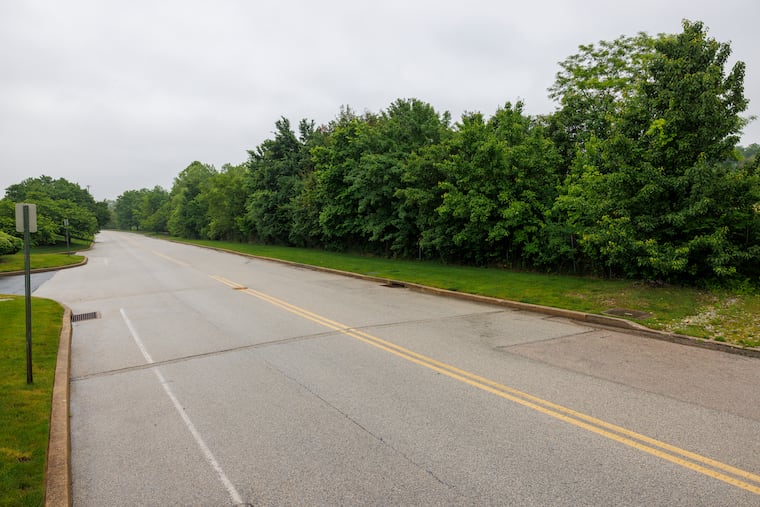
The most obvious way to repurpose the Franklin Mills site would be to build housing across its sprawling sea of parking lots.
The property is surrounded by residential neighborhoods.
Adding more single-family housing would both match the character of surrounding neighborhoods and likely sell briskly considering the current demand for homes.
The site is so huge that it could sustain thousands of properties, including apartments, says Mohamed “Mo” Rushdy, an influential residential developer in the Philadelphia area. (Rushdy says the lot could also be subdivided and sold to different developers.)
“They might need 30 to 40 units an acre, with some areas more dense and some less,” said Rushdy. “You’re talking about a 3,000- or 4,000-unit plan, with retail. A very inclusive plan where there’s something for everyone. Apartments, single-family homes, senior housing.”
But the obstacles to such a plan are considerable. The cost would be huge, especially in the current difficult development environment — and demolition of the mall would add to the price.
But almost anything else is even less likely.
A hotel would only be part of a redevelopment plan for the site, and no one is investing in new office construction in Center City, let alone Far Northeast Philadelphia.
“Apartment development’s down, no one’s built an office building, no one’s built a lab building,” said Bill Hankowsky, former president and CEO of Liberty Property Trust, a once prominent developer of commercial and then industrial buildings.
“The cost of steel is way up, copper’s up and it’s because of data centers consuming so much of the supply chain,” said Hankowsky. “Then the cost of diesel is way up, and you’ve got to bring every piece of material to a construction site. Then throw interest rates on top of it.”
Hankowsky says that data centers themselves are still profitable to build, and the site is large enough to sustain one in a city with few other options.
But the backlash against such a project would almost certainly be immense. Data centers have become profoundly unpopular in the Philadelphia area and nationwide.
The zoning politics
Any redevelopment of the Franklin Mall will require a zoning change from City Council, which would likely be challenging to achieve.
According to two real estate sources who have discussed the property with Councilmember Brian J. O’Neill, he has made it clear he is not interested in seeing either residential or industrial development at the site. He has a long track record of opposing new residential density in his district.
Without his support, a project would have to take the lengthy and uncertain path through the Zoning Board of Adjustment — which is particularly arduous during a period of rising construction costs and interest rates.
“Any of these ideas that you could kick around would require some level of rezoning,” said Hankowsky. That makes Franklin Malls’ future “both an economic challenge and a zoning and development rights challenge.”
O’Neill, who has represented the area since 1979, did not respond to a request for comment. He is up for reelection next year and faces no known challengers.
“Without a zoning change, you have a 100-acre hole in the middle of the Northeast that might be there for years and years and years,” said Rushdy.