Delaware County is about to get another tool to help manage intense flooding
Officials say the tool will help the county track data and better plan for future flooding.
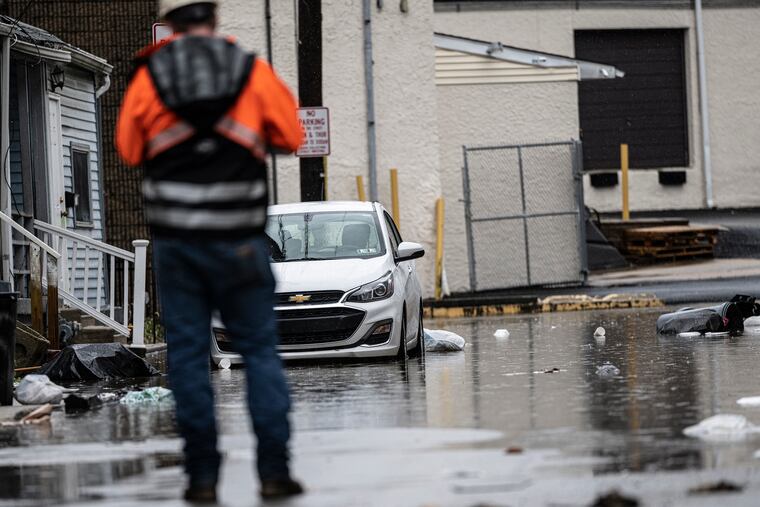
A new tool may help Delco officials better understand flooding in the county.
Delaware County recently acquired 70 AWARE flood gauges, which officials say will help track data, improve response to flooding events, and allow the county to better plan for the future as extreme weather events challenge the region’s aging infrastructure.
Here’s a rundown of what flood gauges do and how they’ll fit into stormwater management in Delco.
What are flood gauges?
Flood gauges are tools placed in and around bodies of water that measure water levels — think giant measuring sticks.
Delaware County’s flood gauges will be placed throughout the county and report data to a public access portal in real time, allowing municipalities and residents to track water levels online.
Why is the county installing flood gauges?
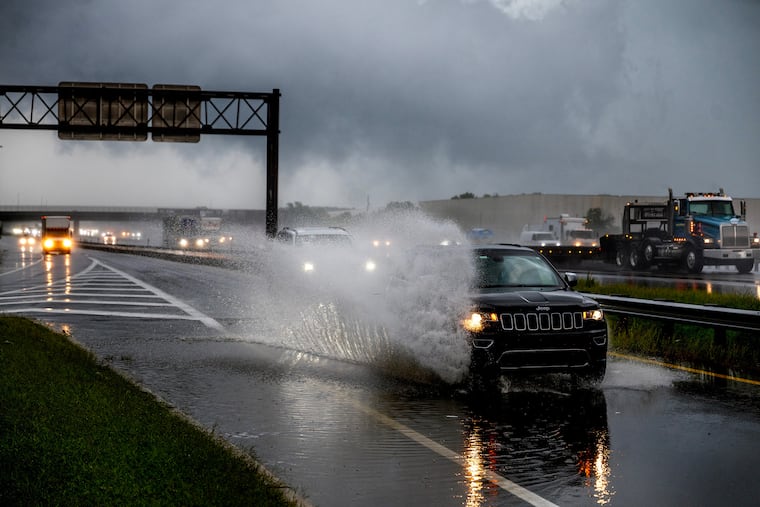
Flood risk is growing in Delaware County, Gina Burritt, the county’s planning director, said, as the region’s infrastructure contends with increasingly frequent and intense precipitation events.
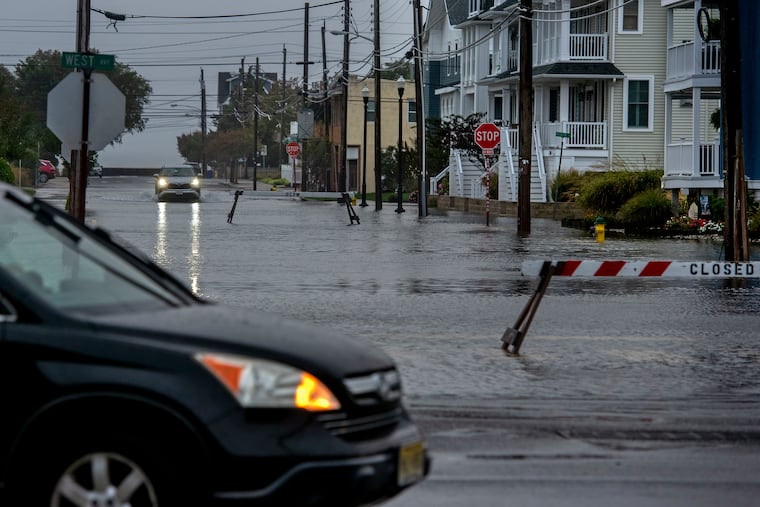
The county is seeing flooding in areas where it used to be rare, Burritt said, and water-proximate areas are becoming more vulnerable to serious storm damage. Flooding is of particular concern in Delco, where much of the land is low-lying and close to the Delaware River and its tributaries.
“We always kind of say that we’re downstream of everywhere,” Burritt said. “All of the watersheds, they flow to the Delaware River, so we’re at the very bottom of that watershed.”
Gauges will help the county understand where flood risk is the most acute, said Burritt, informing decision-making for county planners and emergency responders.
The flood gauges may also eventually provide early warning detection, though Burritt noted that this capability is still being developed.
Philadelphia installed a similar flood monitoring system earlier this year, with flood sensors and cameras put in nine locations, including Cobbs Creek, Darby Creek, and the Manayunk Canal. Residents can see flood monitoring data on a live portal.
Where will the gauges be installed?
In drafting its Act 167 plan, a state-mandated stormwater management blueprint, the county and consultant Jacobs Engineering have identified 87 potential flood gauge locations.
The first batch of flood gauges will be installed on county-owned sites like bridges and parks. Once the initial round of gauges are placed, Burritt said her department hopes to work with other landowners, like the state, PennDot, and local municipalities, to place gauges in other key sites.
Potential locations outlined in the draft plan include Smedley Park, Catania County Park along Little Crum Creek, Sun Village Park, Clayton County Park, and numerous county-owned bridges, according to the county’s draft Act 167 plan.
Officials have identified 230 “flood problem areas” across the county, 130 of which fall under the “high priority” category. Some of the highest priority flood risk areas in Delaware County include the intersection of 69th Street and Marshall Road in Upper Darby, Brookhaven Memorial Park, and the section of Baltimore Pike that crosses Brandywine Creek at the border of Chester County. The highest priority areas were identified by the frequency and severity of flooding that occurs there, as well as impacts to emergency services, roads, and structures.
Delco’s Act 167 plan is in preliminary drafting stages, according to the county, and will be further refined, including with feedback from municipalities and the Commonwealth’s Department of Environmental Protection.
How much did this cost?
The 70 flood gauges were acquired with a $107,845 Community Development Block Grant from the U.S. Department of Housing and Urban Development and another $224,274 in Pennsylvania Local Share Account grants.
Installation of the first batch of gauges will cost $95,000, an expenditure coming out of the county’s capital budget. Burritt said the county is in the request for proposal process and does not yet know exactly how many gauges will be installed in the first round.

Inquirer Greater Media
This suburban content is produced with support from the Leslie Miller and Richard Worley Foundation and The Lenfest Institute for Journalism. Editorial content is created independently of the project donors. Gifts to support The Inquirer’s high-impact journalism can be made at inquirer.com/donate. A list of Lenfest Institute donors can be found at lenfestinstitute.org/supporters.