Meet the local filmmakers presenting their works at the 15th annual BlackStar Film Festival
Films about Philly’s rumba dance roots to the femme-powered emcees who built hip-hop will take center stage at this year’s festival. All made by people who call the city home.
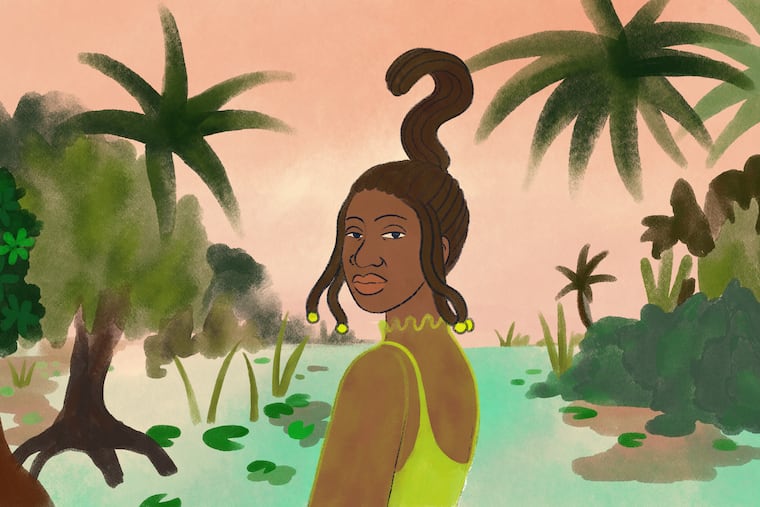
Philly’s BlackStar Film Festival returns Aug. 6-9.
Ahead of the 15th annual celebration of films by Black, brown, and Indigenous filmmakers, we spoke to the local filmmakers whose projects will be featured this year.
They told us about the impact of BlackStar on their careers, Philly’s influence on their filmmaking, and their favorite spots to hang out after a long day on set.
Answers have been edited for length and clarity.
Maori Karmael Holmes
‘Scene Not Heard: Women in Philadelphia Hip Hop’
Aug. 7, 4:30 p.m., Suzanne Roberts Theatre and streaming virtually
What’s your film about?
Taking Scene Not Heard: Women in Philadelphia Hip Hop on the festival circuit back in 2006 gave me the bug to launch a festival of my own — the Black Lily Film & Music Festival in 2007. So many of the relationships I made in its production are still relevant to the festival’s origins.
Holding the “hometown premiere” at International House in January 2006 to a packed house [established] my connection to that venue, which was where the first BlackStar took place. Aside from BlackStar, seeing this film and the [culture] scene two decades later, and with some issues still being relevant, it’s sobering in some ways.
What’s your connection to Philly?
I moved to Philadelphia from LA in 2001 to pursue my Master of Fine Art in Film & Media Arts at Temple University. Prior to that, I’d visited the city a few times, as I have some very dear friends from here. Since then, I’ve made my home here and have so many beautiful friends and chosen family now.
How has Philadelphia inspired you as a filmmaker?
The legacy of Black struggles for freedom and intellectual pursuits abounds in Philadelphia, and I am constantly learning about both historical marvels and uncovering new artists and thinkers who live here in the present. I have found a lot of opportunities in my time here, and as someone with a lot of ideas, it has afforded me plenty of space to try out new things in an incredibly supportive community.
How valuable is BlackStar for filmmakers of color?
I think that BlackStar is valuable for filmmakers of color as a platform for everyone to know about their work. Sometimes in mainstream spaces, nuance and humor are misunderstood, or there’s a need to overexplain. BlackStar offers a space for artists of the global majority to present their work in a space that goes beyond the 101 understanding.
We also value experimentation and a lot of artists of color are tapping into ancestral esthetics that fall outside of our contemporary Eurocentric conventions. I imagine it is affirming to present work to audiences who appreciate that kind of exploration.
Your favorite Philly bar or hang when you’re out on the town?
I do a lot of eating out (and in) with my friends. Picnic, which is a few blocks away from my house, is a current favorite.
Melissa Beatriz and Andrés Cisneros
‘Philly Rumba’
Aug. 6, 2:30 p.m., Perelman Theater and streaming virtually
Tell us about your film’s role in starting BlackStar?
Philly Rumba is about a group of African American men in Philadelphia who gravitated toward Cuban rumba as an expression of their African roots during the Civil Rights and Pan African Movements. More than 50 years later, they continue to play rumba together, proving that music can create community and solidarity in difficult times.
What’s your connection to Philly?
MB: I’ve been based in the Philly region for the past 16 years. During my first few years in Philly, I worked with local Latine serving nonprofit organizations in North Philadelphia, including Taller Puertorriqueño and Esperanza. From there, my first community media roles were with Scribe Video Center (shout out to Street Movies!) and Movement Alliance Project.
Philly provided the space for my interest in community media and arts and culture to develop and flourish throughout this time. I’ve gotten to build a network of artists and cultural workers, and develop my body of work that focuses on visualizing underrepresented stories of communities of color in the region.
AC: I came to Philadelphia for what was supposed to be a temporary teaching job. Eighteen years later, the city is home. Through artists and communities like Kùlú Mèlé and Conjunto Philly, I’ve continued to learn, collaborate, and build projects rooted here.
How has Philadelphia inspired you as a filmmaker?
MB: Philadelphia has taught me the power of collaboration, and supported my creative style. I am inspired by the tight-knit community of independent filmmakers and artists, which is often using the arts as a way to catalyze impactful change.
Philly Rumba is technically my first independent film as a director but it was the years of collaborating with the Philly arts community that prepared me to make this short documentary.
AC: A way to empower a community is to give them a chance to show you who they are. As an educator and musician, I know how art brings people together. Filmmaking became another way to preserve culture and tell stories that deserve to be seen.
How valuable is BlackStar for filmmakers of color?
MB: BlackStar is essential for filmmakers of color, as it is a culturally affirming space. It rejects the mainstream gaze and celebrates films that are from the perspectives of filmmakers of color and their broader communities. These films are not exploitative, but instead are deeply rooted in diverse histories and traditions.
AC: BlackStar is an ecosystem of artists, mentors, and collaborators that gives independent filmmakers of color the support and visibility our work deserves.
Your favorite Philly bar or hang when you’re out on the town?
MB: Renata’s in West Philly, Bok Bar in South Philly, and El Nopalito in Camden County.
AC: For years, it was ending the day at rehearsal and making music with friends. These days, I’m just as happy ending the day at home with my family.
Donn Thompson Morelli
‘The Philadelphia Sensei: Lovett Hines’
Aug. 9, 4:30 p.m., Perelman Theater and streaming virtually
In your own words, what’s your film about?
My film introduces Philadelphia music educator Lovett Hines, teacher to generations of acclaimed artists. Believing there was a gap between the visibility of the artists and the visibility of the person who helped shape them, I sought to heal that gap. I was curious about the idea of legacy through others, how one person can influence culture without necessarily being centered in it.
Lovett’s impact is deeply felt, but not widely documented in this way — until now. The Philadelphia Sensei: Lovett Hines is an introduction to his living legacy and what happens when someone sees you before you see yourself.
What’s your connection to Philly?
West Philly raised me. My family’s musical, two-story rowhouse on Osage Avenue was my launching pad. It’s where I wrote my first poetry and songs.
It continues to drive me to tell stories and buoys every reinvention, including my directorial debut. Philly being Philly, actor Coleman Domingo and I shared an alley. Philly is a magical place.
How has Philadelphia inspired you as a filmmaker?
Philadelphia has main character energy. It inspires me to lean in, watch, and listen. Extraordinary stories are hiding in plain sight.
How valuable is BlackStar for filmmakers of color?
Very. BlackStar elevates our stories and amplifies them to the world. This year, that includes my film about arts education at a time when arts funding is increasingly under pressure. There’s hope in that, and a challenge for culture to course correct.
Your favorite Philly bar or hang when you’re out on the town?
Lately, Honeysuckle. When my creative battery is blinking red, the food, art, and the warm community there are a perfect reset.
Gabrielle Patterson
‘The Seeds We Carry’
Aug. 6, 2:30 p.m., Perelman Theater and streaming virtually
In your own words, what’s your film about?
It’s a short documentary about the power of growing, cooking, and sharing food in community. The film weaves together intimate portraits of urban farm stewards in Southwest Philadelphia, whose everyday acts of community care nourish bodies, while also nurturing belonging, forging cross-cultural kinship, and preserving a sense of home amid the pressures of gentrification and displacement.
What’s your connection to Philly?
I came to Philadelphia in 2011 to attend the University of Pennsylvania, where I received my Bachelor of Arts in Fine Arts.
After graduating, I decided to stay in Philly, and the city quickly became my home as I formed deeper bonds with friends, explored new interests, and developed my career in animation and design.
In late 2025, I decided to move back to the Atlanta area to live closer to my parents and sister. However, Philly will always feel like home.
How has Philadelphia inspired you as a filmmaker?
I am inspired by the ordinary, but also by the unexpected wonders of the city’s landscape, from an especially lush front-yard garden to a humorous or insightful conversation with a neighbor.
I am also inspired by fellow artists and filmmakers around me who navigate all sorts of barriers and obstacles to bring their creative visions to life and see them through until the end.
I don’t know if I would be a filmmaker if not for this city. I am grateful for organizations like the Leeway Foundation, Scribe Video Center, People’s Media Fund, SIFT Media Collective, and Termite TV Collective that have supported me on my journey.
How valuable is BlackStar for filmmakers of color?
When I think of what a film festival should be, I think of BlackStar. The quality and diversity of films from around the world is incredible, as is the care and consideration for the participating filmmakers and audiences.
For filmmakers of color, the festival is an amazing opportunity to see how the themes we explore in our work are interconnected, despite us often coming from vastly different regions and cultures.
Your favorite Philly bar or hang when you’re out on the town?
If it’s summertime and the weather is nice, Pentridge Station for DJ Jamz’s Watermelon Glow party. When I’m in need of chill or cozier vibes, dinner and board game night with friends is the way to go.
Tshay Meade
‘Tell Me When You Get Home’
Aug. 8, 5 p.m., Suzanne Roberts Theatre and streaming virtually
In your own words, what’s your film about?
Tell Me When You Get Home is about an uncle and niece who are making sense of loss, love, and connection during a family party. The film is semi-autobiographical in that it draws on my experience of losing a close loved one.
The film is my attempt to create a portrait of a family reflecting on their connection to each other, both with people who are living and those who have passed on.
What’s your connection to Philly?
I’m a transplant to the city, but in a sense, I grew up here. I moved to Philadelphia for college and have pretty much been here since. In 2015, I began volunteering with BlackStar Film Festival and Scribe Video Center. They are two incredible film organizations in the city where I sharpened both my artistic sensibility and political understanding. BlackStar became my film school.
How has Philadelphia inspired you as a filmmaker?
During my six years as a volunteer and staff member at BlackStar, I watched hundreds of movies from filmmakers of all scales and sizes, learning from people who make work across genre, duration, approach, and attitude. This was a formative, nurturing environment for me as a young person interested in the arts, and it inspired me to pursue a life in independent cinema.
A decade later, I’m still in Philly making work with many of the people I met at BlackStar.
How valuable is BlackStar for filmmakers of color?
BlackStar places cinematic work within a context of cultural organizing, which inspires attendees to think about the aesthetic and social implications of the work. It’s about more than watching a movie. The films, panels, side convos, and parties create a container for dialogue, exchange, and uplift around the pressing issues of our time.
Your favorite Philly bar or hang when you’re out on the town?
Blue Corn in South Philly.
Louis Massiah
‘Tenants of Lenapehocking in the Age of Magnets’
Aug. 6, 5:30 p.m., Perelman Theater and streaming virtually
In your own words, what’s your film about?
Tenants is a biography of North Philadelphia, as told through the personal stories of 10 present-day and former residents.
It reminds us that we live on a patch of land that was stewarded by the Lenape for millennia. The period that the film covers is the late 19th century to the mid-20th century, the Age of Industrialization and the Great Migration of Black people from the South to Philadelphia — the Age of Magnets.
And the idea of Tenants is to make clear the impermanency of home. The visuals of the film come primarily from the extraordinary photo archives of the Charles L. Blockson Afro-American Collection at Temple, specifically the photographs of John Mosely.
What’s your connection to Philly?
I’m a lifelong North Philadelphian, still living in the family house where I grew up. And it’s funny, I seldom say Philly. The word Philadelphia helps me stay clear about the history and complexity of the place.
How has Philadelphia inspired you as a filmmaker?
Philadelphia has been a center of time-based media storytelling, film culture, and film industry — from the work of Sigmund Lubin beginning in the late 1890s to the independent film and video movement that blossomed in the 1970s and 1980s.
I must add that my father, Frederick Massiah, was the contractor who built the Royal Theater on South Street. Film for me is very much a Philadelphia thing and a personal thing.
How valuable is BlackStar for filmmakers of color?
What the visionaries of BlackStar have understood is that film is meant to be a communal activity. A film screening is an opportunity to bring our best selves together to share. BlackStar allows film to be part of a much larger project of building and strengthening community. Film is the inspiration of necessary conversations.
Your favorite Philly bar or hang when you’re out on the town?
It’s a toss-up. Madis Coffee shop in West Philadelphia is my place to be nourished if I’m at Scribe Video Center on Lancaster Avenue. If I’m in North Philadelphia, Honeysuckle is the place I dream about because they take food and food culture so deliciously seriously.
The article was updated with responses from Andrés Cisneros and Louis Massiah.