The Academy of Natural Sciences museum is closing, but all eyes are on its specimens — all 19 million of them
"Profound concern" over the fate of the Academy and its internationally significant collection.

Philadelphians reacted with outrage when Drexel University and the Academy of Natural Sciences announced the closing of its museum on the Ben Franklin Parkway earlier this month.
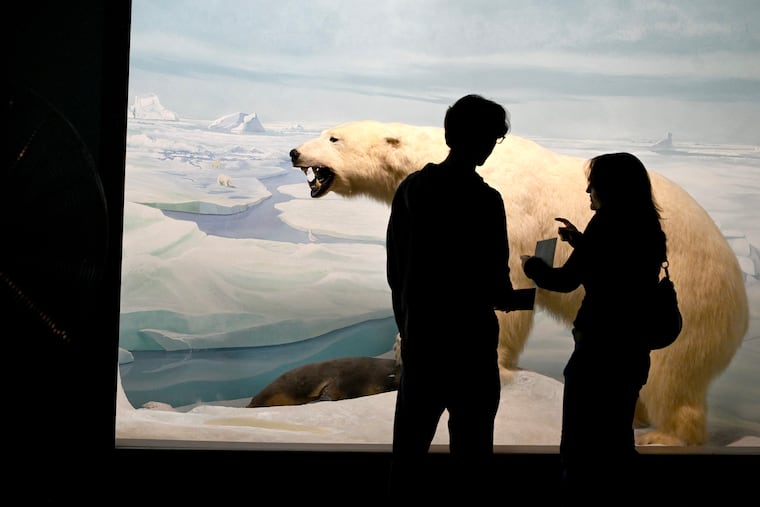
But the museum is only a part of what the academy does. And while most Philadelphians think of dinosaurs and dioramas, the main business of the academy — its “beating heart,” as one board member calls it — will continue, even if it has often escaped the notice of the general public.
Housed backstage beyond the museum walls is one of the world’s largest repositories of natural specimens: bird carcasses, fish, mollusks, minerals, and bones of various kinds — millions of them amassed over more than two centuries.
And now, amid reports that the academy’s building may be sold and the collection moved, all eyes are on the fate of this trove.
“It’s not just the scope of the collection that’s so important — 19 million specimens representing every aspect of the natural world,” says Robert McCracken Peck, curator of art and artifacts and senior fellow emeritus of the Academy of Natural Sciences of Drexel University. “The collections are not only important because of their associations with historical figures like Lewis and Clark and Thomas Jefferson.
“But these collections were made at specific times in history. We can never go back to collect more of these voucher specimens. They tell us how our world is changing.
“It is by definition irreplaceable.”
Microalgae too numerous to count
Among its peers, the academy’s group of species collections is one of the most significant in the world, and is perhaps unrivaled in certain areas of concentration and historical importance.
More than 220 plant specimens collected by Lewis and Clark on their landmark 1804-06 expedition between the Mississippi River and the Pacific Ocean are housed at the academy. Among the institution’s corresponding members over the years were Thomas Jefferson, John James Audubon, and Charles Darwin. The American Medical Association was founded here in 1847.
The plants and fungi collection holds 1.4 million specimens of algae, lichens, fungi, and slime molds and includes some of the oldest and most important plant collections in the Americas. The invertebrate paleontology collection is the oldest such collection in the United States.
The number of diatoms in that collection is unknown, says Laura Aycock, manager of the academy’s hoard of the single-celled microalgae that are neither animals nor plants, though the academy has around 300,000 slides, with some slides containing upward of a hundred thousand diatoms.
“I’m not going to attempt to calculate that,” Aycock said.
The diatoms captured at the academy — which go back to the 19th century and come from around the world — serve as a time capsule.
“You can actually look at water quality and monitor how it’s changing and biodiversity of the diatoms looking at our slides,” says Aycock. “So people will reach out wanting to see, ‘Hey, can I see a snapshot of what this river looked like X many years ago?’”
The academy’s collections are a magnet internationally, says Ted Daeschler, professor emeritus, curator, and chair of vertebrate zoology at the academy.
“It’s a stopping point for people studying a wide variety of different things,” says Daeschler. “Every time I talk to any mollusk person in the world who’s done research, they’re like, ‘Oh yeah, I’ve been to the academy. I’ve done research there.’ Talk to anybody working on crickets and grasshoppers — ‘Oh yeah, I’ve been to the academy.’ People working on Devonian fish, they all came through at one point or another.”
The academy has seen some novelties over the years: an albacore tuna shipped to the institute from Ernest Hemingway in 1934, fingernail samples from now-retired U.S. Supreme Court Justice Stephen G. Breyer collected in 2010, and two red-eared sliders donated in 1977 by Sylvester Stallone as souvenirs from the original Rocky film.
Hemingway’s tuna remains. But Breyer’s fingernails were tested for stable isotopic composition of carbon and nitrogen to determine the justice’s diet and then discarded, and the turtles Cuff and Link are no longer with us, a spokesperson said.
A key to the ‘next pandemic’?
If some of the collections work and research going on at the academy seems esoteric, there’s no way of knowing what might become urgently relevant at some point.
“We all lived through a pandemic recently — pretty much hell on earth for most of us,” says Jason D. Weckstein, curator of the academy’s ornithology collection and professor at Drexel University College of Arts and Sciences.
“Understanding the ecological interactions that lead to those kinds of events is part of this kind of research. So why are some parasites specific to some hosts, whereas other ones can jump between hosts easily, and there are ecological characteristics that allow that?”
“You just never know when something’s going to happen in the world,” says Weckstein, “and then it turns out there’s something here. We have tissue samples from all over the world. It’s possible we could discover something in those samples that is important for understanding the next pandemic.”
That’s possible, in part, because in the future, specimens might be tested for characteristics whose existence is beyond our current base of knowledge.
Paul Callomon, the academy’s collection manager for malacology and general invertebrates, says that when the first snails entered the academy, “We had no idea what an isotope was. Nobody knew anything about that. But we had an unshakable faith that if we preserve and stabilize these things, as time goes on, they’ll become more important to more people. And so it’s turned out to be. And now of course, with climate change and with this enormous Anthropocene influence on the natural system, the number of ways in which our specimens are going to help tell that story is enormous.”
Each specimen functions as an irreplaceable snapshot in time. Organic materials in their environment are continually breaking down and becoming something else. But when a bird or fish is plucked from its environment, it becomes a permanent record — of itself, but also of the world as it existed at that particular moment.
Biological specimens are often called upon to help solve certain mysteries.
“There are examples in the world generally of new pharmaceutical products being developed from the study of mollusks and their venoms,” says Callomon, “or closer to the academy, we provided shells that were material evidence in the lawsuit against BP for the gulf [Deepwater] Horizon oil spill — historical specimens that proved there was oil in the gulf’s waters before any drilling started, but that it was of a very low level.”
There’s a bigger role now for the academy’s species collection to play, Callomon says.
“The real world is on fire. And the real natural world, the natural ecosystem that sustains all life on Earth, is undergoing enormous changes at the moment. And the only place that you can find material evidence for what it was like before that started, or what it was like at an earlier stage of that process, is natural history collections, and they are mostly housed in museums.”
‘Profound concern’
Curators and scientists say that as the academy has arrived at a vulnerable juncture, its collections and research are more critical than ever given the march of climate change, microplastics contamination, biodiversity loss, and other crises.
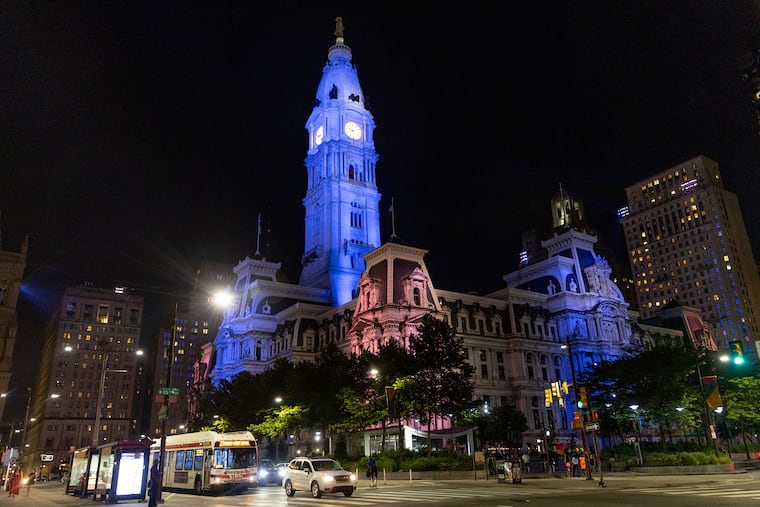
The scientific powerhouse’s own future is a question mark at the moment. Drexel is facing deficits and a challenging enrollment environment, and, in a cost-cutting move a decade and a half after a partial merger of Drexel and the academy, the two groups announced last week that the academy museum will end its nearly two-century run at the end of the month.
The aim now is to move the collection and sell the building, according to a source close to the situation who asked not to be identified. This raises questions about the fate of the academy’s historic building and the critical mass of the Parkway’s cultural attractions, as well as concerns for the future of the collection and the academy’s historically significant library and archive, whose holdings span five centuries.
“Profound concern” is how a group whose board includes the largest and most important natural history and science centers in the U.S. has expressed its apprehension over the future of the academy.
“As the oldest natural science research institution and museum in the United States, the academy is a globally important natural history collection and center for biodiversity research,” the Washington, D.C.-based Natural Science Collections Alliance wrote in an April statement after news of a potential schism between Drexel and the academy.
“Any administrative or structural changes at the Academy must prioritize the integrity of these collections. The destabilization of the institutional support or the specialist staff required to maintain these specimens for active use in research would represent an immense loss to the city of Philadelphia, the state of Pennsylvania, and the global scientific community.”
The NSCA’s concerns remain, said president Trina E. Roberts this week, and while “we’re glad to see that the importance of the collection has been acknowledged in public statements,” she said, the closing of the museum was an unwelcome surprise.
“Education, research and collections are all part of a truly functioning natural history museum. It would be wonderful if the academy can find a way to maintain all of those,” she said.
Academy leaders say they will work to find “new and financially sustainable opportunities for the public display of elements” of its collections, but have not specified any details.
In a statement last week, the two institutions affirmed their attention to the trove of specimens, library, and archive.
“The stewardship of the Academy’s collections and their use to advance scientific knowledge will be the focus of our work for the near future,” said a statement from Drexel president Antonio Merlo and academy board chair Suzanne Biemiller.
A Drexel spokesperson this week said there were no immediate plans to move the collection, and, regarding a potential sale of the building, “no decisions have been made regarding its future disposition.”
“The academy’s home will continue to house its collections, library, archives, and laboratories while Drexel and academy leadership consider potential pathways forward,” said Britt Faulstick.
Should relocation become part of a future plan, Faulstick said, “maintaining appropriate access to the collections for research [during a move] would be an important consideration in that process.”
‘A recipe for disaster’
Moving the collection would be expensive and time-consuming, says Peck, who, with Patricia Tyson Stroud, co-authored A Glorious Enterprise: The Academy of Natural Sciences of Philadelphia and the Making of American Science.
Peck says that in the 1970s, parts of the collection were moved into the former Reliance Standard Life Insurance Co. building on Pennsylvania Avenue now occupied by the Philadelphia Museum of Art, and then, a short time later, were moved back.
“I imagine it would take a couple of years,” he says of a potential move now of 19 million specimens, “because that’s how long it took to move our collections to and from the Art Museum area, and they didn’t even move them all.”
“It can be done, and it can be done in a professional and careful way that maintains the integrity of the collection, but you can’t do it in a hurried way,” says the NSCA’s Roberts. “That is a recipe for disaster for a collection of this size and importance. They need to plan for a year before they move any specimens out of the building.”
Collections like these require a specific kind of care, says Roberts, who is also associate vice president for collections at the Natural History Museums of Los Angeles County.
Specimens can degrade over time if not maintained properly, she said.
“We rely on good temperature and humidity control depending on what kind of specimen you have. A dinosaur bone that is basically stone is a lot less sensitive than a plant specimen that is a dried leaf. We’re also concerned about the curatorial and collections expertise that’s represented by the staff.”
Much of the academy’s collection is digitized, and a certain amount of information can be gleaned online, but for some purposes, the actual specimen must be available, which happens either by a visit to Philadelphia or a loan.
“DNA research is just exploding in natural history collections because it turns out that we have this resource we’ve been building for hundreds of years that can still be used for DNA,” says Roberts. “So a plant specimen, an insect specimen, a mammal specimen in a natural history collection from 100 years ago, you can get DNA out of that, and that’s an amazing resource. You absolutely cannot do that from a digitized record.”
It’s possible now, she says, “to look at actual gene expression patterns in different environments — for example, what genes are turned off or turned on in cold vs. hot conditions. That might be something important in an era of climate change if we want to understand how something like plant communities and animal communities are going to respond to that.”
‘It changed their minds completely’
The academy-Drexel partnership, 15 years in, was much in evidence during a several hour visit in early August. In one room at the academy, a group of students was removing organs from birds, and in another, Drexel environmental sciences undergraduate Ean Geller-Nocella was examining a freshwater drum, an invasive species that’s recently turned up in local waters, to see what the fish has been eating.
“I’ve been cutting them open, taking out their stomachs and removing the stomach contents. All that is mussels — freshwater mussels,” he said, referring to a small cluster of crushed up shells.
Another invasive species is being looked at by the academy.
“Ten years ago in Tinicum, snakeheads weren’t there and we got a picture of what the diet was for the resident fish,” said David Velinsky, senior scientist of the Patrick Center for Environmental Research and professor at Drexel University College of Arts and Sciences. “They’re now there, so we’re doing a study. We already have the samples collected, analyzing on the mass spectrometer how the food web changed, and this gives us an idea of what needs to be protected or not protected.”
Weckstein recently had a Drexel undergraduate student who sequenced the genomes of the parasitic lice living on vultures.
Having students working there “just adds a vibrancy to the place,” says Velinsky.
Says the malacology department’s Callomon:
“I think the role that I’m proudest of our collection’s playing is when Drexel undergrads come here on their co-op and we have successfully diverted careers in medicine, the law, and engineering in favor of working in our part of the world, in our part of science, because of the experience. They came and did a six-month co-op here and it changed their minds completely. It changed their minds because it moved their hearts, and your heart is what drives your mind. But they had no way of previously knowing.”
One persuading factor: at the academy, students have direct, hands-on contact with specimens in the collection.
“Other places use photographs,” says Peck. “Drexel students, thanks to the academy, get to work with real specimens, which dramatically enhances their interest in and understanding of the natural world.”
Just another reason, advocates say, that the academy’s treasures must be kept intact and accessible to all.
“My greatest concern is over keeping the collection together,” says Peck. “It needs to be cared for, for reasons that extend well beyond Philadelphia and the academy. These are collections we hold in trust for the world.”
Staff writer Susan Snyder contributed to this article.