William Penn Foundation offers funding to keep Academy of Natural Sciences museum open
A Drexel spokesperson did not say whether the school had declined the offer, but said, “No proposal has been presented that would provide a permanent, sustainable path forward" for the museum.
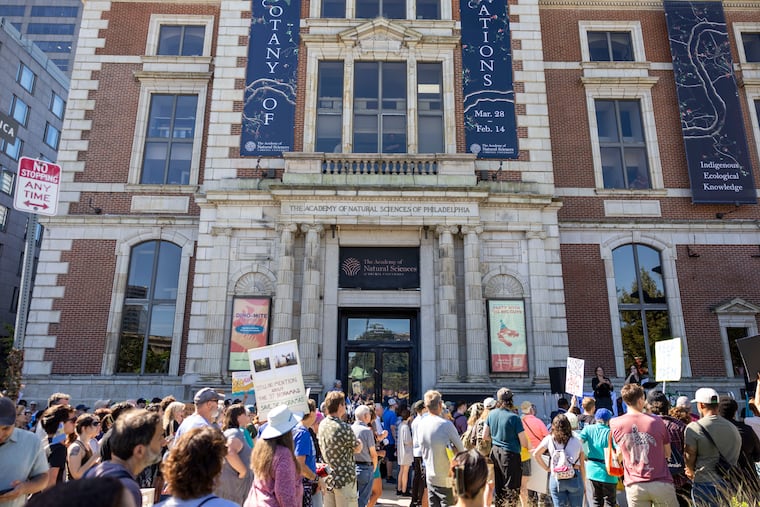
Drexel University has received an offer from the William Penn Foundation that would underwrite operating costs at the museum at the Academy of Natural Sciences of Drexel University while its survival could be studied.
The money would float the continued operation of the museum for at least a year while questions about the Academy’s viability could be examined — matters such as how much money would be required to cover deferred maintenance on the building, how much it would cost to adequately fund and run the museum, and what the potential fundraising capacity would be.
On Sept. 1, Drexel and the Academy announced the closure of the museum as of Sept. 30, with Sunday being the last day open to the public.
Shawn McCaney, executive director of the William Penn Foundation, one of the largest and most influential funders of arts and culture groups in the region, said in a statement that the foundation values the “importance of the Academy of Natural Sciences and its deep history, its presence on the Parkway, what it contributes to critical scientific research, and its public facing museum which has engaged generations in science learning for hundreds of years.
“We have offered to cover the cost of the operating subsidy Drexel has been providing to keep the museum open for at least another year so that the full range of options for the future of the museum could be properly explored, and to provide time to test the interest of other funders and supporters who have not been engaged so far.”
A Drexel spokesperson did not specify whether the university had declined the offer, but said: “No proposal has been presented that would provide a permanent, sustainable path forward for the Academy’s museum. We sincerely appreciate the many ideas and expressions of support.
» READ MORE: The Academy of Natural Sciences is closing its museum after nearly two centuries
“At this time our efforts remain focused on securing a permanent, financially sustainable future for the Academy, one that protects its collections and research enterprise and provides meaningful opportunities for public engagement over the long term.”
Academy of Natural Sciences board chairperson Suzanne Biemiller said the Academy was supportive of the idea of staying open beyond Sunday.
“The Academy has learned of an offer to keep the museum open for an interim period of time and give us some breathing room to reimagine a path forward working with the philanthropic community and the larger community. Certainly as a board we are open to the idea and are truly grateful.”
That said, as of Friday afternoon, Biemiller said she was operating under the assumption that the museum would be closing for good to the public at 5 p.m. Sunday.
A second rally by the Save the Academy coalition is planned for Saturday afternoon and a candlelight vigil and march to City Hall on Sunday, beginning at 5 p.m. A rally was held earlier this month shortly after the Sept. 1 announcement.
» READ MORE: The Academy of Natural Sciences museum is closing, but all eyes are on its specimens — all 19 million of them
The plans for the museum come after weeks of public shock and dismay from a broad swath of government officials, civic leaders, science advocates, and families.
City Council members have called for public hearings. Petitions calling on Drexel and the Academy to reverse the decision have drawn tens of thousands of signatures. And families, children, and others have taken to their feet. Attendance at the museum last weekend was about 14,000 over three days — a sum that, if it could be repeated every weekend of the year, would bring more visitors to the Academy annually than almost any other cultural attraction in the city.
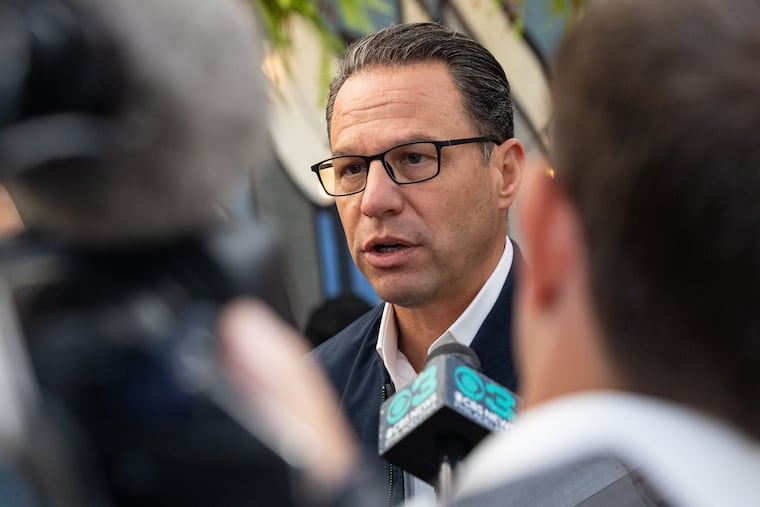
Former Comcast executive and U.S. Ambassador to Canada David L. Cohen, who has been involved in the talks between Drexel and the Academy at the behest of Gov. Josh Shapiro, said on Friday that the museum cannot survive in its current location, which has far too many deferred maintenance needs. The better approach, he said, is to find an alternative museum or exhibition space and then seek funders to support the plan.
“When we have a plan, it likely will require some funding,” he said. “And then we’ll go to the philanthropic community, which seems so eager to write a check with a real plan where money can actually accomplish something and accomplish something that would be valuable.”
Cohen said the agreement between Drexel and the Academy preserves the research and education components of the Academy and the third leg — coming up with a plan for a new museum space — is still being worked on.
“We need to have a real plan which is likely to be a community-based plan, that is, with multiple institutions coming to the table,” he said. “We just need the time to put that together and no one is helping things by offering Band-Aids.”
While Cohen said he was aware, and appreciative, of various offers from the philanthropic community, they are “premature,” he said, and “not founded in the true facts of what’s going on here.”
He did not specifically address the William Penn Foundation offer.
At-large City Council member Nina Ahmad said on Thursday she is continuing to explore what can be done to help the academy both with its capital and operational needs and to be sure its endowment is protected.
“We are taking some steps to do our due diligence to understand where we are,” she said. “We are getting hundreds and hundreds of emails with concrete suggestions. We are going through those suggestions.”
She said one thing to explore is whether the PIDC, Philadelphia’s public-private economic development corporation, could provide a bridge loan that would help secure other financing. The Preservation Alliance for Greater Philadelphia also is applying to get the Academy building on the National Historic Register, which might open up other funding streams, she said.
A hearing on the Academy also will be held before City Council, but the date hasn’t been set. Ahmad said the resolution authorizing the hearing included subpoena powers so that Drexel officials will be required to testify.
“It should not have come to this,” Ahmad said. “Somebody has just been moving along without addressing problems in a timely way,” she said.
A spokesperson from the mayor’s office declined to comment on the offer put forward by the William Penn Foundation.
Drexel and the Academy earlier this month reached a tentative agreement that will continue their affiliation and maintain Drexel’s financial support of the Academy. Negotiations continue on final terms.
Niki Gianakaris, the Drexel spokesperson, said the Academy and Drexel are continuing discussions and “nearing an agreement that will establish a new framework for the relationship between the two institutions and support the Academy’s path forward.”
The Academy’s collections, research activities and exhibit materials will remain in the building “while Drexel and Academy leadership consider potential pathways forward,” she said.
William Penn’s McCaney said that a creative solution was possible given the challenges that the arts and culture sector has faced down before.
“This is a city that can do great things — we saved Eakins’ The Gross Clinic and Parrish’s Dream Garden when they were in jeopardy of leaving Philadelphia. We built an incredible new museum on the Parkway — Calder Gardens. The partnership between the Free Library and the Rosenbach kept a cultural treasure accessible to the public. Those efforts took strong leadership and bringing together partners with the political, intellectual, and financial capital to keep our city at the forefront of arts, culture, and science. We are ready to contribute to an effort with similar thought, ambition, and collaboration.”