At the Kimmel, jazz legend Herbie Hancock gave way to rock star Herbie Hancock
“Let’s see if we can have some fun,” is how the keyboardist and composer started the evening that had him joking about his age. Neither his playing nor his stamina showed any signs of slowing down.
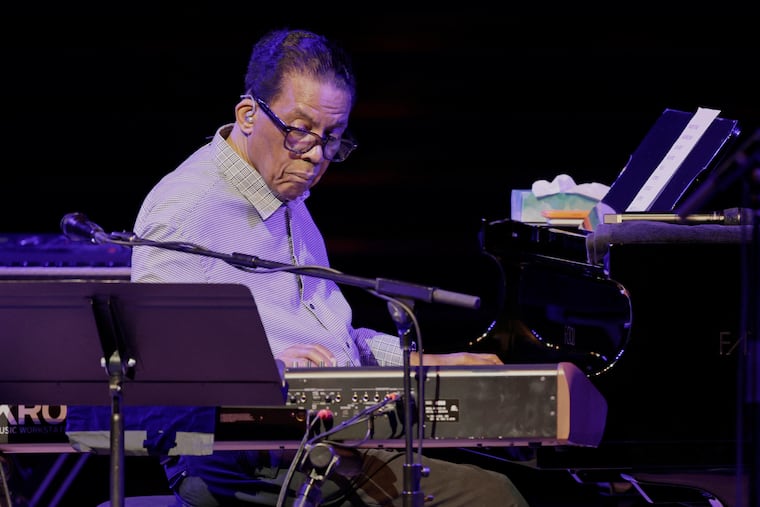
At some point in his 86 years of life, Herbie Hancock — one of the most revered artists in jazz — became a rock star.
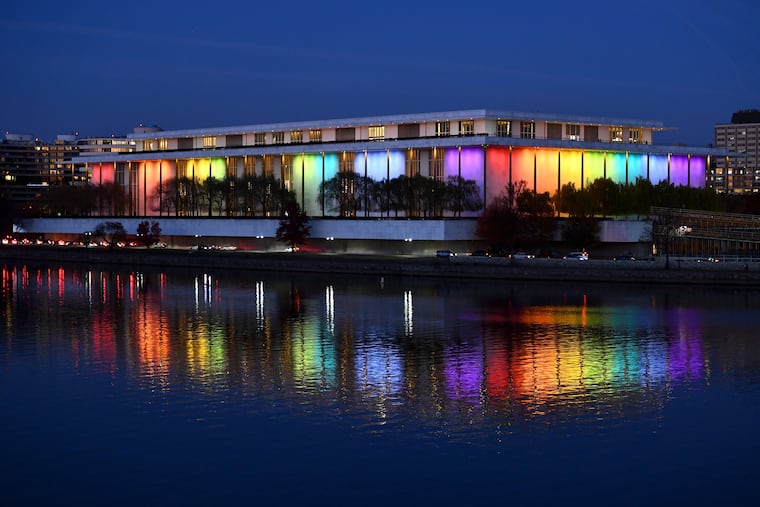
That was evident simply from the rapturous reception that greeted the legendary keyboardist and composer at Kimmel Center’s Marian Anderson Hall on Wednesday night, from a packed crowd that would have been a demographer’s dream.
The point was driven home throughout his nearly two-hour performance, which was raucous, pyrotechnical, and just plain big.
That includes the members of his audacious quintet, outsized musical personalities all.
Trumpeter Terence Blanchard is a fellow NEA Jazz Master who likely answers few calls for sideman work these days, busy as he is writing scores for Spike Lee and other filmmakers, composing acclaimed operas, and leading his own band.
Benin-born guitarist Lionel Loueke pairs a singular sound (Hancock mused that he must be “either alien or AI”) with vocals that incorporate Xhosa-inspired rhythms and tongue clicks.
James Genus is a virtuoso with a deep groove whose Saturday nights have been booked solid for more than 25 years as the bassist in the SNL band.
The wild card was 27-year-old drummer Jaylen Petinaud, who played with the destructive force of a bulldozer, an avalanche of funk that provoked his elders on the stage into visceral flights. He was embraced so quickly by the Kimmel crowd that he received a trademark hazing, getting heckled for daring to show up for the gig sporting a Knicks cap. He obliged by turning the offending logo to the back.
Hancock, attempting to introduce the band, was unaware of the details but quickly picked up on the vibe, asking, “What’s that, some Philly stuff?”
As tumultuous as the set would become, it began in a meditative mood. Hancock spent the first few minutes musing on “Maiden Voyage,” the title tune from his 1965 Blue Note classic, letting the melody submerge and rise again from his elegant, gossamer lines as if gently bobbing on ocean waves.
After a few minutes, he turned to his right, bringing in the band with the familiar strains of “Watermelon Man” on his Korg keyboard. In that 90-degree swivel was represented a pivot point in jazz, the turn from the acoustic piano to the electric keyboard and the adoption of ‘70s rock into fusion, as embodied by Hancock’s Headhunters.
The bandleader has long since melded the two strains into one, moving effortlessly throughout the show between piano, keyboard, and keytar — the latter allowing him to roam the stage and bend notes like a guitar wizard.
Hancock’s age was a constant theme of the night, for him at least — nothing about his playing or his stamina showed any sign of slowing, even if his gait shuffled more than in the past. By the end of the night, he would be face-to-face with Loueke, wailing on the keytar while executing synchronized jumping jacks with the guitarist more than three decades his junior.
He introduced much of the set with jabs at the material’s age, only backing off when he realized that he might be insulting fans who can remember when these songs were new. “I was going to say this one is older than me, but that can’t be,” he remarked at one point — then added, “Nothing’s older than me.”
This was in Hancock’s introduction to “Actual Proof,” an avant-funk framework for improvisation from 1974’s Thrust that proved to be one of the show’s most vital and exuberant highlights. Driven by Petinaud’s percussive barrage, Hancock erupted into forceful cascades along the piano, his hands crashing down onto the keys and then skittering away into curious, serpentine lines. (“I call that a finger-breaker,” he commented afterward.)
Blanchard’s turn opted for tension, his electronically-enhanced trumpet sculpting sleek contours vigorously resisting the pull of Petinaud’s boisterous funk. Loueke’s quicksilver solo, Genus’ burbling flow unfolding with the logic and cadence of a monologue, and Petinaud’s final explosion rounded out the jaw-dropping showcase.
These classics were balanced by a few newer pieces that Hancock introduced as works in progress, though “Secret Sauce” has been a staple of his setlist for nearly a decade. The other, tentatively titled “Phoelix” after one of its cocreators (along with Loueke and flutist Elena Pinderhughes), was a neo-soul-inflected number featuring Hancock singing through a vocoder. Genus’ eloquent unaccompanied solo, fleet and mellifluous, so impressed one woman in the audience that she was moved to announce, “I love bass players!”
“Footprints” was also included as an homage to the late Wayne Shorter, Hancock’s bandmate in Miles Davis’ second great quintet and “my best friend.” His investigatory piano solo offered a capsule portrait of Shorter’s quizzical and mysterious nature, becoming increasingly insistent and blistering as it unfurled, hinting at stride inflections that further expanded the historical reference points. Loueke’s solo turned from an intricate guitar/vocal pairing to blues-rock shredding, then to taut, gnarled figures, the malleable rhythm section hyper-attuned to every swerve and sudden stop.
“Let’s see if we can have some fun,” is how Hancock introduced the evening, making sure to wave to every section and balcony before taking his seat at the piano.
Mission accomplished, judging by the standing ovation from the crowd and the ear-to-ear grin on Hancock’s face after every tune. He confirmed the feeling with a final outburst of, “We had fun!” before breaking into a giddy run across the stage and shaking hands with an adoring crowd.