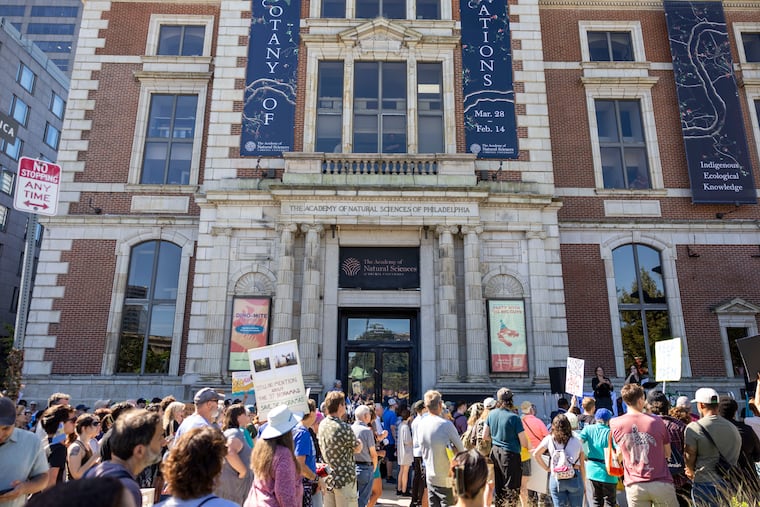
There’s a lot of love for the Academy of Natural Sciences of Drexel University. Where’s the rescue?
No white knight appears to be coming to the rescue, and that's probably because there is no carefully constructed plan of saving the museum.
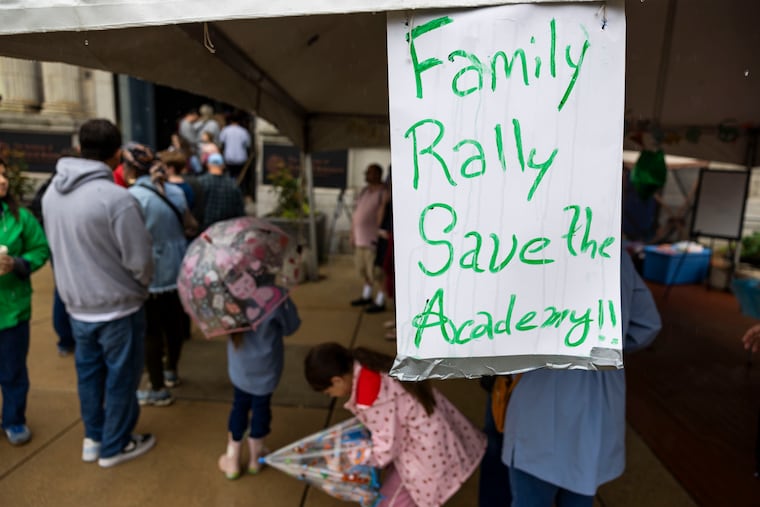
Of all the sensations in the air following the closure of the museum at the Academy of Natural Sciences of Drexel University, perhaps none is more strongly felt than the creeping awareness that no white knight appears to be coming to the rescue.
It could very well be that a savior is on the way. But benefactors generally don’t throw money at a problem that doesn’t have a clearly articulated solution. Most donors think of their funding as an investment — in a carefully constructed plan, in specific leaders in whom they can have confidence, and in a vision for the future.
The Academy at the moment does not appear to have all of these. As previously reported, Drexel and the Academy are still talking, and hanging in the balance is a potential new affiliation agreement that would presumably outline how much Drexel’s financial support of the Academy would be going forward, among other key matters.
If a solution is forming that would reopen the museum and provide a plan for the future, it hasn’t bubbled to the surface yet.
That’s one of the reasons the William Penn Foundation cited when it offered to take over Drexel’s millions in operating support for the Academy for at least a year — “so that the full range of options for the future of the museum could be properly explored, and to provide time to test the interest of other funders and supporters who have not been engaged so far,” Shawn McCaney, executive director of the William Penn Foundation, said last month.
Drexel has neither accepted nor rejected William Penn’s offer.
In other words, to slow down what has seemed like a rushed process long enough to answer critical questions in a thoughtful, objective way.
How much would it cost to run a first-class and well-funded natural science museum in Philadelphia? What is a realistic annual attendance number? What should the earned-vs.-contributed income ratio be? How much would deferred maintenance on the building cost, and is all of the work urgent, or could some of it be phased over time?
Another salient question: If the specimens collections are being moved off-site, could the freed-up space be leased to provide a revenue stream to support a museum that would stay on the Parkway with all the other museums? What about selling air rights for development?
Perhaps lost in the tumult of the past few weeks is the fact that the scale of an immediate rescue isn’t very large compared to some others in the cultural sector.
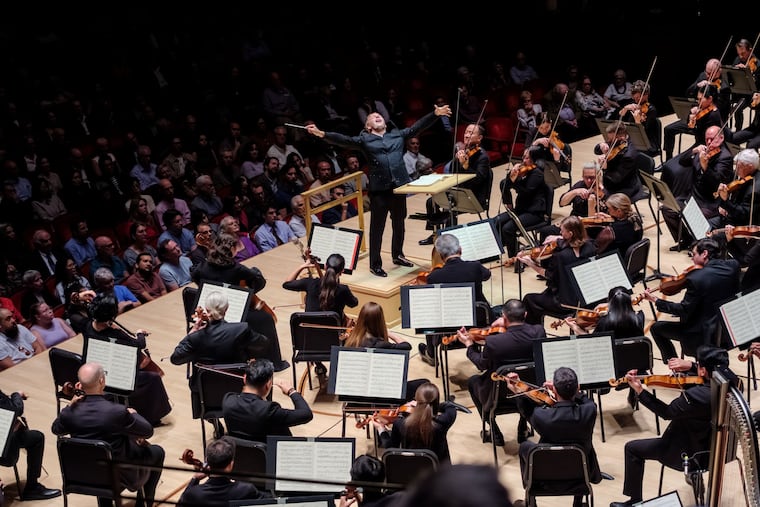
One recent case is Opera Philadelphia, which was in debt just a few years ago and is now playing to sold-out houses. Consider: Opera Philadelphia is well on its way to raising $33 million in three years with an annual ticketed audience that’s about a quarter of the size of the Academy of Natural Sciences’.
Arguably, the opera can raise more money because it’s an art form with a well-heeled crowd. But in reality, the natural donor pool for the Academy is in science, pharma, and biotech — in other words, new-economy money and entrepreneurs, many of whom might be parents who want their children growing up in a city with a first-class natural science museum.
The other question not understood at the moment is what the alternative might be. If it would cost, say, $200 million to renovate the building and fund the museum for a finite period while it builds ongoing support, it’s important to also consider what would be gained or lost in a differently imagined future.
One scenario envisions cutting up the Academy and dispersing its parts, according to a source familiar with plans who declined to be named because they were not authorized to speak.
The collection of 19 million specimens would go to one place; the library and rare books deposited on long-term loan to another library; the research arm placed with another institution; the live animals given to a zoo to be cared for; and the museum would no longer be a stand-alone experience, but a less ambitious attraction spliced onto another institution.
In other words, the Academy of Natural Sciences would no longer be its own distinct thing with the kind of synergism that currently exists among the collections, research, and museum.
The challenges on both sides are understandable. Drexel is feeling the pressures of shrinking enrollment trends being felt across higher education generally; over about the last decade, the university has lost about 20% of its enrollment, The Inquirer reported earlier this year. The Academy has struggled for audiences and bandwidth in a highly competitive environment in the arts and culture sector.
Though the Academy had worked to rebuild attendance after the pandemic, “patterns of visitation and audience behavior changed in lasting ways, while the costs of operating the museum continued to rise,” the statement announcing the museum’s closure last month said.
But at this particular moment it feels like something is slipping away, and the stewards of an institution that connects deeply to both the hearts and minds of millions are shedding little light on the animating factors of ongoing negotiations.
David L. Cohen, who was brought in to lead talks for a new affiliation agreement between Drexel and the Academy, has recently directed those involved to not speak publicly about it. A City Council hearing on the matter slated for Wednesday has been postponed until the end of the month because of a scheduling conflict.
And Philadelphia, it seems, is at risk of becoming the city that can afford an opera company but not an institution that educates the public about the natural world.
There’s something else at stake, and it’s probably a stealth reason the fight has taken on so much energy. This is the second time in recent memory that a major local cultural institution has gone under with no public warning, and no public plea for help. The University of the Arts in 2024 disappeared with just a few days’ notice and no public appeal for outside help, and now it’s happened again.
In this case, it seems the arts and culture community has had enough. There’s a tremendous groundswell of support for an institution that for years had been quietly gasping for air. Are the stewards of the Academy are able to seize the moment and channel all of this energy and goodwill into a solution?
The whole city is watching.