Lincoln University just sued Lower Oxford Township in federal court over event rules it says are unconstitutional and racially discriminatory
The historically Black school argues that Lower Oxford’s newly passed ordinance is racially discriminatory and singles it out unfairly.
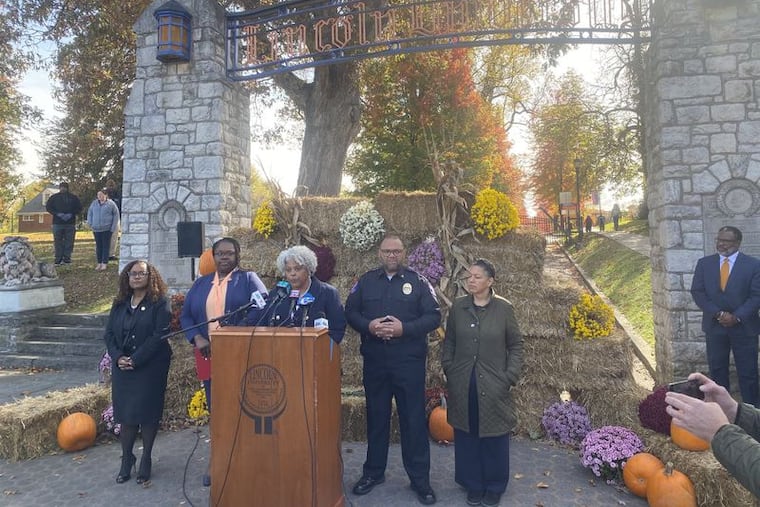
An event ordinance passed earlier this month by Lower Oxford Township unfairly targets Lincoln University and is unconstitutional and racially discriminatory, the historically Black school said in a federal lawsuit filed Tuesday.
“The ordinance’s disparate negative impact on the Lincoln University community is the result of deliberate racial gerrymandering — or other illicit gerrymandering — by the Defendants,” the school’s lawyers argued in the complaint, filed in the U.S. District Court for the Eastern District.
The suit notes that the township’s three supervisors are white and that the population of the township nestled in farm fields with about 5,000 residents is “overwhelmingly white” except for Lincoln’s community.
» READ MORE: Lincoln University is facing pressure from its Chester County neighbors after homecoming shooting
The ordinance seeks to regulate events with more than 500 people, requires a permitting process, allows the township to revoke permits without a hearing for a violation, and threatens to prohibit an entity from applying for another permit for two years if a violation occurs. In the permit request, applicants will be asked to address security, parking and traffic impact, number of attendees, planned activities, and other elements. Violations will result in fines of up to $1,000, the ordinance states.
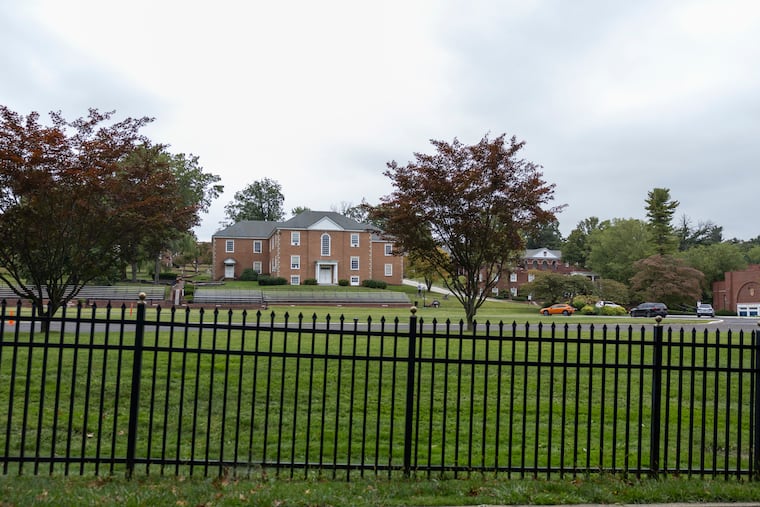
The rural Chester County township began looking at enacting the ordinance following the shooting last October of seven people, one of whom died, on Lincoln’s campus during homecoming festivities. Township officials also had cited ongoing concerns about traffic, trash on neighbors’ lawns, and other disturbances, including crimes, during large events on the 422-acre campus, where 1,650 students are enrolled. The township previously had passed a parking ordinance in response to access issues created during large events at Lincoln.
» READ MORE: Fatal shooting at Lincoln University was carried out by gunmen looking to rob students’ jewelry, DA says
Deborah Kinney, township secretary/treasurer and codes enforcement officer, said Tuesday she had not been aware of the lawsuit until The Inquirer called. She declined immediate comment.
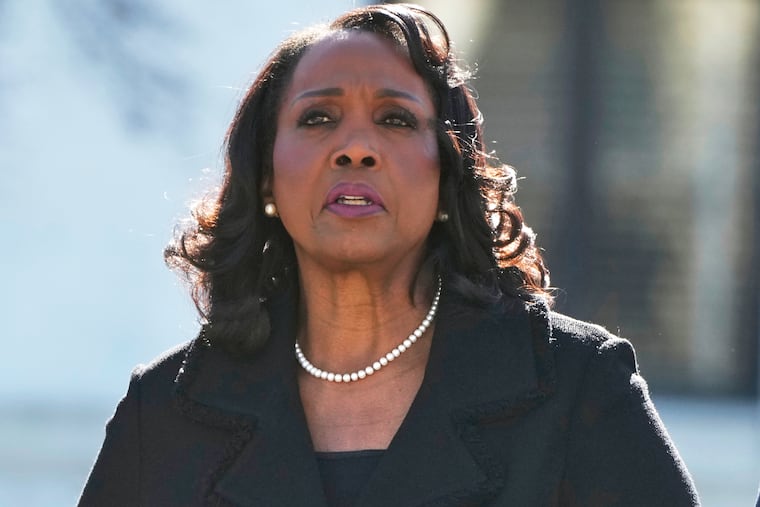
Lincoln president Brenda A. Allen said the university is seeking to stop the township from depriving members of its community of their First Amendment rights to free speech, freedom of assembly, and freedom of religion. The ordinance, she said, is attempting to restrict the university from events that are essential to its academic mission.
“Lower Oxford Township’s ordinance is a targeted, unconstitutional overreach that threatens the hallowed traditions ingrained in the university’s foundation,” Allen said in a statement Tuesday. “Lincoln University will remain on the front lines of protecting, defending, and advancing our community as we take this matter seriously.”
In its ordinance, the township states that “activities associated with special events can constitute a hazard to the public’s health, safety and welfare and that these activities can also create a public nuisance when unregulated.”
The township’s supervisors, the ordinance states, have “determined that the impact of special events that involve large numbers of attendees on roads and other infrastructure within the Township represents both a traffic hazard and an impediment to the delivery of emergency services to residents of the Township and therefore constitutes a nuisance.”
» READ MORE: Lincoln University is conducting an ‘after-action review’ after fatal Homecoming shooting
The shootings that spurred the township to begin considering an ordinance occurred Oct. 25, when thousands gathered on campus for Lincoln’s homecoming. Emergency personnel had to use all-terrain vehicles to transport patients on stretchers because ambulances could not access the campus, given how many cars were parked around the venue, township officials said at the time.
While the ordinance applies to other township events, the school’s lawyers argue that it targets Lincoln and specifically names examples of special events subject to regulation as “College homecoming or other similar events, college, university or school commencement, graduation or baccalaureate.”
“It was enacted by the township with the deliberate purpose and with the calculated effect of targeting Lincoln,” the school’s lawyers argued. “Specifically, the ordinance was enacted to interfere with Lincoln’s academic mission and with the speech and other academic activities of the Individual Plaintiffs and their academic colleagues.”
The ordinance targets events with over 500 people “with the knowledge that the Lincoln University community is at all times several times in excess of that threshold” and “with the knowledge that very few — if any — of the events outside of Lincoln would exceed that threshold,” the lawyers said.
The ordinance, the school’s lawyers argued, violates Lincoln’s constitutional rights by imposing restrictions on its speech and “its ability to serve as a marketplace of ideas.” The ordinance also violates the First Amendment right to assembly because it treats events of more than 500 people as a nuisance, the lawyers said. And the lawyers said it infringes on religious freedom by naming baccalaureates, which they said “in general — and baccalaureates at Lincoln in particular — are religious services.”
They objected, too, that the township has sole discretion over whether an event is subject to the ordinance and over whether it should be permitted, and that no objective standards exist. And they disputed the township’s intention to require event holders to have liability insurance subject to approval by the township solicitor.
“The ordinance also makes the sponsor of a special event liable for actions of people over whom it has no control,” the school’s lawyers argued.
The ordinance states that the sponsor “shall be responsible to the township for damages sustained to township property caused by participants in the special event.”
Founded in 1854, Lincoln is known as the first degree-granting historically Black university in the nation. The first presidents of both Nigeria and Ghana are Lincoln graduates, as are Philadelphia Mayor Cherelle L. Parker, former U.S. Supreme Court Justice Thurgood Marshall, and poet Langston Hughes.
The school has received $45 million in gifts from philanthropist MacKenzie Scott, the ex-wife of Jeff Bezos. Allen, Lincoln’s president, who in 2020 had survived an internal battle to oust her and had her contract extended to 2030, was named a top leader of a historically Black college by a national nonprofit in 2021.
» READ MORE: Lincoln University announces new plans for event safety following homecoming shooting last year
Township officials had been expressing concerns about events at Lincoln for a while before the homecoming shootings brought renewed attention.
In spring 2023, two women were shot and injured on Lincoln’s campus during its annual Spring Fling event. In 2022, a student was fatally stabbed by the sister of a student during a fight inside a dorm. During an on-campus dance in 2018, 15 students were taken to the hospital following a brawl in which a security officer was assaulted. In 2016, there was a robbery and shooting on Lincoln’s campus following homecoming. And in 2015, Lincoln tightened security after shots were fired in a dorm.
» READ MORE: Mother of 20-year-old killed in Lincoln University homecoming shooting sues school
At the homecoming last October, Ju’Juan Jeffers, 20, of Wilmington, was killed, and six others, ages 20 to 25, including a student, were also shot. Jeffers’ mother subsequently filed a lawsuit against the school, and three Wilmington men — William Sells, 20; Makaveli Valera, 19; and Karon Rollins, 17 — were charged with second-degree murder, conspiracy, and related crimes in connection with the shootings.
“We have had meetings with people at Lincoln,” Township Supervisor Noel Roy said last December. “They’ve been somewhat reluctant to do what needs to be done to try and control the situation.”
Allen at that time acknowledged that changes were needed around large events as well as better collaboration with the township.
“We want to come together because we are a part of this community as well,” Venus Boston, Lincoln’s general counsel, said during a supervisors meeting last December.
Before its Spring Fling in April, the university announced new safety plans for large events, including no outdoor events after dusk, screening guests, and allowing only one registered guest per student.