Measles outbreaks present ‘very real threats’ in Philly schools. Here’s how officials are working to prevent them.
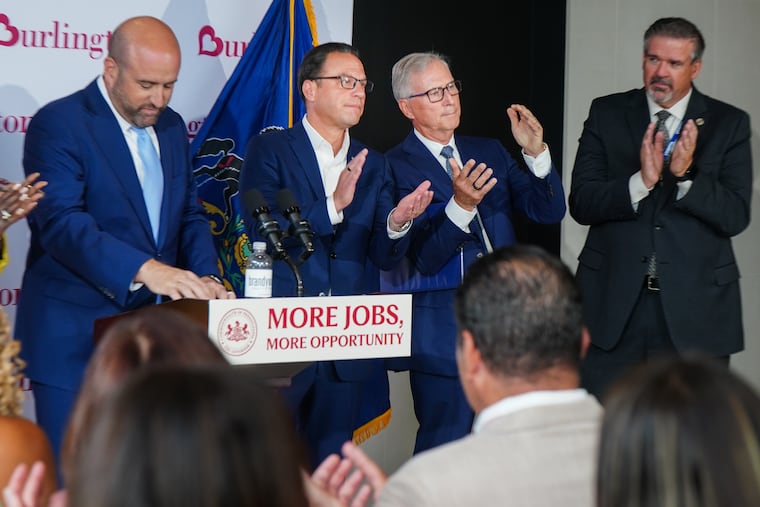
“We are seeing in real time the tragic consequences of children and adolescents not getting vaccinated," said Kendra McDow, the Philadelphia School District's chief medical officer.
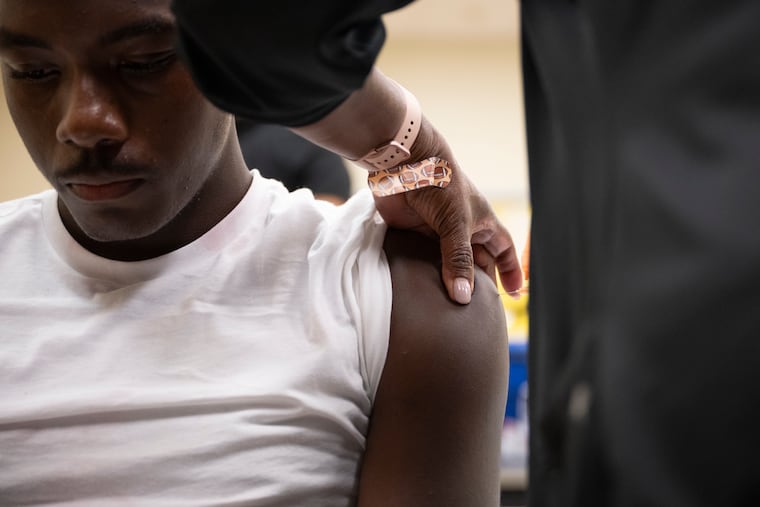
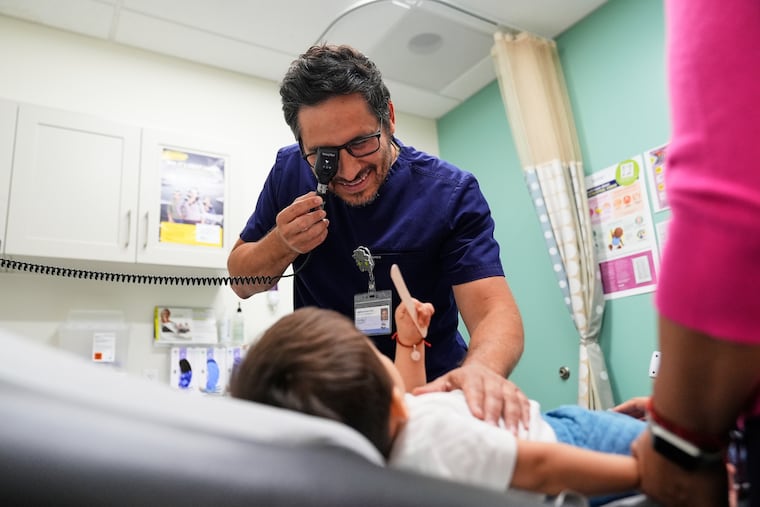
Families with kids in tow lined up Thursday at Benjamin Franklin High School for a one-stop shop: physicals, mental health services, vision screenings, and, perhaps most important, vaccines.
The Philadelphia School District is making a full-court press to get its vaccination rates up, amid a statewide measles outbreak and news that some city schools saw double-digit declines in kindergarten immunization rates in the 2025-26 school year — leaving communities vulnerable to further measles spread.
» READ MORE: New vaccination data show hundreds of Philly-area schools vulnerable to a measles outbreak
Kids must be healthy to learn, said Kendra McDow, a pediatrician and the district’s medical director, and vaccines against diseases like measles, whooping cough, and chickenpox are crucial protection.
“In 2026, these diseases are very real threats to the health of children and communities,” McDow said. “We are seeing in real time the tragic consequences of children and adolescents not getting vaccinated.”
Two people in Lancaster County who tested positive for measles have recently died, state officials said Tuesday. They were Pennsylvania’s first measles-related deaths in 30 years. Both of the people were unvaccinated.
To achieve community protection, which scientists call herd immunity, 95% of a school population must be vaccinated. And though Philadelphia’s vaccination rates remain relatively strong compared with other pockets of the state, about 40% of kindergarten classrooms across Philadelphia and its surrounding suburbs became vulnerable to a measles outbreak last school year, up from a third of classrooms the year prior, according to an Inquirer analysis of state data.
To boost city immunization rates, the district is focusing on access — from a back-to-school bus tour this summer that came with a side of childhood vaccines to the Benjamin Franklin event over two weeks, which runs through Friday.
Parents can register their children at the district’s Constance E. Clayton Education Center, at 440 N. Broad St., then walk up the block to Ben Franklin, at 550 N. Broad, to get their children vaccines and other preventive healthcare, including connection to mental health services and appointments to get eyeglasses.
Measles is now in 28 Pennsylvania counties, with more than 400 cases reported this year — nearly half in the last month. No cases have been reported in Philadelphia, but the highly contagious disease is circulating in suburban Chester County.
Pennsylvania had the most newly reported measles cases in the nation last week, said Ala Stanford, founder of the Black Doctors Consortium, and 73 state residents have been hospitalized.
Pennsylvania now has the highest number of cases reported in the state since 1991.
“This is not a mystery. It’s arithmetic,” Stanford said. “It takes 95% of us vaccinated to stop measles from moving through a community. Pennsylvania is at about 93%, and not one county in this region is at 95%.”
What parents need to remember, Stanford said, is that since children traditionally have not received their first measles vaccine until age 1, “every infant in the city, in the stroller, in the car seat, at the family reunion has no protection of their own. We are their protection. That is the entire system.”
In response to the current outbreak, state officials have started recommending that parents in affected areas vaccinate children as early as 6 months with a “zero dose” to provide extra protection against a disease so contagious that it will infect nine in 10 unvaccinated people who are exposed.
The benefits of community protection go beyond babies and children, Stanford said: “It’s the teacher. The lunchroom lady, the man who sweeps the floor, the security officer at the door — you do not know who they go home to at night. You do not know who is on chemotherapy, who has had a transplant, who is caring for a newborn.”
‘Why so many?’
School officials plan to set up individual vaccine clinics at schools that have problematic compliance rates.
Emlen Elementary in Mount Airy, for instance, had a 100% vaccination compliance rate among incoming kindergarteners two years ago. Last year, it dropped to 80%. (Many Emlen families cited philosophical or religious exemptions to vaccination.)
Ericka Hayes, senior medical director of infection prevention at Children’s Hospital of Philadelphia, said rampant misinformation about vaccine safety certainly contributed to lower vaccination rates.
“Parents should not let that sway them from giving their children one of the most tested and effective childhood interventions in history,” Hayes said.
Disruptions from the pandemic are another factor in lagging vaccine rates, Stanford said.
At a recent clinic at Strawberry Mansion High, Stanford said, children from 30 schools across the city showed up for shots.
“We had 14- year-olds getting four shots, and we said, ‘Why so many?’” Stanford said. Families told care providers that they had fallen off on vaccine schedules, but were relieved to have a chance to catch up their children.
As word spreads about vaccine access, about ease and availability across the city, “more people show up,” Stanford said.
Kids can be excluded for vaccine noncompliance
Children can be excluded from school under Pennsylvania law if they are unvaccinated and their families have not formally filed for an exemption on religious or philosophical grounds.
According to state data, the Philadelphia School District excluded 34 12th graders, five seventh graders, and three kindergartners last school year for vaccine noncompliance.
Far more students were labeled “noncompliant and attending” — 1,392 12th graders, 1,853 seventh graders, and 669 kindergartners. That means those students’ families have made a plan for them to get vaccinated, but have not yet followed up on it.
Students without vaccine exemptions can be admitted to kindergarten on a provisional basis as long as they have a plan to catch up on their vaccines. (State law allows exceptions for students living in foster care or without permanent housing.) They are listed as “non-complaint but attending” when families fail to adhere to that plan.
School officials have said they work with families in that category to help them catch up on shots, but unvaccinated kids may be asked to stay home if a communicable disease is identified at their school.
School nurses are key to the effort, officials said, on the front lines of ensuring students are vaccine-compliant. Every school in the district currently has a full-time school nurse, McDow said.
One of the district’s 277 school nurse positions is unfilled, but an agency nurse is covering that vacancy, and “we are working to have the position filled as soon as possible,” McDow said.
The act of getting vaccinated or vaccinating your children, said James Garrow, deputy commissioner of the city health department, is powerful.
“Your vaccination can help save lives,” Garrow said.