Trump’s rage at Hollywood may be rooted in the power of movies to tell uncomfortable truths
Political operators once put anti-Nazi Hollywood film makers in their crosshairs—but achieved little.
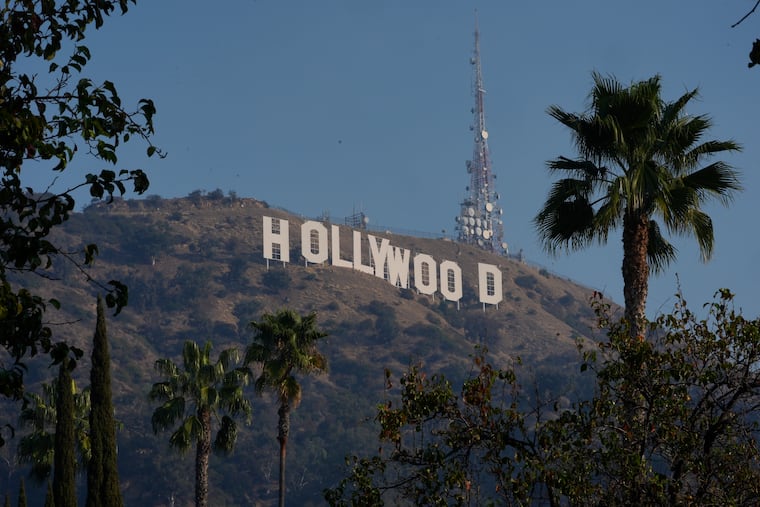
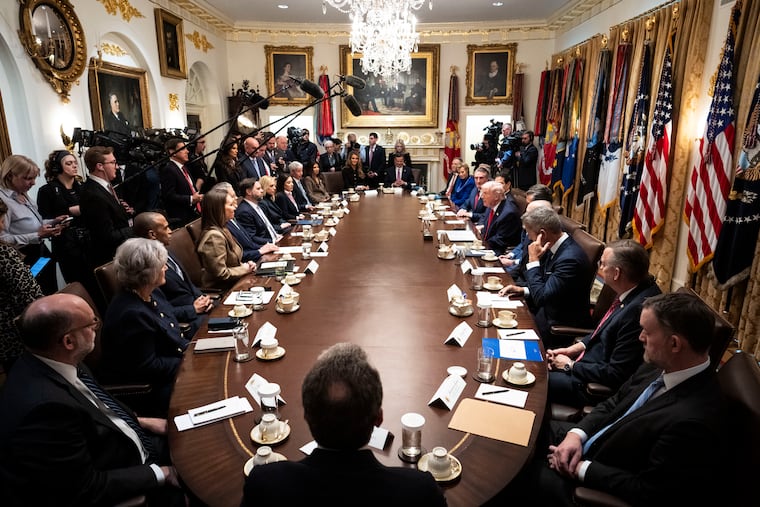
“Hollywood is a complete and total disaster!” The recent words of President Donald Trump to Congress rang loudly on many levels. The topic at hand was a 20 percent federal tax credit for compensation paid for labor performed on films in the United States, an incentive for domestic film production, which will likely pass in the coming months. While politicians courting media executives by appealing to their pocketbooks often proves successful, the tactic skirts the real political power of Hollywood: silver screen narratives. Hollywood has the power to shape reputations, as on-screen depictions can drive public perceptions.
Indeed, 85 years ago, some isolationist politicians saw Hollywood as a national security threat, guilty of warmongering by producing anti-Nazi films.
By the late 1930s, as international tensions escalated between Nazi Germany and interventionist attitudes in the United States, Jewish producers and writers in Hollywood began to voice their concerns. They conducted anti-Nazi espionage in Los Angeles through the Hollywood Anti-Nazi League, and later took their concerns to the big screen where a handful of Hollywood films sparked tremendous political controversy.
One example was Confessions of a Nazi Spy (Warner Bros., 1939), based on FBI agent Leon Turrou’s account of his work uncovering a fascist espionage network. The movie’s message was that there are Nazi supporters among us. It hit theaters just months after the infamous pro-Nazi rally at Madison Square Garden attracted more than 20,000 people. Backlash against the film began during production, as 12,000 antisemitic pamphlets circulated Los Angeles. They stated that a “Jewish monopoly” in Hollywood aimed to replace “non-Jewish men and women” in the industry by hiring “refugee Jews from Europe.” The handbill argued that these foreigners were thrown out of Europe for good reason and these anti-Nazi and anti-authoritarian films were simply “war-provoking propaganda.” As other studios began producing anti-authoritarian fare, isolationist and Nazi-sympathizing rallies held by the America First Committee targeted these films. America First Committee member and U.S. Senator Gerald Nye (R-N.D.) castigated Hollywood on rally stages, in the press, and then on Capitol Hill.
By September 1941, Senators Nye and D. Worth Clark (D-Idaho) dragged studio heads like Harry Warner and Darryl Zanuck before a subcommittee, insisting that films like The Mortal Storm, Confessions of a Nazi Spy, and The Great Dictator were dangerous interventionist propaganda.
Anti-Roosevelt political operators like the journalist John T. Flynn mixed with America First representatives like Senator Nye, with the support of pro-Nazi celebrities like Charles Lindbergh who, during the hearings, claimed that the greatest threat to the United States in 1941 was not spreading fascism or Nazis, but the “Jewish controlled media.”
Notably, Roosevelt’s recent presidential opponent, Wendell Willkie, fresh off his 1940 presidential run, spoke on behalf of the studios telling The Hollywood Reporter that “we make no pretense of friendliness to Nazi Germany and the ruthless invasions of other countries.” “We abhor everything which Hitler represents,” added Willkie. His job became easier because none of the senators on the committee had seen any of the films they had branded as dangerous. One of their own, a junior senator from Arizona, Ernest McFarland, simply asked what was so bad about these films. Nobody could answer.
Anti-immigrant fearmongering was a major driver of the debacle—unsurprising, perhaps, in an era with strong immigration restrictions in place. Proponents of these attacks regularly identified studio bosses, as well as performers like Charlie Chaplin, who were foreign-born.
The xenophobia was so pervasive that when 20th Century Fox executive Darryl Zanuck took the mic at the hearings, he reminded the senators that they need not fear him, as he was just a boy from Wahoo, Neb. Hollywood defenders spent much of their testimony explaining how Hollywood operated to the committee. Fireworks took off when Warner Bros. president Harry Warner sat down before the committee. He’d been watching every day, stoically, waiting for his turn.
“The only sin of which Warner Bros. is guilty is that of accurately recording on the screen the world as it is or as it has been,” asserted Warner, framing the studio’s stand against hate as rooted in the Warners’ love of America.
In a powerful moment, Warner even presented a letter from Gerald Nye written in 1939. In it, he had written, of Confessions of a Nazi Spy, that “[a]nyone who truly appreciates the one great democracy upon this earth will appreciate this picture and feel a new allegiance to the democratic cause.” Nye turned red as Warner read the letter aloud, betraying his recent anti-Hollywood fearmongering as opportunistic, but said nothing.
The investigation ended when Senator McFarland stormed out, disgusted by the desperate plays of a committee making accusations about movies they knew nothing about. A recess was finally granted, allowing time to watch the films in question. The committee would not reconvene. Japan’s attack on Pearl Harbor and the U.S. declaration of war led to calls for more anti-Nazi and anti-imperialist material.
But the hearings had demonstrated the growing power of film and its ability to influence perception and narrative. Playwright and screenwriter Lillian Hellman called the investigation a “disgrace.” Legendary journalist Dorothy Thompson, who had interviewed Hitler in 1931 during his rise to power, called the investigation “the greatest Nazi propaganda stunt ever pulled off in the United States.” Thompson criticized Hitler in Cosmopolitan magazine. She also wrote a short book, I Saw Hitler, where she observed that “[h]e is a little man whose countenance is a caricature…a drummer boy risen too high.” Thompson had watched the rise of fascism through the lens of cartoonish personalities, including those on Capitol Hill.
That’s why this episode continues to be a useful lens for today. The tactics feel familiar even when the target changes: pressure a company for the crime of telling an unwelcome truth, dress the pressure up as concern for “fairness,” and count on the target to fold before anyone has to defend the underlying claim on the merits. Trump’s insults of Hollywood, combined with proposed financial incentives to keep film production in the United States, may be designed to produce more MAGA-friendly movies—or fewer “woke” ones.
But wild accusations rarely survive contact with the evidence. Senator McFarland’s question probing the motives of the committee, wondering what was so dangerous about anti-Nazi films, was left unanswered. Congress adjourned to go watch the movies it had spent weeks condemning sight-unseen and never reconvened. Eighty-five years later, the same test still works. Ask the crusaders to detail the specific accusation, and the crusade usually has nowhere left to go.
Chris Yogerst is the author of The Warner Brothers and Hollywood Hates Hitler. He’s regularly published in the The Hollywood Reporter and writes news and features for MovieWeb, while teaching media courses at Marquette University.
Made by History takes readers beyond the headlines with articles written and edited by professional historians. Opinions expressed do not necessarily reflect the views of The Inquirer.