Prestigious science prize honors three innovators, including two with Philly ties
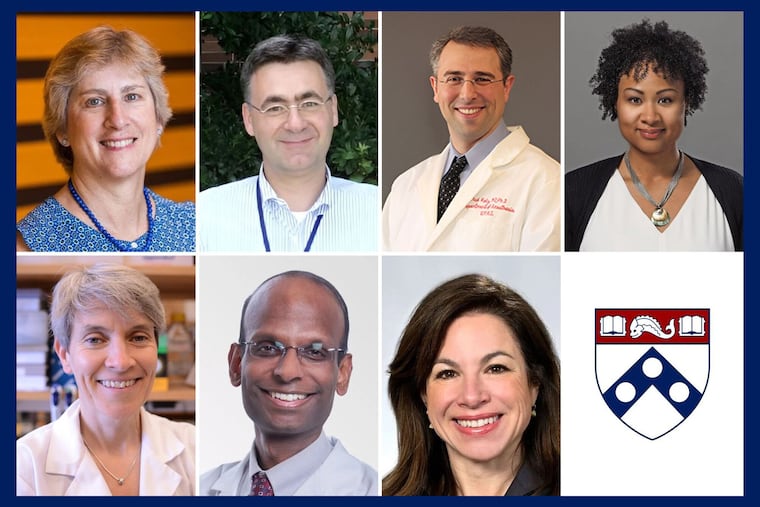
The John Scott Award recognized three scientists with Pennsylvania roots: Penn State professor Nina Jablonski, Temple professor Magid Abou-Gharbia, and Eli Lilly executive Daniel Skovronsky.
One John Scott Award winner traced the evolution of human skin color, transforming our understanding of race.
Another led the development of drugs for depression, pain relief, and cancer.
And a third pioneered a first-of-its-kind diagnostic tool for Alzheimer’s disease.
This year’s three winners of one of the nation’s oldest science prizes were honored on Tuesday for contributing to the “comfort, welfare and happiness of mankind,” according to the prize website. Presented by the Philadelphia-based American Philosophical Society, the award comes with a $10,000 cash prize for each recipient.
Previous honorees include Marie Curie, Thomas Edison, and the Wright brothers, among other scientific pioneers.
» READ MORE: Penn immunologist David Fajgenbaum receives prestigious John Scott Award
This year, the award recognized three scientists with Pennsylvania roots — Penn State professor Nina Jablonski, Temple University professor Magid Abou-Gharbia, and Eli Lilly executive Daniel Skovronsky.
The prize prioritizes scientists in the region, including New Jersey, Pennsylvania, and Delaware.
The theme for 2026 was “breakthroughs in human understanding and in drug discovery,” according to Marsha Lester, a University of Pennsylvania professor who leads the advisory committee for the award.
“They’re regional people who have made enormous contributions to society through their work,” Lester said of this year’s winners.
Here’s what you need to know about the 2026 John Scott Award winners:
Nina Jablonski
Penn State University professor Nina Jablonski was recognized for her contributions to unraveling the scientific origin of human skin color.
She showed that dark skin evolved as a protective barrier against UV radiation, and traced the evolution of skin color from dark to light based on the amount of sun exposure in a region.
By proving the evolutionary basis of skin color, she showed that the concept of color-based races was merely a social construct.
Everyone was darkly pigmented at one point, she explained, referring to how modern humans all originated in Africa. As some moved further from the equator — to Europe, for example — their sun exposure decreased, and skin color lightened as a result.
“What we learned is that the differences in color between us are literally just skin deep,” Jablonski said in a Thursday press release. “The reality is we are all one under the sun.”
Her research challenged long-held racial prejudices and inspired Jablonski to work on educating the public about differences in skin color.
Partnering with Harvard historian Henry Louis Gates Jr., she created the Finding Your Roots Curriculum Project for middle and high school students, and the award-winning PBS web series, “Finding Your Roots: The Seedlings.”
“We need to change the way people think about the physical differences between us,” Jablonski said. “When we learn about them without all the old prejudices, it frees us to learn an even more important lesson: That we are all human beings who can do anything we put our minds to.”
Magid Abou-Gharbia
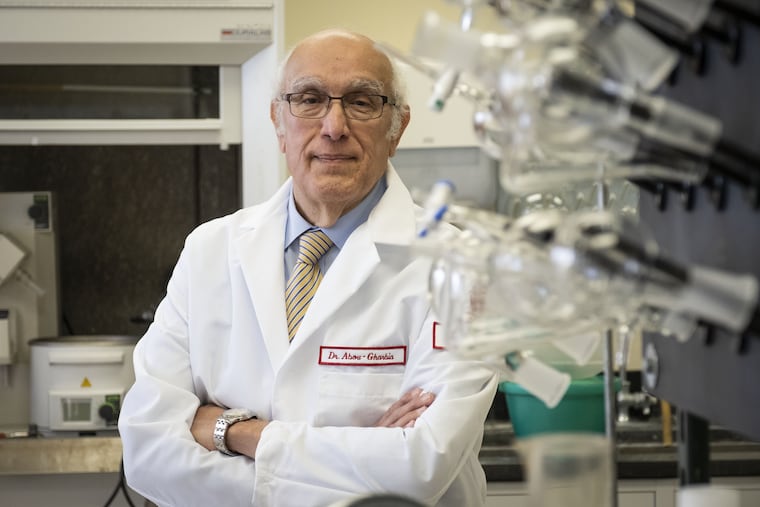
Medicinal chemist Abou-Gharbia’s work has led to 145 U.S. patents and the discovery of nearly a dozen novel drugs.
Originally from Egypt, Abou-Gharbia arrived in Philadelphia in 1974 to start his PhD in chemistry at Penn. He later worked as a bench chemist at Wyeth Pharmaceuticals, where he was promoted to an executive position directing drug discovery efforts.
In that role, he led the discovery of 10 marketed drugs, including two commonly prescribed antidepressants, Effexor and Pristiq, the painkiller Dezocine, and the kidney cancer drug Torisel.
It “brings us a lot of satisfaction when we help patients relieve their suffering,” Abou-Gharbia told The Inquirer.
In 2008, he returned to academia, “hoping to inspire the new generation,” he said. As a professor at Temple’s School of Pharmacy, he served as founding director of the Moulder Center for Drug Discovery Research, which has generated more than $30 million in funding for drug discovery research.
» READ MORE: https://www.inquirer.com/health/temple-university-moulder-drug-discovery-achievements-20241009.html
Abou-Gharbia doesn’t plan on retiring soon. He credited this mindset to his Penn mentor, 2015 John Scott Award winner Madeleine Joullie, who retired at 94.
With two grandchildren now in pharmacy school, he has even more reason to continue.
“They say, ‘So what’s new, Grandpa?’” he said.
Abou-Gharbia updates them on his current project focused on advancing drug candidates for cocaine and opioid addiction, which have shown promise in animals but have not been tested in humans.
“My grandchildren also see me as encouragement for them,” he said.
Daniel Skovronsky
Skovronsky currently serves as chief scientific and product officer and president of a research and development division at the Indianapolis-headquartered pharmaceutical giant Eli Lilly and Company.
But before that, he called Philadelphia home: earning his medical degree and PhD from Penn, and founding Avid Radiopharmaceuticals in University City with a focus on imaging agents.
At the startup company, Skovronsky built an imaging test to detect Alzheimer’s markers called amyloid plaques in the brain of living people. The first such test approved by the FDA, Amyvid, helped guide Alzheimer’s disease diagnosis and better match patients with clinical trials.
His team followed that up with an imaging test for tau, another hallmark of Alzheimer’s.
Skovronsky’s scope expanded to other diseases when he joined Lilly, which acquired his company in 2010. He advanced the first antibody treatment authorized by the FDA for emergency use for COVID-19 and GLP-1 drugs for obesity and diabetes.
“If you can understand a disease, you can finally do something about it,” he said.
Having learned of the history of the John Scott Award during his time in Philadelphia, Skovronsky said he was moved to receive an award that recognizes impact on human life.
“To receive it in Philadelphia, where my own science began, means more than I can easily say,” he said.