New $25 million Penn center aims to advance precision therapies for heart disease
Rather than just managing symptoms, the Smilow Center for Precision Therapeutics aims to treat the underlying causes of heart disease, and eventually work toward cures.
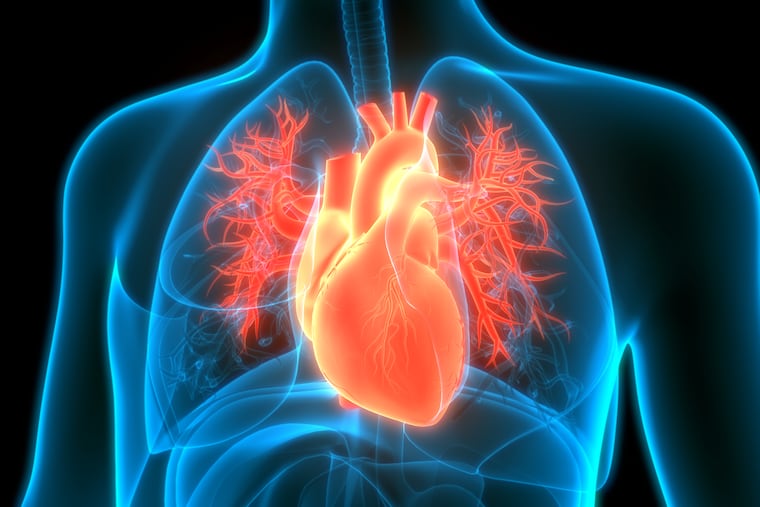
The heart’s anatomy and immune reactions make it a challenging target for emerging gene therapies, which have transformed treatment options for some health conditions.
A new Penn Medicine center, supported by a $25 million gift from the Delaware-based Smilow Foundation, aims to overcome those barriers to develop precision therapies for cardiovascular disease, officials announced this month. In addition to gene therapy, researchers will explore targeted approaches involving small molecules and messenger RNA, or mRNA.
Rather than just managing symptoms, the Smilow Center for Precision Therapeutics aims to treat the underlying causes of disease, and eventually work toward cures. A core team of five physician-scientists will lead the center, each overseeing a large research program contributing to these goals.
“Cardiac disease is the number one killer of people in this country,” said William Smilow, who lives in Chestnut Hill and serves as president of the Smilow Foundation.
The family philanthropic organization, seeded by his father, Joel Smilow, a former CEO of Playtex Products, has donated significantly to Penn and other major medical centers. Before taking the helm, Smilow worked as president and founder of Great Oak Holdings, Inc., a real estate development company.
A cardiology patient at Penn himself, he started talking with Penn cardiologist Thomas Cappola two years ago about ways they could push the field forward.
Smilow rejected Cappola’s initial ideas for being too small scale.
“We went back and forth quite a bit because I wanted to take a big swing on something,” Smilow said.
They landed on this precision therapeutics center, which Cappola now directs.
The center will draw on the expertise of several Penn physician-scientists, including Kiran Musunuru and Drew Weissman.
Musunuru co-led the team behind last year’s first-of-its-kind personalized gene-editing treatment for Philadelphia-area infant “Baby KJ,” and will help lead the center. He also helped develop a gene therapy for high cholesterol, which showed promise in early clinical trial results this past spring.
» READ MORE: A gene therapy lowered cholesterol in early trial results. It has a Philly backstory.
Weissman shared the 2023 Nobel Prize with Katalin Karikó for developing the mRNA platform used for the COVID-19 vaccines.
“Those two technologies in combination are very powerful,” Cappola said.
Those approaches could also help researchers tackle their major challenge: delivering precision therapies to the heart.
Precision therapies
Precision medicine customizes treatment to the individual, setting it apart from the traditional medical approach of prescribing the same pills or procedures to everyone with a given diagnosis.
“We find the root cause of the disease in you, and we treat that root cause,” Cappola said.
The center’s initial effort focuses on genetic forms of heart muscle disease, where an obvious change in the DNA of a patient leads to the problem.
One area where that could help is heart failure.
When someone has a weak heart, they have poor blood flow to tissues. This can lead to heart failure, where the heart is unable to pump enough blood to meet the body’s needs.
“The majority of innovations to treat heart failure are really ways to help your body live with a weak heart,” Cappola said.
He envisions fixing the root cause rather than helping the body adapt to an imperfect organ. For example, if someone has a specific mutation that leads to their weak heart, doctors could focus on fixing it or finding a way to block its effects. They could even act before someone starts having symptoms.
Targeting the heart
Several clinical trials have tested precision therapies for cardiomyopathies, diseases of the heart muscle.
But questions remain around the immune responses and side effects that can result when these therapies are delivered into heart muscle cells.
“Many of the current approaches we use to try to deliver these therapies have problems,” Cappola said.
The center will prioritize developing ways to package and deliver therapies.
Gene therapies tested in recent years have mainly targeted the liver, which is a much easier target.
The gene-editing approach that Musunuru helped develop to treat high cholesterol, for example, works by introducing a specific mutation into a gene in the liver called PCSK9. That inactivates the gene, leading to substantial drops in levels of bad cholesterol.
Although the treatment could ultimately help prevent heart disease, it targets the liver rather than the heart.
“We want to target the heart itself. That’s a very aspirational goal,” Cappola said.